Review Summary: This is a very good album, containing some all time classics by who may very well be the greatest rock guitarist of all time. Unfortunately, it's bogged down by some dreadfully boring filler, keeping it from the perfect 5 it should have been.
The year is 1968. The counterculture was at its peak, after rocketing into the forefront in the summer of ’67, soon to dramatically decline in 1969 and 1970, when the hippy dream is shattered for various reasons and the “flower power” philosophy quickly fades into obscurity. Right now, it’s still flower power and it’s still psychedelia. Every rock band is experimenting with psychedelic textures more than ever before, utilizing the recording studio as an instrument.
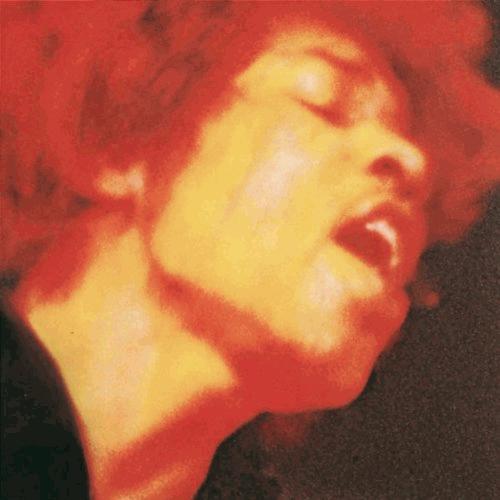
This resulted, of course, in a lot of pretentiousness and a lot of “rock-as-fine-art” trash. Overall, the albums from this period are of poor quality indeed, with rock bands greedily trying to cash in on the wildly popular hippy scene, a world of drugs and flowers and peace on earth. But a few albums of this time managed to match its pretentiousness with genuinely good musicianship and fine rock lyrics. Some artists even managed to use this new idea of using the recording studio as an instrument to improve their music, rather than make it an emotionless, glossy trip through pastel world (the result of most artists using this idea.) One of those artists were The Jimi Hendrix Experience (Hendrix joined on the bass and drums by Noel Redding and Mitch Mitchell, respectively), on his magnum opus,
Electric Ladyland.
It can be hard occasionally to find the good music here. There is a lot of artsy psychedelic noise that would eventually inspire pompous filth like Genesis and Yes. But underneath that - and dare I say it, sometimes
with that - is some great music on this album.
The journey begins with “…And the Gods Made Love.” This is unfortunate, because judging by this intro, this is going to be another spacey soundboard show in the mold of Sgt. Pepper’s Lonely Hearts Club Band or Syd Barrett-era Pink Floyd. Be not dismayed. Though the follow up track is equally terrible, things start brightening up with the third track, “Crosstown Traffic.” The lyrics are poor at best; sexist at worst. But the musicianship is undeniable. The genius of the song is breathtaking. Well paced, delicately textured with keyboards and kazoo (!) yet perfectly fast and quick. And like most songs on this album, it features an overall excellent sound due to the recording techniques and location. The reverb is excellent for this song. It’s a crisp but open sound, leaving one with the feeling of seeing the band play live, but in a small little room with only you and a few others there to attend.
It gets better from there. The lyrics are once again poor on “Voodoo Chile” (though not borderline offensive this time), and once again, the musicianship is top-notch. This is a modern blues in the truest sense. You can hear the pain on Hendrix’s fingers when he bends the strings, and the strain in his throat when he shouts “Voodoo child!”; the depression in the organ; and though drums back then weren’t recorded very well, you can tell Mitch Mitchell is pounding his drums like his life depends on it.
As the journey through Electric Ladyland progresses, we find some huge bumps in the road, which severely impact the quality of the record. Noel Redding was at his best when he was playing his bass in the corner, not when he was writing/singing. To put it nicely: “Little Miss Strange” sucks. But it gets better soon enough. “Gypsy Eyes” features incredible guitar effects and a great, primitive rhythm, and a disorienting, barrage-of-notes outro. The lyrics are a bit obscure on first listen, so one has to look into Hendrix’s history to totally understand them. But when one discovers that this song is about his mother abandoning him as a child, one understands the mournful tone of Hendrix’s voice. The lyrics are beautiful and depressing when they are read through the filter of such a tragedy. The line “Two strange men fightin' to the death over me today” are about former partners of his mothers’ having a legal spar over who was his real father. These are rock lyrics at their best: a personal story which stands as a testament to a larger problem in society, told in a totally unpretentious yet effectively poetic manner in the tradition of the blues.
Again, we see some problems as the album continues - though “Burning of the Midnight Lamp” is a masterpiece that even the perfectionist Hendrix acknowledged, some of the songs delve into meandering psychedelic swish and swoosh. A great shame since Hendrix was far above this useless crap that serves only to bore the listener into skipping to the next track.
But luckily, the album closes with a pair of true winners. “All Along the Watchtower” is not original lyrically as it is written by Bob Dylan, but Hendrix’s arrangement is far superior to - and his voice is far less sucky than - Dylan’s. This could truly be one of the greatest rock songs of all time. It is a recording that defies words in many ways, but with my best effort, I can only say that everything about is perfect: the reverb, the guitar lines, the emotion in Hendrix’s voice, the rhythm arrangement, the stunning lyrics penned by Dylan. This is one of those rare recordings that, even if Hendrix came back to and got together again in the same room with the same instruments with the same guys to record the same song, could never be replicated. Somehow, the microphones captured an intensity and drama that words defy. And then we end off with “Voodoo Child (Slight Return)”. Not half as good as “Watchtower,” but one of the best tracks on the album. A great solo and a great, hard-hitting riff, this is how hard rock is supposed to sound (basically, not heavy metal).
Yes, this album contains a lot of flaws. I hate that there are several throwaway tracks consisting of nonsensical LSD-trip lyrics set to unmelodic dissonant noise that make the listener want to break his stereo by the time they’re almost over with. But the missteps are truly that; missteps. They are not who Hendrix was. Hendrix was “All Along the Watchtower;” Hendrix was “Gypsy Eyes.” Hendrix was probably the greatest guitarist in rock history, and a great songwriter. Not because the rock mags say so or the establishment critics love him. Because he knew what sounded good and what didn’t, and thus, could write a powerful song, whether he had the critics behind him or not.
… so
why did he have to throw that intro on there?
This would truly be a five if the filler was excised. It was going to be a 4, but after a last minute review, I remembered there really is a lot of useless psychedelic filler to spoil the magic of the great songs. 3.5 it is.