Korn- Korn
Jonathan Davis: Vocals, Bagpipes
Head (Brian Welch): Guitar
Munky (James Shaffer): Guitar
Fieldy (Reginald Arvizu): Bass
David Silveria: Drums
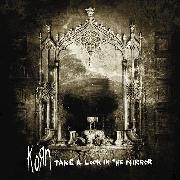
Blame Korn for everything. It's all their fault. Released in 1994, their eponymous debut album is responsible for every whiny, angry, screaming wall of noise you hear on the radio and MTV2 today. There is no "mallcore" band out there today that does not owe at least some of its existence and sound to this Bakersfield, CA quintet. But what exactly did they do?
Well, you may or may not be surprised to learn that Korn's first album is arguably their finest work as well. The reason for this is because, quite simply, it was unique! There was nothing, I mean NOTHING in 1994's music scene that was even close to sounding like Korn: the tight, forceful drums, the eerie downtuned twin guitars, and the percussive, slap-happy bass merged with Jon Davis' fearful, growling vocals for a complete overhaul of grunge, rock, metal, or whatever else they could be classifed as at the time. In fact, this record is so groundbreaking that the only reason to blame Korn for current nu-metal is that the band itself has continued to decline in quality. With only a few minor adjustments, the band has re-made the same album over and over again, further influencing the lack of quality in similar bands.
If one can look past all the horrifically awful music in the future, and examine this album with no other context, you will find an inventive and mildly entertaining alternative-metal album. Here are some of the standout tracks of Korn's self-titled album:
Blind (4:19): The album starts out with some cymbal tapping. Very ominously, it builds up for the next thirty seconds with only a few bass notes to interrupt it. Then a guitar riff blasts in, blasts in again, and Jon yells out the question we were all wondering: "Are you ready?" The song comes in at full volume, and the listener of 1994 is left wondering if they could have ever prepared for this kind of sound. The main riff is very catchy, the chorus is a vaguely-ironic "I can see I can see I'm going blind," and the vocals really do not resemble later Korn songs at all. This is the best song on the album in my opinion, and therefore is also the band's best song. Is it right to say that the band would be better off to have just quit after this one great song? Of course not, because there are still plenty of decent songs on this album.
Ball Tongue (4:29): The second track bursts out of the gate with an explosive ferocity. The song refers to a gripe against a tongue-studded moocher of some sort. The guitar in the verse is just one whiny note, stretched out, but the chorus reveals the background vocals of "Ball tongue!" while Davis rants and raves incoherently in a rather amusing set of barking. More great angry music from Korn, I would suppose.
Clown (4:37): Starts off with some in-studio chatter, then jumps into a song ranting about someone who assaulted Jon at a show, I believe. This song is a lot slower and plodding than some others, but it is a device that would come to be used more often than not in later Korn releases.
Faget (5:49): This song is probably the second-best track on the album, and it refers specifically to the insults Jon received as a child. Typical response from most music lovers today is "Boo hoo," but this was a real subject of interest back in the day! The guitar in the verse uses a haunting mix of effects to express the utter bleakness of the song, and the chorus has plenty of visceral power behind it to back up Jon's feeling that everyone who ever picked on him in school is a big fat meanie.
Shoots and Ladders (5:22): This is probably the longest intro Korn fans have had to deal with; a minute and a half of solid bagpipe-playing. Some might see this as a ploy to turn off "true" music fans at every angle, but it works very well as a segue into the real, "Korny" part of the song. Jon recites nursery rhymes and other public-domain nonsense as an attempt to explain how screwed-up they were supposed to be (Ring around the rosies = some plague thing). Works fine for me.
Predictable (4:32): Jonathan Davis was once quoted as saying in an interview that he would have left this off the album if he had another chance, but I thought it was one of the better tracks on the album. The drumming is suberb (although "Blind" probably has better examples), and the guitar is a lot more prevalent as a riffing force than in most of the songs (usually used for atmospheric effect in the verses). Especially of note are the lyrics in the bridge: "You wait for me, I'll call out to you/ Another day, I'll live foreverrrrrr!" The way they are sung is actually much better than in most of the songs, and it really makes this a decent song for me.
Helmet in the Bush (4:02): Starts off with a simple bit of drum tapping, and then enters with a song that would be more reminiscient of what Korn would later become. The song is about Jon's speed addiction (the title refers to the shrinking of the pee-pee while under the influence), but it's really not that "speedy," just another mid-tempo Korn song. Nevertheless, it possibly represents a break from the grungier, "alternative" metal sounds of the rest of the album's songs, and a segue into the less ambitious future of Korn.
Daddy (17:31): The final track is slow to begin, but once it does you'll realize that this is some "fu
cked-up shit." Korn does not play this song live under any circumstances because it is so personal for Jon. Basically, he equates not receiving any attention from his parents to being molested, which makes for some pretty graphic imagery in the lyrics. Not to mention the accompanying music is creepy and haunting even by this band's standards. It ends in a torrent of wailing and crying from Jon, and eventually we get a bizarre secret track of a husband and wife arguing comedically (the band found it laying around in the studio and decided to add it at the end).
...and thus ends the album. If you're sick and tired of Korn or nu-metal in general, then you still won't like this album; it's not far-enough removed from today's dismal modern-rock scene to ever change anyone's mind in that respect. However. the revolutionary force that this album catalyzed makes it the equivalent of
Nevermind or
Paranoid in terms of sheer influence. This album gets a 3/5 for musical worth and a 5/5 for groundbreaking work, evening it out to a
4/5.
Pros: Revolutionary, introspective, and deeply personal. Creates a world of loss and pain with brutal sound.
Cons: All of the songs sound very similar to each other, and none of the band members except Silveria is especially good at his respective instrument.