Review Summary: The joyful sadness of a Japanese emo masterpiece.
If you ask music savvy kids today what emo sounds like, they’ll probably play you a twisty, sparkling Telecaster riff that could have come off American Football I, Some Kind Of Cadwallader, or any record by Tiny Moving Parts. But what if I told you that on the other side of the world, a totally different take emo had already been perfected by a Japanese band in the mid-90s, with virtually no resemblance to the Midwest sound we all know and love?
Enter Bloodthirsty Butchers. Getting their start in the late 80s as a snotty punk band in the gritty venues of blue-collar Hokkaido that could maybe be analogized to Manchester, the Butchers put out a trio of releases that steadily diverged from straightforward punk. By the time of 1994’s Lukewarm Wind, the band had evolved into a unique but still usually-abrasive alternative rock band prone to extended jams and sudden, nearly progressive, changes of tempo and mood. Only a short instrumental track, Poolside, hinted at what the band would become.
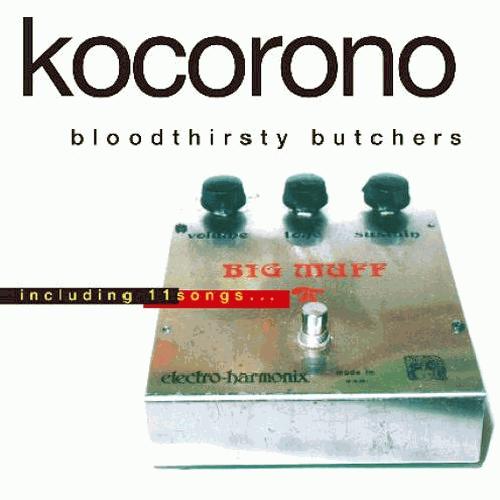
Everything changed with Kocorono, the group’s 1996 breakthrough. All traces of hardcore abrasion had been smoothed into warm alternative rock, resonating from the first chords of album opener February, where tempestuous frontman and creative mastermind Hideki Yoshimura trades his caustic screams and shouts for wistful emoting. The album opens with a trio of relatively accessible, upbeat tracks that don’t quite brandish the kind of hooks suggesting a band consciously seeking a wider audience.
Rather, there’s a notion that the Butchers had simply outgrown the constraints of punk, and needed to tap into a new vein for continued creative inspiration. As it turns out, they struck gold. Kocorono really takes off with “June,” a tense, cloudy piece that captures the sensation of anticipating a downpour that may never arrive. It exhibits the band’s compositional skill, music that conveys mood and emotion alongside the lyrics and vocal delivery - a compositional competence often humbly concealed beneath layers of wandering guitars.
This approach hits its crescendo in album centerpiece “July,” a swirling epic that captures the wistful melancholy of loss. Yoshimura’s chiming layers of guitars evoke Kevin Shields vacationing in the sweltering, cicada-soaked Japanese countryside in summer, climaxing witth fuzzed-out guitar explosions that would likewise make J Mascis proud. Underneath, Takeshi Imoriya’s bass shines just as bright, his unique approach to the instrument straddling the line between foundational low-end and countermelody.
“August” pushes the emotion to its boiling point, trading nostalgic pain for searing turbulence, Yoshimura’s desperation easily transcending the language gap. “September” gives some appropriate breathing room before “October” erupts with drilling guitars and thundering bass that signify it as the album’s most immediately upbeat song yet. This urgency carries through “December”, the album’s anthemic closing track wherein the Butchers sound more melodic and almost poppy than anything preceding it.
This decision to save the most upbeat, concise, and catchy songs for the final act is a bit of subtle brilliance on the band’s part. Kocorono is a record that takes its time to reach the destination, and by putting the longest, most demanding compositions at the center of the album and subsequently easing up, Yoshimura and his bandmates succeed at maintaining the listener’s attention and engagement, rather than exhausting them. It’s evident on a close listen that Bloodthirsty Butchers devoted extraordinary care and attention to every aspect of Kocorono, ending up with a spectacular, cohesive album that would surely be ranked with the greatest rock releases of the 90s, were it more widely known outside Japan.
But what then of Emo? Bloodthirsty Butchers contributed something vital to the conversation which unfortunately has gone unheard, thanks to their general obscurity overseas. Frontman Hideki Yoshimura brings a distinctly Japanese approach to the genre, one inseparably intertwined with his unique and quirky persona. Like his music, Yoshimura is a man who is at times brash, abrasive, blockheaded, and stubborn; but also capable of warmth and gentleness, and a natural tendency toward mulling over wistful heartache.
Furiously shouting emotive lyrics on stage, complaining about money in an izakaya, picking melancholic chords on the beach as the sun sinks beyond the waves; the reposed Yoshimura is all of these at the same time, the bigger-than-life artist immortalized in the music capturing his regrets, disappointments, and anxieties, interspersed with bursts of joy, humor, and hope.
Bloodthirsty Butchers show a vision of emo where we take the good along with the bad, treasuring inexplicably the memories of loss as warmly as the good parts. It’s in Masahiro Komatsu’s bursts of explosive drumming, Takeshi Imoriya’s melodic bass, and Hideki Yoshimura (and later, Hisako Tabuchi)’s chiming, swaying guitars. And it all started in earnest here on Kocorono, an album that truly is, as its name in translation suggests, from the heart.