Review Summary: Great concept on paper, mild execution.
Over the past decade, Steven Wilson has gradually become the prog icon he sought to be. Porcupine Tree’s absence and discovery by a new generation of listeners only made the group bigger, leading to a glorious return. Meanwhile, the front man did an excellent job providing new content as a solo musician. It was a needed step for him to cement his reputation, as both critics and fans pushed him to the forefront of the neo prog movement. With each album/tour cycle, he became more confident and outspoken. At the same time, remixing dozens of classic records in 5.1 surround and more recently, Dolby Atmos, garnered him significant praise on the technical side of the business too. Trying his hand at a more mainstream direction was perhaps the most brow-raising moment of his career.
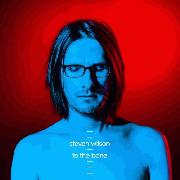
To the Bone and
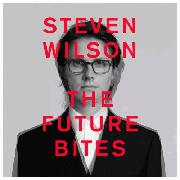
The Future Bites expressed an interest in further expanding his audience. It was an unnecessary step as Wilson did not need any validation on that front, yet it made sense to him personally in a regretful-for-not-giving-a-shot way. Nevertheless, stylistically, those albums opened new doors in the electronic sphere for his main solo career, which would be explored in a more captivating way on 2023’s
The Harmony Codex. We barely had time, however, to get accustomed to that LP before announcing his latest musical venture,
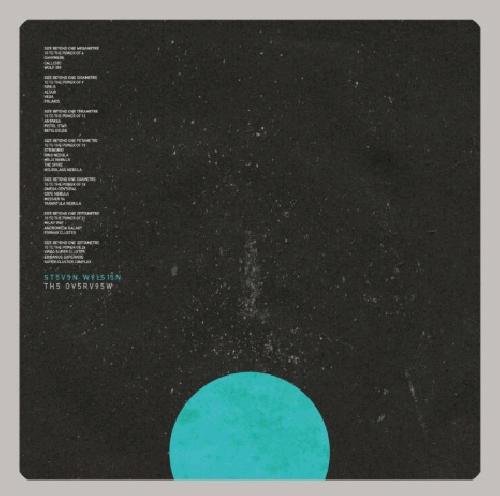
The Overview.
This full-length was inspired by the overview effect, an awe-inducing state astronauts experience while gazing at the Earth from outer space. The visual stimuli have a psychological effect on them, often through overwhelming emotions of beauty and appreciation, as well as feeling a connection to other people and the planet as a whole. More directly, the cosmic scale of things renders everything happening on Earth as trivial. So, Steven took this chance to expand on it in his own way. We get two epics, “Objects Outlive Us” & the title track, the former focusing on mundane events in one’s life and the personal importance of them, whereas the latter turns toward the cosmos in an Interstellar sort of way. Our perspective on time changes, there is so much information to absorb and ultimately you reach to a pragmatic conclusion that our lives are insignificant in the grand scheme of things. Such an immersive concept was a perfect opportunity to return to his musical roots. Inspired by ‘70s prog records which contained one song per vinyl side, these two cuts share several interconnected segments. You can hear traces of Pink Floyd, King Crimson, Mike Oldfield, Tangerine Dream or Vangelis throughout, but the results ultimately play like a blend of various eras from Wilson’s diverse discography.
I was expecting a more extravagant take on the respective concept, but for the most part
The Overview focuses on a moody atmosphere with occasional sonic bursts. Each tune features a main melody and a prog counterpart, connected by multiple ambient interludes. “Objects Outlive Us” is more flamboyant, building on a stomping, piano assisted sing-along, before transitioning to heavier riffs during the second half. The Gilmour-esque solo towards the end is lovely amid the soothing synthesizers. Meanwhile, the title track starts as a Tangerine Dream-meets-Autechre, sequencer-led beat with stars, nebulae and galaxy names or distances recited in a spoken word fashion, before taking a conventional, bittersweet sonic route. From there it kind of meanders, until it returns to an ambient coda. While there are beautiful moments on the record, some of them seem thrown there for variety or just to enhance the overall prog value. The ambient parts, especially, could’ve used more expansion to sink in. Whether it’s guitar noodling, synth pads, Mellotron or Hammond organ chords, they all sound nice for mood setting, but rarely take off on their own journey. The core songs are decent, still, there’s nothing mind blowing. While the instrumentals occasionally dive into intricate progressions, they never truly reach a powerful climax. Thus, we are left with several fragmented bits and a couple of fleshed out numbers in between. Had Steven expanded them more would have led to a very immersive project, just as complex as the concept undertaken.