Review Summary: Surviving the 80s, Part Two
The circle of musicians who approached the changing music landscape of the 80s with the required understanding – or managed to put out distinctive, high-quality material on their early releases (if they were unfortunate to form at that time) – is small. Usually, the secret of success lies in the ability to mix resistance, innovation, and then-modern instruments in the right proportions while preserving one’s identity and maintaining high songwriting standards. If one skews too far to either side, it can lead straight to oblivion, the risk of disappearing in a crowd of similar act, or becoming a bland copy of oneself. Even success achieved by following trends is no guarantee of survival in the sparkling, brightly colored, and rhythmic current typical of the 80s sound. More often than not, this success is short-lived and, in hindsight, presents itself as yet another example of a generic album from that period.
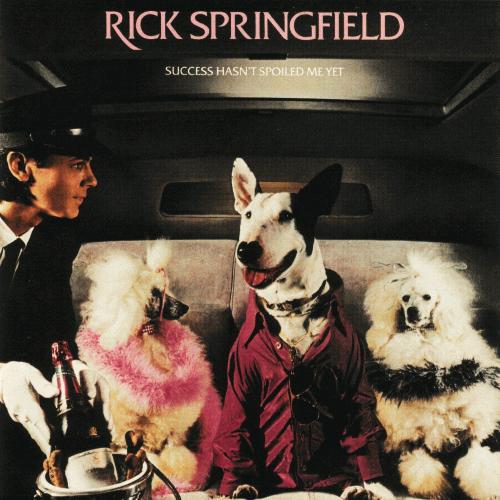
Success Hasn’t Spoiled Me Yet, which was slapped together practically a year after the popular 1981 album
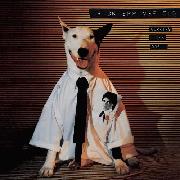
Working Class Dog, does not escape this fate. The LP is clearly aimed at replicating the success of its predecessor, despite the ironic statement in the title. Besides the short gap between the two albums, this goal is also confirmed by the cover: it features the same cute dog, who this time has risen above his working-class roots, with a grateful driver (Springfield) serving him champagne. A very strong sense of repetition follows for the duration of the record. It has the same wannabe-hit anthems about girls and relationships, driven by straightforward, measured rhythms, slick guitars, and a generous helping of period-typical studio polish. The feeling of déja vu (or the impression that you are listening to Side 2 of the 1981 LP) intensifies when one hears
I Get Excited, which recalls the superhit under the same number from the previous album to a fault. This unabashed exploitation of the exact same formula continues until the very end.
Certainly, there are occasional solid songs – primarily ballads, like
Don’t Talk to Strangers (despite its clear ties to the era) or
Still Crazy for You, which is surprisingly moving and possesses a somewhat timeless quality. But these instances do not save the LP from sinking in the current that overtook many musicians and only grew getting stronger at the time.
In the end, Rick Springfield managed to step into the same river twice, bringing joy to fans of the previous album, but failed to bring anything worthy to the bank of his artistic legacy. The record is recommended to those with nostalgia for the 80s, as it effectively captures the vibe and spirit of the time. As for the other music fans, they can either rewind back to good old-school rock or try pressing forward in hope of a miracle, entirely at their own risk.