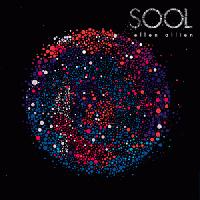
Review Summary: A skeleton of a dance album but far from a bad one
What’s the difference between darkness and emptiness? There may not be much. After all, they are fundamentally similar. For one thing, darkness
is empty: empty of light, empty of hue, and just empty in general. When you picture emptiness in your head, typically you either picture absolute white or absolute black, though the latter is more fitting: white is a light made up of every color in the spectrum, with black being the exact opposite. It has nothing. When people close their eyes, the state of seeing nothing is generally described as black. Kids fear the dark because they fear what they can’t see: the unknown. It’s as if darkness contains nothing.
Ellen Allien is an electronic dance artist from West Berlin, Germany. Minimalism has always been her style, using the scarcity of her computer samples to make relatively subtle music. With her fifth studio album (that’s including her collaboration with
Apparat,
Orchestra of Bubbles), she now uses the scarcity of her computer samples to make
really subtle music, expanding on emptiness and subsequently darkness as well.
Sool is dark because it’s empty and empty because it’s dark, using silence as a tool to craft an effectively ethereal release.
Sool is still an Ellen Allien album at its core. She does sing alongside her electronic ambience, but she’s far from
Bjork in terms of prominence. Vocals are used sparingly and, save for “Frieda”, play more the role of another instrument, another sample in her arsenal, with instrumentation taking the forefront. Besides having faint presence, her electronic sounds are overall quite dark. Not a melancholic or gloomy type of dark, more like
The Knife’s
Silent Shout, only less melodic. Actually,
Silent Shout is relatable to a couple of
Sool’s traits. First off, the sound is very processed and robotic, as in The Knife’s “We Share Our Mother’s Health” or “One Hit”. This motif mixes dark samples, like the ones found on “Bim”, with the album’s minimalism to create something bizarre and spooky through its vagueness. Vague, sure, but
Sool is definitely “there”. The sound here is quite breezy, especially if you can accept the moments of silence and nothingness as a positive thing. Back to The Knife,
Sool’s strange and occult appearance is occasionally quirky, creepy but never hostile. Some lighter moments leak through the cracks, heard on the shiny melody from “Ondu” or from the sweet and refreshing “Frieda”, though the darker pieces like “Caress” and “MM” contribute more to what makes
Sool so different.
The thing about
Sool is that it’s quite easy to overlook it as something soulless. With the noticeably less-human atmosphere, who can blame you? The album’s emptier feel isn’t quite for everybody, and you might even need a bit of a trained ear to find some of
Sool’s rewards. Sitting all the way through might reveal some synthetic flaws, as tracks like “Ondu” and ”Out” are quite bland in context with the rest of the album. The collective flow is a bit lagging, and though some songs do tend to build themselves up over time, nothing really “blossoms”, and you’ll notice the basic formula of a song just sticks around until the end. The only song that really shows any heart is the simple love tune “Frieda”, which puts the spotlight on Allien’s whispery vocals for a change. Some of the more danceable songs have a little bit more life, and in the case of “Elphine”, are a bit more whimsical too. “Sprung” is an example of the opposite, sounding quite ethereal, formless and empty. You’ll go through ups and downs on the humanity spectrum, though some songs are so bare you might not even notice.
One thing you can’t miss though, is that
Sool is quite a different electronic album. For how minimalistic it may seem, it can get pretty danceable, and like The Knife, is charmingly dark. Allien is definitely experimenting this time around, and nothing comes across as ambitious or pretentions. It’s actually pretty modest for what it is. Ellen Allien shows us that “dark” and “empty” aren’t necessarily the same thing, but a team. The bareness of the album does get a bit creepy at times, and likewise, the desolate, slightly jaded moments do make you feel pretty empty inside. It’s all rather passive to the average listener mind you, but it’s pretty easy to recommend
Sool to anyone looking for a sound that’s avant-garde and kind of shy.