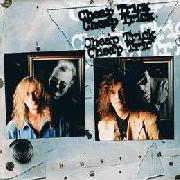
Review Summary: A classic album that demands more attention.
Many – both critics and audiences – shared the opinion that rock music, which started its rapid and uninhibited development in the second half of the 1960s and exploded with a galaxy of now-revered names in the first half of the 70s, began to lose the nerve and energy that had made it a part of the counterculture. Due to various reasons, songs were getting more and more unwieldy and complex, inflated by the talents of their creators as well as their egos. Pretentious concepts challenged perception, with themes drifting into the fantastic and ethereal. The king was losing touch with reality, and a revolution was inevitable.
It all took the shape of a movement with opposite musical values known as punk rock. Topical lyrics and a rebellious attitude, accompanied by intentionally simple – even primitive – melodies, attracted many. New stars appeared in the sky, outshining heroes of the past.
Sex Pistols,
The Clash,
The Ramones, and others threw away everything they deemed unnecessary, practically returning to the DIY philosophy and giving teeth back to the toothless bite.
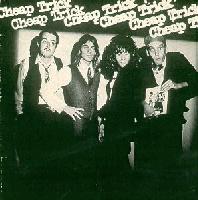
The eponymous debut by Cheap Trick, released in 1977 among the ongoing musical upheavals, is notable for many of the traits the new generation was trying to bring back. Although it should be noted the band never attempted to fully follow the evolving ideology, they were driven by similar impulses. Still, they were not a part of the young movement, despite certain similarities. To tell the truth, it is difficult to classify the band’s sound and put them in the correct genre box. Critics label them as part of the thinly populated style of power pop, but what they actually are is classic hard rock distilled to its very essence. Gone are the protracted and epic solo sections, complex arrangements, and fantastic concepts. That space is taken over by strong melodies, sparing arrangements, and pop hooks.
Cheap Trick is a prime example of striking effectiveness. Just listen to the work of guitarist Rick Nielsen, who sounds purposefully simple, yet leaves no doubt about his guitar-playing skills. The intro to
Daddy Should Have Stayed in High School reveals his insight into the understanding of “just enough”. A few chords and a couple of notes played using tapping provide enough volume and simple effectiveness while avoiding primitivism. His solos employ the same principle. The rhythm section, represented by drummer Bun E. Carlos and bassist Tom Petersson, follows that philosophy, steadfastly supporting their partner-in-crime. Vocalist Robin Zander is right there with his bandmates, displaying his vast vocal arsenal. He balances between more traditional singing and a kind of snarl on
ELO Kiddies, strains on the edge of a scream on
Hot Love and
He’s a Whore, and soulfully croons on
Mandocello (the track is also driven by a great bass riff). All the band members show their professionalism and maturity, realizing that nothing should distract from a song, while still maintaining enough variety not to get lost. And they do a bang-up job.
That rebellious attitude typical of the time is present in some of the lyrics. How about the abovementioned
Daddy Should Have Stayed in High School, a rocking number sung from the perspective of a pedophile? Or
Oh, Candy, which sounds like a love song about a lost partner, but is actually about the band’s photographer who took his own life? Or perhaps
The Ballad of TV Violence, about serial killer Richard Speck? Still, regardless of these more extreme topics, one thing you cannot deny: the album has no weak songs. Even the band was confident in its own material, jokingly designating one side of the LP as ‘Side 1’ and the other as ‘Side A’. And, to be honest, there is no desire to argue with this, because what’s presented on the album is top-grade pop music deserving of its place among the classics. It is a pity, though, that this classic is known to a much smaller audience than it deserves.