Review Summary: A masterful piece of work. One of the best metal albums of the ‘90s.
Line up:
Robert Lowe - Vocals & Keyboards
Edgar Rivera - Guitars
John Perez - Guitars
Lyle Steadham - Bass, Additional Vocals
John Covington - Drums
S.A. initially recorded their debut album,
Into the Depths of Sorrow, but encountered release obstacles with King Classic, an independent label hampered by financial constraints. Ultimately, the band signed with Roadrunner Records, and after an 18‑month delay, the debut appeared in July 1991. During this interim, S.A. focused on composing material for a second release rather than touring. In March 1992, they began recording their sophomore album. The project benefited from a substantially larger budget, yielding an improved overall sound that reflected enhanced production values and artistic growth, marking a pivotal progression in their career.
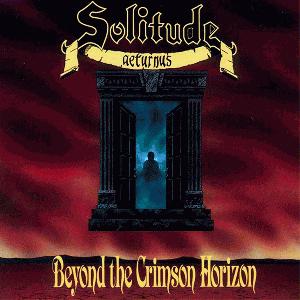
Beyond the Crimson Horizon stands as a landmark 1990s heavy metal offering, rightly lauded for refining S.A.’s signature sound. The album advances the band’s euro-tinged doom template, weaving subtle power metal and thrash hints into their established strengths. It navigates the burden of precedent - sometimes unfairly labeled America’s Candlemass - while asserting a distinct sonic identity. In doing so, it not only sustains momentum from the debut but also redefines a post‑1980s Candlemass lineage within heavy metal.
Solitude’s ascent appeared destined for artistic, if not commercial, prominence. From the outset, their early catalog reveals a string of brilliant records that signal serious creative potential. Similarly with the debut, the vocal work by Rob Lowe is amazing, matched by deft riff-craft and a production that delivers an exemplary, crushing guitar tone, characteristic of traditional epic doom metal. The rhythm section sustains a careful balance, weaving heavy, doom-ostinato foundations with occasional bursts of energy that flirt with progressiveness. Together, these elements craft an album of commendable ambition and enduring artistic vision.
Candlemass’s influence permeates this album, even as power metal inflections surface, underscoring a distinctly Swedish signature. The harmonized riffs and the sense of graceful heaviness announce a deliberate, epic doom character, intensified by Lowe’s majestic vocal delivery. This combination cultivates a subtle mystic quality, as melodic patterns drift away from predictability and into expansive, almost ceremonial atmospherics. While faster sections echo Trouble’s brisk dynamics, they remain tethered by decades of craft, preserving Candlemass’s gravitas while inviting re-imagining. Sections even reveal a tattered thrash edge in tracks like
The Hourglass, where intensity surges through drifting riffs. Drumming becomes more aggressive, verging on extreme metal at pivotal moments, occasionally resembling a muted death-metal partner to
Depths. Overall, the album stands as a nuanced homage that honors foundational doom while showcasing ambition, technical refinement, and a compelling, enduring mood.
A few introductory sections and various bits change things up. Notably, certain “atmospheric” openings - such as those in
It Came Upon One Night,
Beneath the Fading Sun, and
The Final Sin - function more to occupy time than to enhance atmosphere, a perception that invites reconsideration of their purpose within the pieces. Similarly, the title track, an otherwise strong instrumental outro, occupies space without full necessity, even as its opening riff remains compelling. There are a lot of elements here like dynamic pacing, structural innovations, and intricate fills that demand attentive listening. Acoustic guitars are also tastefully integrated, particularly on
Beneath the Fading Sun and
Seeds of the Desolate, while the performers are willing to explore complex, sinuous melodic lines and agile percussion for added substantial depth. Overall, the work demonstrates technical proficiency paired with thoughtful texture, yielding a compelling sonic experience.
Beyond presents a paradox of power and imperfection that captivates as much as it challenges. The overarching grandeur is undeniable; the music often soars on epic, metallic wings, delivering moments of sublime intensity that fans may crave. Yet, this very ascent is tempered by persistent frictions that prevent the work from achieving absolute perfection. Throughout the album, there are passages that, in the realm of epic metal, border on flawless - sharp riffs, melodic depth, and executive guitar work that signals a high craft. However, these strengths are countered by a recurring sense of misalignment. The band frequently struggles to sustain momentum from start to finish, as if a decisive arc is missing; Some tracks open with promising, even electrifying riffs, only to drift into less cohesive terrain, while others rely on a standout solo to rescue an otherwise inert introduction. And some songs border on perfection, but parts of the solos don’t hit the nail quite in the head (check the hauntingly beautiful high note in the second guitar solo on
Plague of Procreation). These sudden structural transitions can render works incomplete, introducing internal inconsistencies. This balancing act matters; for every brilliant moment, a counterbalancing flaw can undermine the overall impeccability, resulting in an album continuously sabotaged from being truly flawless. It’s one thing trying to be progressive, but
writing and most importantly
executing progressive music that sounds convincingly exciting is another, and S. A. sometimes fail to deliver just that. However, this “illness” can, in one way or another, add a subtle nuance: one that underscores the album’s ambition and the band’s willingness to push boundaries, even if the execution occasionally falters.
Another disadvantage of this anomaly is the absence of “hit” songs. Doom metal grapples with a paradox: the absence of conventional “hit” songs sustains its distinct identity, even if it limits broader appeal. While mainstream hooks might broaden reach, they could undermine the genre’s sanctified aura and be deemed sacrilegious by some fans. Consequently, doom metal remains an obscure sub-genre, preserving its character by avoiding mass-appeal saturation. The value of such music lies not in singular anthems (from previous works) but in the cumulative strength of its best passages, with
Mirror of Sorrow exemplifying this principle.
Beyond exists as a culmination of those strengths.
Beyond the Crimson Horizon reveals Solitude's' undeniable ambition, even as it falls short of fully realizing their remarkable potential. The standout tracks -
It Came Upon One Night,
The Hourglass,
Seeds of the Desolate, and
Plague of Procreation - are unequivocal masterpieces, boasting atmosphere, formidable riffs, and inventive musical ideas. The performances, especially from the guitarists and Robert Lowe, elevate these compositions to near perfection; their solos are indispensable, shaping the album’s epic doom identity. Regrettably, the remaining tracks do not quite resonate at the same high level, undermining the collection’s overall cohesion. Yet within the epic doom metal milieu, the record remains a bold, forward-looking statement, notable for material conceived as early as 1988, shortly after Candlemass’ seminal debut. In the broader metal landscape, bands like Solstice, Isole, and Sorcerer have since expanded this subgenre, building on its foundations and steering it into new, adventurous directions.
This work presents an arcane, complex, dungeon-like epic whose structural inhibition makes individual tracks challenging, yet its impact lies in a cohesive, full-listen experience rather than song-centric design. The five Texans craft a distinctly personal, doomy sound rooted in genre conventions, yet it projects a more positive, restrained attitude than many contemporaries. In total,
Beyond remains a compelling document of ambition and artistry, a record that rewards repeated listening as its fearless ideas gradually reveal their true merit. It's an undeniably theatrical and era-defining piece of work, yet it also functions as a blueprint. This collection not only captures its time but also influenced and continues to shape the trajectory of future US doom metal, directly or indirectly.
Recommended tracks:
Seeds of the Desolate
The Final Sin
It Came Upon One Night
The Hourglass
Beneath the Fading Sun
Plague of Procreation