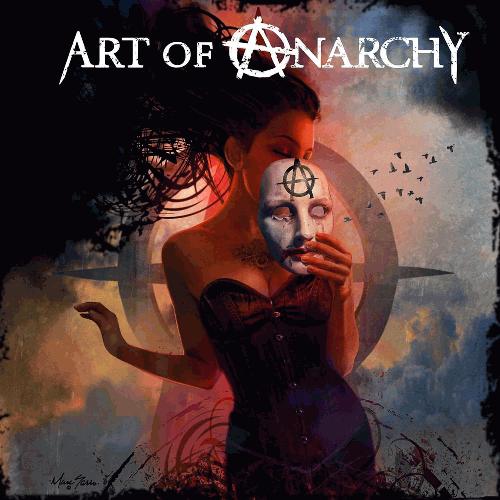
Review Summary: In this case it's more like Attempt at Mediocrity.
In concept, it was all very intriguing: a new band founded by unknown twin brothers Votta (on drums and guitar), together with former
Guns N’ Roses guitarist Ron “Bumblefoot” Thal and current
Disturbed bassist John Moyer. On vocals the ever-talented, but unfortunately past his prime,
Scott Weiland, who needs no special introduction. With these components at hand, we could have easily expected a solid hard rock album in the end of the equation. But no such luck.
For some inexplicable (and clear only to him) reason, Weiland started to deny his involvement with the band before the debut album was released. Even though his vocals were already a part of the LP, and he himself participated in accompanying promotional photoshoots and appeared in a video for the first single, Scott claimed that he just recorded the vocals over stereo tracks sent to him (in exchange for money, of course), but otherwise had nothing to do with Art of Anarchy. Definitely not the most promising beginning for a new band.
In fact, while listening the record, there is a constant feeling that Weiland indeed didn’t want to be in the band. Certainly, the album has its number of interesting moments, but in general, Scott’s vocals on the AoA debut can, without any compunction, be considered his weakest work. Always multi-faceted, versatile, and capable of creating the necessary moods, here the vocalist often sounds insincere and detached, occasionally slipping into undisguised and frank monotony, resembling a lifeless machine (as on
Time Everytime, for example, one of the worst tracks). Also, not all of his choices and decisions tie in well with the music, leading to a sense of discord which some listeners may feel. There are a number of somewhat interesting cuts –
Small Batch Whiskey,
Grand Applause, the first single
Til the Dust Is Gone,
Aqualung – but all in all, Weiland feels out of place here. A while back, quite a few critics and music lovers stated similar observations in relation to the
Velvet Revolver debut, but, in this reviewer’s opinion, such statement is much more valid for this album.
The instrumental components also leave an ambiguous impression. Yes, the performances are all confident and professional, but this is not the point. There is a general feeling that the band is not sure what it wants to sound like. As such, the choices made tend to look like an approach of throwing all the ideas in just to see what sticks and what falls off. Some of the songs seem clearly underdone and unfinished (like the threadbare
Time Everytime), while others lack additional polish and editing. It is difficult to say why Art of Anarchy chose to release the album in such a half-baked state, but it is certain that they do need a leader, or somebody to play that role in the studio.
And what do we have as a result? To be honest, the diagnosis is rather disappointing, though not beyond recovery. Truth be told, the Art of Anarchy debut album is more interesting for all the drama surrounding its release than for its individual musical accomplishments. The primary reason to listen to this LP is the fact that it ended up being the last recording by Scott Weiland – a person of undeniable talent, but one tortured by his inner demons until the very end. As for the rest of the band, their future seems to be hazy and uncertain.