Review Summary: A great work of the early 70’s UK prog scene. A keyboard dominated trio sounding great.
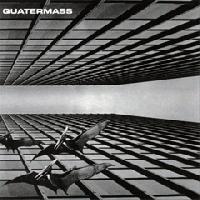
“Quatermass” is the debut studio album of Quatermass that was released in 1970. The line up on the album is Peter Robinson, John Gustafson and Mick Underwood. The album also had the participation of Steve Hammond, String ensemble, Paul Buckmaster and Tony Gilbert.
As many of us know, in the 70’s, the progressive rock was essentially a British phenomenon. As we also know, most of the biggest progressive bands at the time were also British. There were a number of them that had a relatively long career and were able to release an impressive number of albums. Some of them are still active today. But, there were many others that hadn’t that chance, even if their works were still great. Some of those British progressive acts, even if they were great, only released a single album, which is the case of the band I’m going to talk about now, Quatermass.
Quatermass took their name from professor Bernard Quatermass, a fictional scientist who had been the hero of three science fiction serials produced by the BBC Television in the 50’s. Quatermass was founded in London, UK in 1969 and released only one work, at the time. After the release of it, the band was considered as a band of the future and one of the great promises in the field of progressive rock. But, two years later the band broke up due to the poor sales of their eponymous debut work. The band was reformed as Quatermass II between 1994 and 1999. Quatermass only released their second and last album, “Long Road” in 1997. Their eponymous debut is regarded today as a prog classic album.
“Quatermass” is often described as a compact album full of ideas and powerful vocals and complicated instrumental arrangements, enriched by Robinson’s artistic classical pianistic notes, which are present in the various keyboard compositions. The album is very close to reaching perfection and is considered, in our days, as a progressive rock classic. In opposition to the albums released in time, this is an album very well produced. It had to be anyway because otherwise the magic of the album wouldn’t stand out. The music sounds like a more complex and progressive version of Deep Purple. The album is a mix of long and progressive tracks and shorter catchier ones. “Quatermass” is an epic album and a classic full of technical details worth noting for any music connoisseur, especially for prog rock fans. It’s also considered by many specialists in the field as one of the pioneering albums for the formation of progressive metal.
The album opens and ends with two short instrumentals both entitled “Entropy”. Both are organ filled tracks with Moog and Hammond nuances. “Black Sheep Of The Family” has organ salvos combined with a nice catchy and groovy vocal melody. Prog approaches are only available in small doses. It was honored as a cover on Rainbow’s debut album. “Post War Saturday Echo” is a great, emotional and slow track with jazzy and blues approaches stuffed with lots of excellent and progressive Hammond organ playing. It has a powerful spirit of experimentation. “Good Lord Knows” is a relatively short, quite mellow song and it’s stylistically out of keeping with the rest of the album, but I like it. The pseudo classical influences are in further evidence here. “Up On The Ground” as happens with “Black Sheep Of The Family” rocks hard, with thunderous bass and Hammond providing heavy riffs, giving the band an almost Deep Purple meets Emerson Lake 1970. & Palmer, meets Uriah Heep, meets Atomic Rooster, meets The Nice sound. “Gemini” is the last hard rock track on the album. Like with the previous track, it’s an energetic and hyper catchy track, joyous and powerful stomping. It’s an upbeat funky progressive rock song with lots of orgies of Hammond organ and passionate vocals. “Make Up Your Mind” dominates the proceedings with a stellar progressive six minute instrumental section that separates the two shorter lyrical parts. It’s great for any Uriah Heep fan with lead vocals and harmonies that bring to mind David Byron and Ken Hensley. Robinson’s Hammond work pushes to Jon Lord, Vincent Crane and Keith Emerson styles. “Laughing Tackle” is a lengthy instrumental track with pseudo classical flourishes and occasional jazz rock ideas. It shows the members of Quatermass jamming with a string ensemble. The string arrangement gives the music a symphonic touch.
Conclusion: “Quatermass” is a quintessential British progressive rock album destined to remain a cult classic. It can be compared with some other British progressive rock bands at the time, like The Nice, Atomic Rooster, Emerson, Lake & Palmer, Refugee, Deep Purple and Uriah Heep. It also was one of the first albums recorded in the vein of progressive metal. Beautifully packaged with informative liner notes, Quatermass sounds as resounding today as it did in 1970, and upon hearing it, one can only wonder why it was so overlooked during its release. Quatermass should have achieved more than they did. If you’re a lover of early 70’s rock in general, especially of the keyboard orientated progressive rock in the same vein of bands like already mentioned by me, you may like this album. I really guess you won’t regret it.
Music was my first love.
John Miles (Rebel)