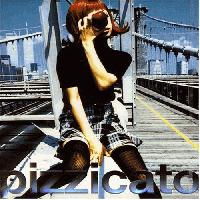
Review Summary: For fans first and curious kitties second.
Overdose might initially come across as something disappointing. It suffers from what I like to call “follow-up syndrome”. After Pizzicato Five reinvigorated Japanese pop music with their cool and groovy albums
This Year’s Girl and
Bossa Nova, they became something like a revolution; they paved a unique path in the pop genre that fused jazz, bossa nova, soul and indie pop into something they could call their own. Those 2 albums are considered defining works for both the band and the shibuya-kei genre, but they certainly didn’t deplete the band’s ideas; the rest of the 90’s saw the creation of albums equally loved by fans, but understandably,
Overdose wasn’t one of them. What’s wrong with it? Nothing really, but when a band releases what’s considered their “defining album”, especially one that defines its own subgenre, the stakes are set pretty high, and lofty expectations push albums like
Overdose to the shadows of its predecessors. And so, as a follow-up, it’s simply overlooked because it wasn’t as new or inventive, but that doesn’t keep it from being a rock-solid album anyway.
As an album that really
isn’t all that new or inventive (in the context of the band’s work), it’s good to know
Overdose is still an album with plenty of awesome individual songs. Much like the band’s career as a whole, the album exhibits great variety while staying faithful to their core sound, but it isn’t afraid to take daring leaps into new territory. Their songs are usually very upbeat and feel like daytime tunes, but a couple songs on
Overdose go for more of a nighttime feel, like “If I Were a Groupie” and “Shopping Bag”, mostly because they’re more laid-back and sleazy-sounding. Electronics are employed on “The Night Is Still Young”, the album’s 11-minute dance epic, but the track is so slow-burning and repetitive that you’ll have a hard time appreciating the band’s otherwise breezy attempt at a late night house song. Still, experimentation is never a forced thing for P5, which makes their sound accessible for those who’re new to their diverse genre. When Pizzicato Five play it safe though, it’s usually just as easy to appreciate as the band’s shots at experimentation. Singles “Happy Sad” and “On the Sunny Side of the Street” are among the group’s best songs, and they keep staples like horns and stylish retro appeal while remaining as soulful and fun as any of their other songs. The ratio of conventional P5 moments to those that try new things is about even on
Overdose.
As a whole album, one of its distinctive qualities includes noticeable Jackson 5 and Stevie Wonder-isms that expand on the band’s soul stylings (paying tribute to Wonder specifically), and that the album itself is themed around the city of New York. The “on the street” feel puts
Overdose in an interesting place, which isn’t surprising since Pizzicato Five are usually very good at executing themes with their music. Instruments are nice and varied throughout, only sounding terrible on one occasion (“Superstar’s” freaky-ass guitars, I don’t care how nifty the solo is later), and Maki Nomiya is still one of the better singers in the shibuya-kei genre, many of which use the squeaky crooning technique; her voice is mature and sophisticated and can travel alongside the band’s instruments wonderfully. One of P5’s best qualities is the sheer stability of their sound, not only genre-forging in its aesthetic but boldly able to stand fully-realized and flexible through all the changes and gambles they make. Their 1994 album certainly maintains this stability, but suffers from a tenuous limb every here and there. Ultimately,
Overdose remains in the shadow of bigger albums like
This Year’s Girl and
Playboy & Playgirl, and while it doesn’t not make sense to have such an affinity, it’s still worthy of a listen and a great album all the way through.