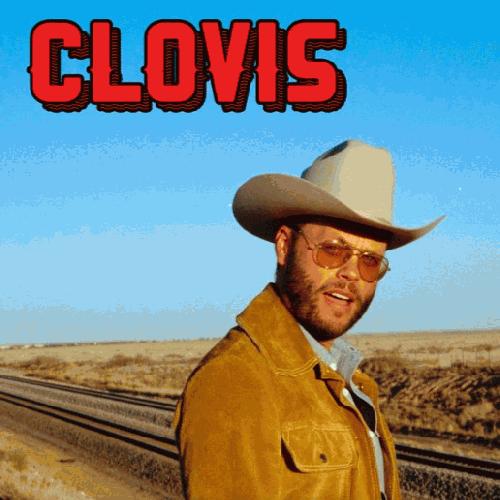
Review Summary: Charley Crockett releases a phenomenal independent country album
In some ways, Charley Crockett truly stands alone in the field of modern country. Less than a month after finishing off what seems to have been a contractual three-album run for Island Records that culminated with the decent but ultimately underwhelming
Age of the Ram, Crockett dropped an independent album,
Clovis, yesterday with no fanfare or forewarning.
Of course, maybe the signs were there. After wiping his Instagram recently, Crockett posted a photo of Marlon Brando in a jail cell reaching for a set of keys, released the album on Spotify and published a short video of himself declaring “You can f-ckin’ drop a record whenever the f-ck you want. And what’s more important to me is dropping all this really good art right now.” It’s the ballsy stuff that outlaw country legends are made of, especially considering Crockett is (allegedly, shoutout Saving Country Music) freshly departed from Island Music. Thankfully the music on
Clovis more than delivers. In fact, this may be the first Crockett album that I’m comfortable bestowing the title of “Classic” on. More on that later though, because we need to talk about how this album appears to have come together.
As the name implies, Crockett’s new album was recorded in the legendary Norman Petty Studios in Clovis, New Mexico where artists like Buddy Holly got their start in the 1950s. But for nearly the past seven decades the studio has served as a museum – quiet, steady and comfortable resting in the glories of its past accomplishments. That is until Crockett’s collaborator and Grammy-winning producer Shooter Jennings (who shares songwriting credits on most tracks here) called them up and pulled some strings. Thus,
Clovis was born before being blasted into the world a mere 25 days after
Age of the Ram was released.
That in itself is an impressive feat, although maybe not the most surprising development considering the tempo at which Crockett has been dropping recent albums (this is the fourth in roughly 13 months). You’d be hard pressed to find among even his most bitter critics any who’d say he’s not one of the hardest working country artists around today.
What’s truly a welcome surprise for me is the absolute quality of the songs on this record. Unlike its major label predecessor,
Clovis has almost no filler and no unnecessary theatrics. It’s just under 55 minutes of all killer with a single spaghetti western-inspired instrumental. The songs here are meaner than most Crockett has released to date, frequently injected with swaggering and driving blues, hints of the 70s inspiration that made
Dollar A Day so damn good and a fleshed out production that feels beefy, retro and warm.
Interestingly there’s a strong showing of folk sounds on this album too. One of the best and most interesting tracks on the record comes by way of
Top Hand which finds Crockett mournfully crooning over Spanish guitars and moody synths. It’s an unexpected but very welcome flair to a strongly blues-country outing. Also included on the album is a fun cover of Johnny Cash’s
Don’t Take Your Guns to Town.
But it’s the lyrical songwriting that really sets this record above the rest of Crockett’s albums, at least in my book. Crockett’s journey to becoming one of the leading lights of modern country was distinctly non-traditional, much to the frustration of his critics who’ve jealously deemed him "Cosplay Crockett." But unlike astroturfed Nashville artists like Gavin Adcock, whose biggest setback in life was a college football knee injury, Crockett secured his stripes drifting coast to coast and even internationally, earning his keep by busking and farming. He came to country by way of hip hop and digging into the blues and American roots music that genre pulled inspiration from. He also launched a career while undergoing a heart surgery. You know, real outlaw sh-t.
Maybe it’s that life experience that's so frequently led Crockett to pen songs about created characters. And while those characters are often great, at times it felt like they could hold him back. This focus on characters came to a head with the Sagebrush Trilogy, culminating with
Age of the Ram. There were certainly moments of brilliance in the Trilogy, especially found on
Dollar A Day which was soaked in retro 70s vibes, but there were flatlines too. Worse yet, towards the end of the trio of albums it felt like Crockett just ran out of steam and lost interest aside from a handful of standout tracks.
That’s why
Clovis is such a breath of fresh air. Found on this record are seemingly the most honest and personal collection of songs Crockett has released to date. Nevermind that some of these song titles are also shared by old Westerns, like
One Eyed Jack (featuring the aforementioned Marlon Brando) or
Last Night at the Alamo, because it’s hard not to hear Crockett singing about his own experience in lines like “He never claimed to be a cowboy, but he sure could sing the songs… He never said he was an outlaw, though at times he was. He wasn’t in it for the money, he only did it for the love.”
Clovis also features some of the strongest instrumental and songwriting performances of Crockett’s career. It feels like an album that’s fully re-energized and then some. Take for instance the sultry blues ramblings on
One Eyed Jack which finds Crockett lamenting unreliable people, the easygoing throwback synths on
Image of a Woman, the barroom banging twang of
Honky Tonk Philosophy or the stomping country rock of
Eagle and the Crow. The lyrics on these songs all feel personal too, like Crockett has dropped the shield of his characters and instead offered the listener an unfiltered peek into his soul. It’s the perfect marriage of his deep well of American musical knowledge and genuine heart.
If this all seems like I’m gushing a bit, it’s because I am. I think that this is the strongest, most mature and most authentic album that Crockett has penned, and that’s saying something considering there’s not a bad album in his ever-growing discography. Some entries are even extremely strong like
Dollar A Day,
The Man From Waco and
Welcome to Hard Times. But despite their strengths, it always felt like there was a film – no matter how thin – between the listener and Crockett’s reality. The genius of
Clovis is found in the lifting of that veil. It’s an album that does everything right, with heart, and one from which I can’t really pick out any faults. The result is a stunning independent country album that I believe is destined to sit among the genre’s heavyweights.