Review Summary: The Force of Habit of the Dukes era.
Dear reader,
Here we go again with Exodus' rollercoaster.
When Exodus announced the return of Rob Dukes, my reaction was rather lukewarm (besides the inevitable "again!?". But not because I dislike him as a vocalist. In fact, I have nothing against him (but nothing particularly in favor of him either).
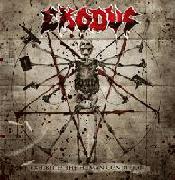
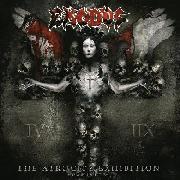
The reason is that, looking back, there has always been something about the Dukes era that simply never clicked with me. I recognize the quality of albums such as Shovel Headed Kill Machine, The Atrocity Exhibition... Exhibit A, and Exhibit B: The Human Condition, but I rarely feel compelled to revisit them. Ultimately, the Dukes era has always struck me as technically impeccable, yet emotionally distant.
It also doesn't help that I'm firmly Team Zetro. Always have been. To me, Steve Souza's voice is just as tied to the identity of Exodus as Gary Holt's riffs. That said, if the alternative was another album where Zetro sounded as uninspired as he did on Persona Non Grata, then perhaps the discussion about who occupies the microphone is less important than it seems. Dukes is good here. Very good, actually. The problem is not the vocal performance.
If there is an obvious comparison to be made within the Exodus catalog, it is Force of Habit. Not only because of the willingness to experiment, but because of the very pacing of the songs. Much of the album trades frantic speed for more controlled tempos, more pronounced grooves, and less immediate song structures.
And that, in itself, is neither good nor bad. Everything depends on how well those ideas are executed, right?
On Goliath, that execution works well in a few moments. But most of the time, I'm left with the feeling that something is missing. The production is excellent, the musicianship is technically flawless, and Dukes delivers a highly competent performance, yet the songwriting often fails to transform all that technical quality into truly memorable moments.
And don't get me wrong when I say the album reminds me of Force of Habit. "Hostis Humani Generis" and "Beyond the Event Horizon" are thrash metal to the core. The entire recipe is there: heaviness, speed, and aggressive vocals. Check, check, and check again. They're solid songs. Not amazing, but perfectly fine.
So what's the problem?
Let's start from the beginning to answer that question.
"3111" was the first single released, and it ultimately served as a yellow warning light for what was to come. As the lead single, it carried the responsibility of introducing the new album to the public, and let's be honest: bands usually choose what they consider their strongest material for that role. The problem is that "3111" simply doesn't impress. It's not a bad song, but it lacks that unforgettable riff, that killer chorus, or that standout moment capable of generating the excitement you'd expect from the calling card of a new Exodus album (or any band as a matter of fact).
The title track deserves special mention as well (though not necessarily for the right reasons). The idea behind "Goliath" is excellent. Here we have a slower, heavier, and more atmospheric Exodus. That could have been fantastic, but it ultimately isn't. The problem is that the execution doesn't match the ambition. The song sooo slow..., because of that, it feels like it drags on forever. It seems like a car trying to accelerate in first gear: the power is there, but it's never fully unleashed. It's practically Exodus in doom metal mode. Some listeners will hear this as bold experimentation; I hear mainly a missed opportunity. And I seriously doubt it's going to work live.
But not everything is lost, dear reader. The sequence formed by "The Changing Me" and "Promise You This" contains much of the album's personality and helps explain why so many people have compared it to Force of Habit.
"The Changing Me" is perhaps the song that best summarizes the album's overall approach. Instead of relying solely on speed, the band focuses on dynamics, atmosphere, and gradual development, creating a track that departs significantly from the traditional Exodus formula. It's a more mature and less immediate approach, but one that rewards listeners willing to give it time.
"Promise You This" follows a similar path. There's plenty of heaviness, of course, but it comes more from the tension in the riffs and the song's progression than from sheer sonic aggression.
"Violence Works," meanwhile, stands out because of its breakdowns. It's a good moment of the album, not because it's revolutionary, but because it delivers exactly what many of the other songs merely promise. There's aggression, heaviness, groove, and a sense of immediate impact that unfortunately appears far less often than it should throughout Goliath.
Unfortunately, after that, the album has little else of real interest left to offer. The remaining tracks suffer from a recurring problem: none of them are bad, but almost all of them feel as though they exist merely to fill the space between the album's few genuinely inspired moments. They are competent songs, well produced and performed by excellent musicians. But competence alone is not enough. The riffs don't linger in your head once the album is over. The songs lack the choruses, passages, and memorable moments that would justify returning to them weeks or months later. In other words: filler. A lot of fillers.
Goliath leaves me more frustrated than disappointed. The production is excellent, Rob Dukes delivers what is probably one of his best performances with Exodus, and the band shows a genuine willingness to experiment and step outside its comfort zone. The problem is that good intentions do not write great songs.
Perhaps fans of the Dukes era will find exactly what they were hoping for here.
Well, I didn't.