Review Summary: A blazing, thoughtful return for a band that's been away for so long. Humaning is a culmination of humble beginnings and exciting new pastures.
It wouldn’t be an exaggeration to say Earshot have had a troubled history. Not in the generic sense where sex, drugs and rock ‘n’ roll played a prominent role in their untimely implosion, but in a much less cliché way that saw a culmination of tribulations besetting them. A thousand little cuts that bled out their momentum and subsequently caused a brace of lengthy hiatuses as a result. Indeed, album-to-album, it has been 17 years since the band has produced a new album. After the success of their sophomore album in 2004 the band was, surprisingly, dropped from Warner Records, squashing any opportunity to capitalise on the trajectory
Two afforded them. What followed was a tumultuous relationship with their next record label, which not only affected the quality of
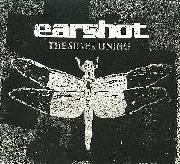
The Silver Lining stylistically but the promotional cycle for it as well. Couple that with a few line-up changes, creative conflicts, and a dwindling lack of motivation, and things began to fizzle out. In 2015 the band decided to release the
Aftermath EP – a collection of tracks on the cutting room floor of previous records – but on the whole, they’ve remained largely inactive for the better part of a decade. It wasn’t until around 2018/19 Wil Martin decided to form a new line-up and get things moving again, bringing in ex-Breaking Benjamin guitarist Aaron Fink, as well as John Novak on bass and Mike Sylvia on drums. With a new line-up firmly in place, during the Covid period Earshot released a couple of singles to get the ball rolling, however, it’s in 2025 where we see the band letting loose and unleashing their first fully-fledged album in nearly two decades.
For anyone familiar with the band’s third outing, they’ll know it’s a departure from the two albums that precede it – a baby out with the bathwater job that focused more on bluesy riffs with a hard-rock flavour, and less on Earshot’s fundamental alt-rock strengths. While
The Silver Lining still presents some great moments and is far from being a bad album (I prefer it to
Letting Go), it ultimately gets a little lost in its own experiment. What does this have to do with the band’s fourth LP? Well, despite the 17-year gap,
Humaning feels more like the true successor to
Two in a lot of ways: it’s a mature progression that retains the
Two sound, but it explores other terrain in a much more organic way. The flow of the record feels intentionally pieced together to ease you into its newer ideas. The first third of the record is an unapologetic barrage of noughties-tinged alt-rock riff bangers that send you right back to 2004. Album opener “What are You Waiting For?” and “I’m OK” have driving, fuzzed-out bouncy riffs and gargantuan choruses that pay universal homage to their roots, while “Where Were You?” and “Out of My Hands” pushes the pummelling sound into a heavy but atmospheric direction. Frankly, this 4-track combo is nothing short of excellent and shows the band firing on all cylinders.
After “I’m OK” the next phase of the record shifts into less abrasive territories and I’ll be honest, the quality wavers slightly. It’s not that the next three songs are bad or the ideas in them don’t work, it’s more on Wil’s melody choices preventing the songs from popping in the same way the other tracks do. “Higher” is the weakest track on
Humaning, kicking off with a washy post-punk guitar passage that transitions into an uplifting chorus, however Wil’s melodies don’t land with the music like they should. Vocally he sounds amazing, really showcasing his broad abilities, but there’s a tonal clash that makes the chorus in particular feel a little jarring and flat overall. “Heart & Chain” suffers from similar issues during the verses, but the excellent guitar solo and soaring earworm chorus from Wil makes the track far more palatable and memorable, while the solemn
‘It’s nice to know you’ line and cathartic solo in “Mistakes I Always Make” combine to make it the strongest of the three tracks. Things start to pick back up from here though. The last four tracks show a pragmatic balance between their heavier sensibilities and the sombre rock mood they were going for on the previous three tracks. To the band’s credit, they find the sweet spot and explore some genuinely great ideas. The longest track “Like There’s No Tomorrow” is an album favourite – it’s a fantastic balance between the abrasive and the atmospheric, building on this weighty vibe while still being heavy, and it has one of the strongest choruses on the entire record. Couple that with the chugging monsters “Unlost” and “Worlds Away”, as well as the ethereal “Any Other Way”, and the album comes to a satisfyingly great conclusion.
Outside of the compositional quality, one of the biggest positives I can give
Humaning is that the production sounds amazing. One of the eminent problems I’ve had with modern rock acts of this ilk in the last decade or so is the move to the ubiquitous, overproduced digital sound that strips all the distinctive qualities away from a band’s sound. Thankfully,
Humaning is chock full of that rich, beautiful analogue sound we took for granted twenty years ago. Novak’s bass tone is really full and aggressive, driving the songs and giving off some really cool grooves on tracks like “Any Other Way”, “Mistakes I Always Make” and “Heart & Chain”, while Sylvia’s playing is progressive and extremely effective on the likes of “Where Were You?”. Predictably, Aaron kills it throughout the entire album;
Humaning is wrought with an arsenal of atmospheric effects and multifaceted layers to add complexity and dynamic, but his playing overall is disparate and accommodative, with, arguably, some of his best guitar solos put to record (see album closer “Unlost”). The decision to bring back
Two’s producer Johnny K was a wise one too, because the sound here has
that Earshot factor to it. Johnny does a good job of balancing the quintessential elements required, while letting the band explore other pastures, within reason. The end result is a focused alt-rock experience that manages to maintain the Earshot sound, while bending the parameters just enough to make it fresh and modern sounding. The formula overall has a couple minor flaws, sure, but it is, nevertheless, a roaring return for a band that’s been away for so long – one that’s returning to a very different landscape no less. And that’s one of the most endearing qualities about
Humaning: in the best possible way, this sounds like a blast from the past. Earshot are like a frozen Steve Rogers, thawing themselves into a completely different world, yet it’s Earshot’s talents and reverence for traditional methods that make them stand out from their peers in 2025.
Humaning’s presentation and style of writing will certainly appeal to old dogs like myself who adore and have some kind of nostalgic bias towards this old style of rock, but it also affords a whole new generation of fans the ability to experience this style of music in its rawest – and in my opinion best – form. And that’s a thought which fills me with felicity.
Overall,
Humaning has a couple of minor indelible blemishes, but it’s a very worthwhile and meaningful return for Earshot. The three-act narrative dampens ever-so-slightly during the second act, relying a little too heavily on moody, mid-tempo-d numbers over unfettered Earshot riffage, but the trade-off is worth it when you hear the full gamut on display and the payoff in the final act of the album where it successfully combines all the emotional hues into one satisfying conclusion. Ultimately the album is best when it’s coming at you guns blazing, but there isn’t a bad song on here, just some that work more effectively than others.
Humaning is a pretty deep experience as well, in that there’s a lot to unearth within each track. As I alluded to earlier with Fink’s laboratory of sounds, every song is jam-packed with subtle layers and things going on that you’ll easily miss on early playthroughs. I’ve been playing this record for months now and its replay value hasn’t diminished an iota. Even with the slightly weaker tracks, the pacing is so slick and efficiently pieced together – the songs themselves so easy to sit through – it’s constantly calling you back to play it again. Lyrically, as the album title suggests, the LP touches on deep human emotions – from relationships, break ups, introspection, healing, overcoming demons and learning to move forward and rebuilding a stronger you from these tribulations. It’s all good stuff and synergises nicely with the tone and atmosphere this album so prominently evokes.
With all that in mind, is
Humaning the best Earshot album to date? It’s a close one, but I’d say so, yeah. Up until now,
Two has always been my favourite record by them, but it’s hard to overlook the level of care that went into this one.
Humaning doesn’t quite hit the stratospheric highs of “Wait”, “Again” or “Someone”, but its consistency makes it the stronger release. Earshot’s fourth album provides a steadfast release of endorphins that'll see you right through to the end of the album with a smile, rather than volatile songwriting that provides intense satisfaction one minute and soporific boredom the next. This is easily the most well-rounded, intricate and thoughtful album put out by the band hitherto, with every member stepping up to deliver their A game. Martin in particular sounds incredible on this – there’s a vitality present in his voice that’s indistinguishable from the Wil Martin of twenty years ago, and his impressive talents are on full display here. If you’re a long-time Earshot fan this will deliver the goods in spades, but if you’ve never heard of the band before today this is an obvious starting point.
So, to wrap up my internal ramblings on this great release;
Humaning is the best alt-rock album of 2025, thus far, and shouldn’t be missed by anyone who likes Chevelle, Seether, Breaking Benjamin, Daughtry and bands of this ilk. Earshot’s comeback is an impressive display on how to write this kind of music with some kind of humanity to it as, like I alluded to earlier, this style of music has become rather sterile and soulless over the last decade or so. Regardless of all that though, it’s just good to see the band back in action after all these years. With a rock-solid line up and an excellent new album under their belts, there’s a very promising future ahead of them, and I can’t wait to see where they go from here.