Review Summary: An ambient sun death of the noise
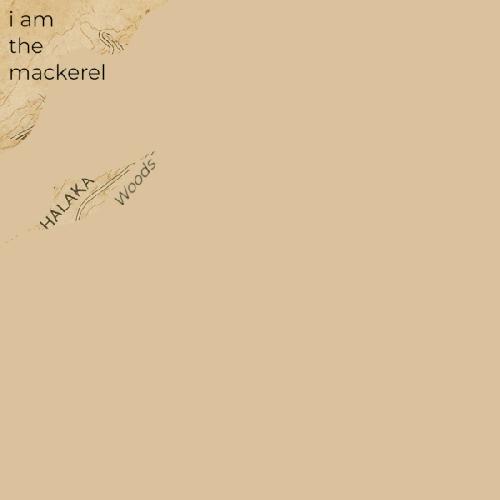
Halaka Woods is an immersive digestion of impermanence and beauty in their most ruinous glimmer, dwelling in liminal space where folk echoes devolve into static, where nature and mechanica conflate in spectral collapse. Across its seven tracks, electro-acoustic collective i am the mackerel wield noise not just as distortion but as a carrier of decay. Across each warble, buzz, and cascade of feedback, they emit a testament to mortality and the fading of all things. They find something profound in slow abrasion, in shreds of melody lying beneath layers of crackle, in dying embers of clarity within sustained feedback. Noise here isn't chaos, but the architecture of passing.
I am transported.
Halaka Woods is full of delights and album highlights. “Marliand Junge” is like hearing a folk song that soundtracked your infancy from a radio just out of reach being eaten by bees who have hived inside that same radio. The wispy melody is drenched in feedback, familiar and uncanny like childhood recollections eroding in the acid honey of memory. Later, "Anomaly Mtn” takes a twangy melody, perhaps the album's brightest, and tableflips it into a sea of feedback, strings of doom, and eventually death crackle. It is the funeral of Philip Glass as attended by blind mice. Its dissonance vibrates, lives and dies—with decay not as a passive backstory but as a grotesque ritual, a carcass being unmannerly unpacked by morbid sonics.
If "Anomaly Mtn" is a funeral procession, "Hux" is the lonely afternoon hours of the day after the burial. Sunlight passes through glass and slowly dies in this piece, a masterpiece of slow refraction and decaying heat that made me open all the windows in my house just to see if it would still hit as hard (it did). It is a piece obsessed with the fade: the stretching out of light, the erosion of warmth, and the fragility of presence. Where the other tracks unfold like chapters in a dream-logbook of entropy, "Hux"'s entropy plays out in the stillness of resonance.
Recorded in a digital realm, yet haunted by analog ghosts,
Halaka Woods unfolds like an elegy for things lost: voices, trees, voices in trees, maps that never told you the way. The sound design is unflinching, yet poetic, and its droning ambience and brittle textures drift through between abandonment and revelation. The “about” text on the Bandcamp page reads like recursive folklore:
Somehow it ended up on a map… the way the map ended up on the desk… the way the leaves disappeared after fall… the way the fall came again, and again, and again. This may be a meditation on circular dissolution, but then why is the album so easy to experience again and again?