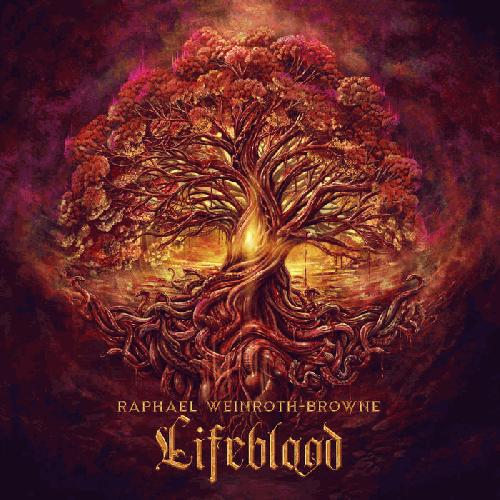
Review Summary: A heavy contender for Album of the Year, and the most ambitious album of Weinroth-Browne's career.
When I first discovered Musk Ox back in 2021, when they were releasing their phenomenal third-outing,
Inheritance, I was legitimately blown away by what this trio from Ottawa, Ontario, Canada was producing. It was chamber folk at a pinnacle grade – poignant and evocative compositions that burrowed their way into your soul when you listened to them. It’s a calibre of songwriting very few manage to attain, and they are a band that truly deserve your attention if you haven’t listened to them before today. However, what makes Musk Ox a particularly unique case is that, while the band is certainly the sum of its parts, each member is incredibly gifted, to the point of absurdity. Nathanael Larochette’s body of work is simply astounding and encompasses a disparate collection of styles and genres, from his interesting solo works right through to his band The Night Watch – all delivered with the same level of unwavering quality to it. Indeed, a man with these kinds of credentials would be sufficient enough for any band, and yet, Raphael Weinroth-Browne brings, in equal measure, an unbridled and influentially raw talent to the table of Musk Ox, as well as his extraordinary solo works. The distinction between these two personalities is apparent though, as, while Nathanael furtively slides through the door into your soul, Raphael’s modus operandi feels more accurately described as a SWAT team raid, blowing the hinges off the door and authoritatively electrifying you from the opening seconds of any song he creates. Raphael’s style of music is so inimitable, ostentatious and colourfully delectable, I’d put it out there by saying he’s one of the most astute, lateral thinking musicians active today. His ability to hypnotise you is on the level of Swans’
The Seer – an album that spends several minutes putting you in the pocket of a whirling vortex of repetitious loops that build to a mystifying crescendo. Yet, while the method is the same for both acts, Raphael manages to do it in half the time and twice as effectively.
2021’s
Worlds Within Live was such an emotional ride that, for the first time in my life, had me thinking the live version was better than the studio recording. Raphael managed to unlock even more potential from these viscerally rich and esoteric compositions, making it feel like a fresh experience all over again. Nevertheless, for
Worlds Within as a whole, the project is a gorgeous, poignant peregrination that has you floating down an ethereal stream, with so many great moments to experience throughout the journey. The record’s pace is slow and sombre, but the emotional mileage you get out of each track is superlative and steadfast, keeping you completely engaged from start to finish. In short,
Worlds Within is held in very high regard and with it, a lot of demand for a new album. Well, after five long years, we finally get to experience a brand-new chapter in Weinroth-Browne’s musical voyage, and frankly, it was worth waiting half a decade to experience it.
The short summary is that
Lifeblood is the logical step forward: it improves the formula, tightens up the loose ends, and delivers the most comprehensive Raphael Weinroth-Browne experience hitherto. It is grander in scale, more complex, and it draws influences from places you wouldn’t expect from a cello album. The first half of the record is a brazen, full-frontal attack on the senses, using Middle-Eastern scales and gargantuan metal-styled breakdowns that would make any metalhead bow their head in respect.
Lifeblood is a much more intricate and varied experience that builds more layers and flavours atop a pre-existing and lush foundation. The flow of the LP is buttery smooth and the narrative underpinning it has you exploring many enigmatic vistas in a timely manner: from the scintillating, baking heat and coarse desert sands, to the damp flora and fauna of a flourishing forest,
Lifeblood spends a decent amount of time in both areas and explores the subtle nuances of each soundscape before moving onto the ethereal final stage of the record. You can tell it’s been planned out with fastidious care, never more apparent than in the album’s pacing. For all the enjoyment you get out of the rich Middle Eastern flavours of “Lifeblood”, “Possession” and “Ophidian”, by the time you get to the end of the third track, you’re over twenty minutes into the record and just starting to get a little fatigued with the style. I think Weinroth-Browne was fully aware of this and prudently introduced the palate-cleansing intermission “Pyre”, which segues into a more traditional sounding Weinroth-Browne soundscape. The composition itself doesn’t feel capricious either – the “Lifeblood”, “Possession” and “Ophidian” journey feels satisfying and has a satisfying resolve that allows “Pyre” to gently guide you down the next rabbit hole and into a completely different area. It’s all masterclass stuff.
The tracks that come after “Ophidian” aren’t as stark or as experimental, but they do refine Weinroth-Browne’s signature style with unrelenting intensity and precision. “Labyrinthine” is an apt title for what is the most intricate and multi-faceted track on
Lifeblood, with winding structures and twisting passages, while the ferocious “Nethereal” sees our titular virtuoso flexing his muscles and showcasing his impressive abilities on the cello at rapid speeds. This is all progressed and finely tuned until we get to the gorgeous album closer “The Glimmering”, which shimmers and fades out perfectly for the closing seconds of the album, solidifying Raphael Weinroth-Browne as a contemporary powerhouse. Overall, it’s fantastic stuff that pays homage to
Worlds Within, utilising the groundwork that record left behind, and with that reverence
Lifeblood manages to evolve Raphael as a musician, allowing him to ascend to the next level in his musical journey. Simply put,
Lifeblood is a staggering album. The profound importance music has had on Raphael Weinroth-Browne’s life is apparent, and that passion oozes out of every track here, but by channeling that talent and nous, he’s managed to effortlessly combine all of his musical passions into one record.
Lifeblood is Raphael’s gift to not only music lovers, but to music itself.