Review Summary: balmy
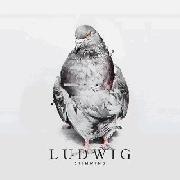
You’d be forgiven if at this point you have an inkling that Martin Stimming may have a thing for pigeons.
Friedrich will be the third time the artist has featured the bird in his album’s covers because to Stimming, the normally invisible bird serves as a reminder to pay attention to life’s more unobtrusive realities. For those who are open to them, it’s in these spaces where new worlds open up and some really interesting things lie. This granular perspective informs Stimming’s more heady approach to deep house where, as he puts it,
”For every track I do, I’m looking for the organic emotion within the computational machinery”. After the brilliance that was
Alpe Lusia, Stimming started exerting even more control over his sound, crafting in
Ludwig, and to a lesser extent
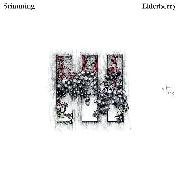
Elderberry, works that relied less on tickling your lizard brain and more on a controlled cacophony of textures, lenses, and space to create intricate melodies that required a bit more of intentional listening to fully appreciate.
Friedrich in contrast sees Stimming relaxed. By loosening the grip on the reigns of his technical ability and allowing himself to intuit his feelings, the artist’s deep house roots are more prevalent than ever. So, is Stimming back? Or did he ever leave?
Yes…. or no, or both. Stimming has always written with themes in mind, and for a few years made a conscious effort to express them without the pulsing beats of his early work.
Friedrich continues this thematic exploration while allowing the listener to feel the music both in their chest as well as their heads. After the ethereal opener “Promise” teases the album’s focus on guest vocals, it’s the next two tracks “Sugar and Lemon” and “Lemondrop” that bring the welcome bop-ability back to Stimming’s work. Namely, the bass is back, and it is
warm. Whereas
Alpe Lusia relied (and succeeded) on inducing its fever-dream atmosphere with long songs driven by the tried-and-true rolling deep house tempos and rhythms,
Friedrich is not
Alpe Lusia 2.0 and takes a different approach to songwriting. Throughout
Friedrich, the hum of the underlying bass serves as the hook and reverberates wonderfully against the myriad of other instrumentation stitching together the tracks. The expertise in which Stimming weaves his dense melodies of plucks, whirrs, buzzes, and drips with the album’s diverse approach to its rhythmic makeup gives
Friedrich a different feel from previous albums without sounding alien. “Pulsar 144”, the album’s most straightforward song, has the cadence of a Flylo track with a tangible rumble that both soothes and sucks you in. “Keys Don’t Match” showcases more thunderous bass in the album and serves as one of the frequent collaborations with Dominique Fricot. These moments allow Stimming to dial the energy down and gives the album a certain James Blake vibe (for better or worse) that adds to the album’s hypnotic allure. It's interesting that something as dense as
Friedrich could be born of an idea so simple as the unassuming nature of a common bird. Just don’t mistake dense for histrionic, you can hear the intention and feel the reason for each note in
Friedrich. And as interesting as the experiments that
Ludwig and
Elderberry were, it’s nice to see Stimming give in to his instincts and produce a product that fully envelopes like this again.