Review Summary: Don't make me resurrect up in this
Like its late muse, Lupe Fiasco’s arresting
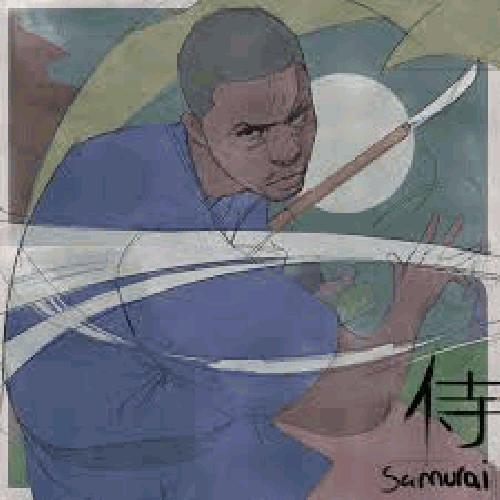
Samurai is lean, jazzy, vulnerable, and wary of the spotlight at all turns, while simultaneously clamoring for it. Lupe has pulled no punches about the album’s conceptual framework, a vibrant, elegiac tribute to singer and cultural icon Amy Winehouse that reimagines her as a roaming ronin slowly being eaten by the elements, a star that shines brighter than any other in its galaxy, an indicator that it is only coming closer to being snuffed out with each passing moment. Listeners progressing through the smoky, dimly lit labyrinth of
Samurai will bear witness to this lyrically captivating juxtaposition as Lupe spits about his titular “samurai” bringing water to entire forests with her bars, an undeniable musical power that is nothing compared to the strength of her own
thanatos. This incomparable, unbeatable, inscrutable genius describes herself as her “own masochist” and primed to “slash [her] wrist with a poem” over the jaw-dropping beat switch that concludes “Palaces”, just one of many instances throughout the record where one of the most gifted MCs our time densely weaves an emotionally dichotomous web of our protagonist’s palpable brilliance and inevitable self-destruction.
The cluster of overcast beats that has been assembled for Lupe to spit over sets the tone of
Samurai from the jump. Its previously released title track is impressively able to capture the spirit of the best in the world at death’s door, its earworm of a lead line somehow blurring the lines between a triumphant battle entry and a funereal bagpipe march. The aforementioned “Palaces” spends its first two minutes wading through the murk of a downtempo piano dirge before ascending to a blustery spiritual plane, while the more spry examples of “Mumble Rap” and “No. 1 Headband” blend lively drum loops, scat singing, and infectious brass with spooky and foreboding progressions that seem to signal the beginning of the end. Lupe himself expertly toes the line between flexing and lamentation throughout
Samurai’s runtime, dexterously weaving alliterations, allusions, and outright confrontational proclamations of his character’s (or perhaps his own) greatness alongside her cries for help. Any track on
Samurai may feasibly be cited as a shining example of Lupe Fiasco’s lyrical virtuosity, but for the most salient examples, see the stunning second and third verses of “Mumble Rap” or the claustrophobic outro of “Bigfoot”, whose roots may have initially been fed in the rapper’s own psyche through his awareness of the horror of being imprisoned by the music industry.
The bulk of
Samurai’s impact does not lie in any one aspect of its thematic atmosphere, whether it be the breezy jazz club and lounge beats that define the record’s instrumentals, the rapper’s intricately nested wordplay that unveils stacking layers of meaning with each effort to untangle it, his frankly impressive North London affectation that he turns to on occasion, or the parallels he manages to draw between the monstrous industry’s role in Winehouse’s decline in health and his horrific experience with Atlantic Records. A well thought-out and carefully handled concept is commendable in and of itself, but it is never enough to magically transform a subpar musical product into a worthwhile one, so thank God
Samurai is Lupe Fiasco’s best collection of work in nearly a decade, independent of its rhetorical aims. The fact that the record’s overarching narrative is so fully realized and tastefully executed only serves to bolster its effect on listeners, giving rise to a brief, yet satisfying lineup of jazz-tinged jams whose layers can be progressively peeled back to reveal further artistry and finesse.