Review Summary: Uriah Heep’s Heaven & Hell?
For whatever reason, I always find parallels in the trajectories of Uriah Heep and Black Sabbath. The timelines aren’t exactly one to one but they both experienced their share of lineup shifts over the years, sometimes sharing members and making for other fun six degrees games, that resulted in different arcs of their stories. Maybe it’s hyperbolic but it feels fair to say that there’s an alternate universe where the Byron era gets talked about the way we do Sabbath with Ozzy.
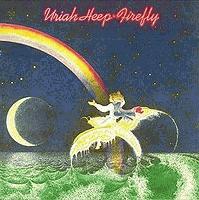
In this sense, 1977’s Firefly seems poised to be the band’s Heaven & Hell with John Lawton of Lucifer’s Friend riding in on a white stallion as their Ronnie James Dio. While Heep’s proggy hard rock makes the actual music closer to the Blackmore side of the spectrum than what Iommi would riff out three years later (I mean, there’s a literal rainbow on the cover), Lawton proves himself to be a strong replacement. He boasts a similarly broad range, not quite tapping into Byron’s signature flamboyance but instead building on a subtly huskier presence that proves to be commanding in its own right.
It rubs off on the rest of the band as well, bringing more muscle to the performances and refocused songwriting. There are moments directly aiming to capture the band’s old dynamic mysticism with “Wise Man” and the closing title track, the former essentially being a repeat of “The Wizard,” but feel endearing enough in themselves. I also have fun with the spacey and driving flair of the opening “The Hanging Tree,” the beloved mix of vocal climbs set to high-energy shuffles on “Who Needs Me” and “Do You Know,” and the somber funk vibes of “Rollin’ On.”
Uriah Heep was likely feeling more out of step the further the seventies went along, but Firefly sees a new phase in their career executed with success. It feels like a proper successor to Sweet Freedom, hitting that album’s energy with a new vigor while doing justice to those fantastical auras of yore. It may not be a huge genre game changer, but it’s certainly in the conversation of Uriah Heep’s top efforts.