Review Summary: A great debut of a typical trio of the 70’s in the same vein of ELP.
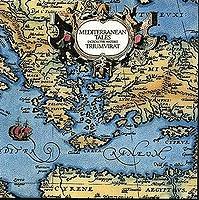
“Mediterranean Tales (Across The Waters)” is the debut studio album of Triumvirat that was released in 1972. The line up on the album is Jürgen Fritz, Hans Pape and Hans Bathelt.
Triumvirat was a German progressive rock band that was formed in 1969 in Cologne, Germany. Triumvirat was initially a classical based trio where founding members were Hans-Jürgen (later simply Jürgen) Fritz, Hans Bathelt and Werner “Dick” Frangenberg. Bathelt was the drummer/lyricist, Frangenberg the bassist, and Fritz the keyboardist. Triumvirat was strongly influenced by The Nice. In fact, they played some of their songs, like “Rondo”. Being fans of The Nice, they loved when Emerson, Lake And Palmer got together. Frangenberg left the group and was replaced by Hans Pape in 1970. With Pape injecting some more life on the vocals and the bass, Triumvirat soon began to experiment with studio recordings. The result of that was a smart classically adapted debut album, “Mediterranean Tales (Across The Waters)”.
“Mediterranean Tales” was a very strong debut, even if the vocals and production didn’t quite match the quality standard of their following albums, “Illusions On A Double Dimple” and “Spartacus”. Despite the resemblances with The Nice and Emerson, Lake And Palmer, there are also many strong influences of classical music with the influence of many classical composers. Predominantly built on the heavy sound of the organ, the trio right away was able to create this unprecedented debut in just three days. The album was a strong precursor of things to come for this prog rock band. The album is an avalanche filled with improvisations. This first effort from the band is a keyboard lover’s dream, with Jurgen Fritz’ Hammond organ, Moog, electric piano, various synths and grand piano out in full force throughout. The songs are led by Jurgen Fritz and his organ, but Hans Pape’s bass and Hans Bathelt’s accurate beats also shine.
“Mediterranean Tales (Across The Waters)” has four tracks, the first track filling in the entire side one of the album and three tracks on its side two. The first track “Across The Waters” is divided into six parts: “Overture”, “Taxident”, “Mind Tripper”, “5 O’Clock Tea”, “Satan’s Breakfast” and “Underture”. “Overture” and “Underture” were two pieces originally composed by Wolfgang Amadeus Mozart and arranged by Jürgen Fritz. This track is a great start for the album, with sixteen minutes of a multi-part epic piece influenced by several classical influences that go from the Baroque to the Romantic style, including the two small pieces signed by one of the masters of classical music, Mozart. With this strong debut suite, Fritz convinces as a keyboard virtuoso bringing to this energetic game the addition of rocking driving ideas with classical elements, with complex rhythms, sweeping keyboard runs and constantly changing chord progressions.
Side two begins with “Eleven Kids”, a very good song with the instrumental part with plenty of diversity, harmony and beauty. It has a classical good keyboard work supported by powerful bass and drums. The main problem is the vocals with the strong German accent on the vocals, which isn’t a great thing. “E Minor 5/9 Minor/5” is a very good and seductive instrumental with some exploratory keyboard work, which curiously some keyboard parts remind me of Peter Bardens of Camel. It’s probably the track that reminds me more of The Nice and Emerson, Lake And Palmer too. “Broken Mirror” is also a great song divided into distinct parts. The first part shows their classical sound with its very complex structure. The second part is a jazz fusion section, indicating the possible way that Triumvirat could follow in the near future. It also showcases the style of Fritz’s touch on the piano, highlighting great work. This is a great closer.
My CD version is the remastered edition of 2002 and has four bonus tracks. “Be Home For Tea” is an edition of the fourth part “5 O’Clock Tea” of the opening track. “Broken Mirror” is an edited version of the original track. “Ride In The Night” and “Sing Me A Song” are two new songs that didn’t appear on the original vinyl version. About these tracks, the first two are weaker versions than the originals and the other two didn’t bring anything really interesting to the album.
Conclusion: Triumvirat is a great band and despite their clear influences from Emerson, Lake And Palmer, I never saw them as an Emerson, Lake And Palmer’s clone. It’s true there are influences and similarities between both bands, but there are also some big differences too. I think “Mediterranean Tales (Across The Waters)” is a good example of that. Despite the band having declared they were huge fans of The Nice too, I think their arrangements and lyrics are unique, putting them away from that band too. Triumvirat deserves more recognition than they’ve got until now. “Mediterranean Tales (Across The Waters)” is an excellent debut album from this great German symphonic progressive rock band. “Mediterranean Tales (Across The Waters)” represents the beginning of their musical proposal and soon, other better things would come. I’m talking about “Illusions On A Double Dimple” and “Spartacus”, two really great masterpieces.
Music was my first love.
John Miles (Rebel)