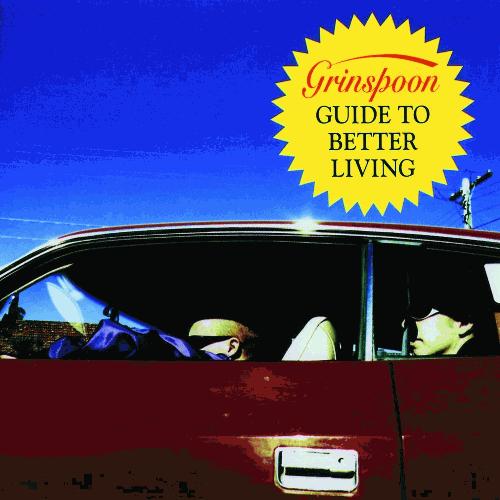
Review Summary: Well, my life didn’t change for the better, but I was intrigued nevertheless
By the time of their full-fledged debut release in 1997, the young and ambitious guys from Grinspoon had already pumped out two EPs – their self-titled debut and
Little Bottle Cozy – and were gradually gaining traction in the alternative scene. By then, they already had a couple of local hits under their belt, namely
Sickfest (re-recorded for the debut – a really nice track) and
More Than You Are, so it would be a lie to say
Guide to Better Living went unnoticed. On the contrary, a few eyes were already on the young band.
Before we dig into the album itself, however, there is one more fact worth mentioning. Just like their Australian peers in
Silverchair (even though Grinspoon started a few years earlier, though that’s unimportant), the members of Grinspoon were around 18 years old when the band formed. And such circumstances were bound to impact the band’s sound in one way or another.
Do not think I am referring to a lack of musical expertise. I have not a single doubt about their instrumental competence, and
Guide to Better Living proves this brilliantly. The guitars deliver crushing, energetic riffs and licks, the bass weaves a palpable rhythmic cocoon in the low frequencies, and the drums assuredly drive this heaviness in the right direction while maintaining their own distinct pattern. Phil Jamieson demonstrates commendable vocals for the genre, adeptly controlling the generated aggression and spewing it out in periodic bursts. No, there can be no reproach regarding the sheer sonic mayhem we get here.
However, all this youthful energy (pardon the expression – I am
not scolding) has its flip side. Bands of that age often follow whatever catches their interest, which can sometimes hinder their search for a unique voice. On their first two albums, the aforementioned Silverchair eagerly copied some of the blueprints established by
Nirvana. On
Guide to Better Living, we encounter something similar. The main difference, however, is that Grinspoon demonstrates a much wider array of influences: here we see snippets of
Alice in Chains, there hints of
Rage Against the Machine, not to mention a heavy debt to
Helmet.
As you might already know, on
Guide to Better Living the band operates primarily within alternative metal, and they do it quite commendably. Almost every track follows a single template (except for pop-punkish
Just Ace): a forceful introductory riff, a short verse, and a quick transition to a straightforward chorus where the melody picks up in volume and tempo. On the other hand, this is hardly surprising, given that the average track length is slightly less under three minutes. Understandably, this doesn’t leave much room for structural maneuvering or the deep development of ideas, but it does allow them to get straight to business without unnecessary preludes.
Still,
Guide to Better Living features a total of 16 tracks, and at such a blistering pace, they tend to unintentionally blur together from time to time. Production plays a slight role here as well: someone deemed it necessary to drench the instruments on most of the cuts in fuzz effects – a choice that doesn’t always help differentiate one song from another.
You might come to the conclusion that this criticism of mine masks a deep distaste for the album. In reality. it is actually the opposite.
Guide to Better Living is a solid debut LP, and that youthful energy is precisely what makes listening to it such an exciting endeavor. Perhaps the real pity is the untapped potential behind these tracks, hinting at depths Grinspoon couldn’t quite fully unearth yet. But after all, this is only their debut – the very beginning of a long musical path for the Australian band.