Review Summary: A solid offering by the classic band.
Blue Oyster Cult has nothing left to prove. The band, which released a string of excellent albums in the 1970s and 1980s, has already left its imprint on popular culture. Unfortunately, it is mostly known for a few songs (
(Don’t Fear) The Reaper,
Burnin’ for You,
Godzilla), though it will come as no surprise to fans that they possess a much wider selection of quality tracks. The period of extensive studio activity ended for them following the release of
Imaginos. Afterward, the band barely produced any new material, living mostly off their classic output. So it came as a surprise when, in 1998 – ten years later – Blue Oyster Cult released a full-fledged studio album,
Heaven Forbid. Critics received it rather warmly, and it presumably enjoyed some popularity, because three years later their next (and, at least for now, last) LP was put out, titled
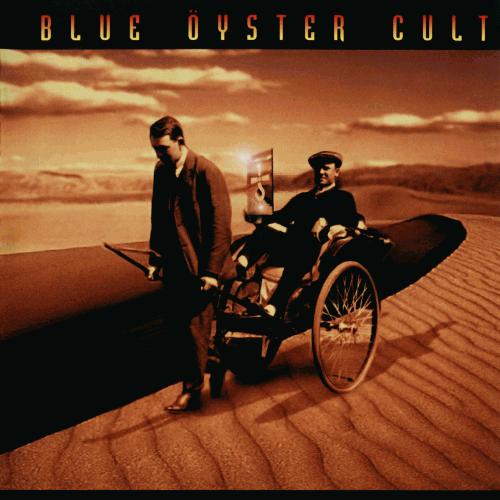
Curse of the Hidden Mirror.
For people familiar with the band’s repertoire, the new record will feel like a long-awaited return to familiar ground. Naturally, it doesn’t try to reinvent the wheel, since the line-up includes three musicians who practically never left, and there is no doubt that Eric Bloom, Buck Dharma, and Allen Larnier know what a Blue Oyster Cult album should sound like. Thus, all the major components are preserved with the utmost professionalism on
Curse of the Hidden Mirror. The band still avoids easy categorization, shifting between hard rock and heavy metal with occasional forays into pop-rock territory. The songs still maintain the band’s signature quirkiness and lyrical eccentricity: there are both creepy or mystical cuts alongside tracks performed in a more ironic or grounded way. As on
Heaven Forbid, some assistance with the lyrics was provided by cyberpunk author John Shirley, carrying on the long-standing tradition of collaborating with science fiction writers and outside lyricists that started in the early days of the band.
The songs included on the album leave a mainly positive impression. Of particular interest are four songs sung by Buck Dharma: the opening track
Dance on Stilts with its stop-start riff; the perky and somewhat philosophical
Pocket; the fast-paced pop-rock gem
Here Comes That Feeling Again with a surprising twist; and the mystical
Stone of Love. Remarkably, “Dharma” Roeser has not lost his voice and has preserved it wonderfully (alongside his sweet guitar skills), making his tracks a sheer pleasure to listen to.
Unfortunately, the songs performed by Eric Bloom are a bit of a mixed bag. The reason for this is twofold. First (and seemingly most importantly), Bloom’s voice is partially weathered, so his raspier, more grating delivery requires some getting used to. Though it should be noted, some of the cuts effective build on his more limited vocal range by adding necessary rawness and grit. Good examples of this are the apocalyptic
The Old Gods Return or the sinister
One Step Ahead of the Devil. He also manages quite well on
Showtime (which was actually written during the sessions for the 1980s album
Cultosaurus Erectus) and
Good to Feel Hungry. The second shortcoming is related to the songs themselves, specifically the choruses. They are often built around the repetition of a few words or based heavily on the track title with minor variations, leading to a certain sense of monotony. This can be heard in the aforementioned
The Old Gods Return,
One Step Ahead of the Devil, and
Eye of the Hurricane.
Nevertheless, despite a few missteps, it must be acknowledged that this veteran act delivered a strong effort which, unfortunately, was passed over by the buying public. Due to unsuccessful sales, the label terminated its contact with Blue Oyster Cult, leaving
Curse of the Hidden Mirror without promotion and causing it to quickly fall off the radar – which is a real shame. However, it can be assumed that those few who did purchase the record were rewarded with a solid album that can stand alongside their classic releases.