Review Summary: I hear America singing
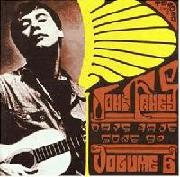
No fingerpicked backwoods pastoral inclinations or tendencies towards Transcendentalism are going to obscure the massive scaffolding on which Fahey builds his edifice. The man’s music is like the ever-incomplete Crazy Horse monument languishing under permanent construction out there somewhere in the American West, an image in perpetual gestation, honoring a plundered culture and carved from the bedrock from which it rose. Fahey draws grandeur and color to himself in little stretches of chorded melodies and odd tunings and whatever the musical equivalent of poetry might be (and it isn’t poetry itself, the distillation and arrangement of the language has no equivalent and both run separate in their parallel streams, Richard Strauss be damned). The image of the back porch fingerpicker is a symbol donned by Fahey; Blind Joe Death becomes much more the looming Paul Bunyan over the pale reality of the weird, alienated spirit of the country. It’s not marketable, it’s doomed to fail, too hokey, too grandiose, and too carved out of knotted and gnarled pine, a solid thing without the cloying, slightly perverted qualities of what would become known as New Age. Fahey’s a mystic no doubt, and his finesse at fingerpicking all these ends and strands of the place into his little folk album, from Christ to Dvorak, means his presence emanates, magnifies the land to something approaching a national myth. Jesus is a dying bed maker no doubt, the maker of the dying bed, if you will. The famous hymn is played straight of course, you simply don’t mess too much with that melody, that little piece of crystalline simplicity. Compare it to all the dazzling 12-string arpeggio work on the title track, following those languid strummed chord melodies, that torrid summer afternoon atmosphere. Finally, The Voice of the Turtle wanders and spreads along peaks and dips in its bright-colored rippling explorations that might err on the faintest edge of too much time spent in wandering. But what a place to wander! For a time, at least in Fahey’s mind, there is such a place as America, something exists, in song and story, that could generously be called a country or a common spirit. It’s a Fahey move, an American move, to draw from every disparate influence under the sun and distill it all in nimble acrobatics on a single guitar. But you hear something like this, and you start to think that maybe, for all its sins, the idea of America could conceivably exist in some sense or place, under all the noise and spectacle and could perhaps be something worth claiming.