Review Summary: Unbelievably strange stuff. A landmark to electronic prog.
“Zeit” is the third studio album of Tangerine Dream that was released in 1972. The line up on the album is Edgar Froese, Peter Baumann and Christopher Franke. The album also had the participation of Steve Schroyder, Florian Fricke and the Cologne Cello Quartet: Christian Vallbracht, Joachim Von Grumbcow, Hans Joachim Brune and Johannes Lucke.
Tangerine Dream is a band that was founded in Berlin, Germany in 1967 by Edgar Froese, Klaus Schulze and Conrad Schnitzler. By borrowing from the minimalist avant-garde, Eastern transcendental philosophy and the impressionistic painting, Tangerine Dream invented the “kosmische music”, one of the most influential musical genres. The band was among the earliest explorers of a new universe opened by electronic instruments. Tangerine Dream’s music was born as a psychedelic journey aided by new electronic keyboards, transformed into a thoughtful survey of the universe.
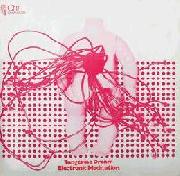
Tangerine Dream began their career influenced by psychedelic music. That phase became known as “The Pink Years” because their music was linked with Pink Floyd in their earlier days. With the line up mentioned above, Froese, Schulze and Schnitzler, Tangerine Dream released “Electronic Meditation” in 1970, an album more in the vein with the krautrock music. Edgar Froese, the percussionist Christopher Franke, a flutist and three keyboardists released “Alpha Centauri” in 1971, an album with three improvised jams that defined the genre. The band pared down to a trio, Froese, Franke and Baumann, released “Zeit” in 1972, one of their most important works that consolidated the electronic genre.
“Zeit” is a double album consisting of a four-movement symphony which adopted a more electronic format and a looser concept of the rhythm. It pretty much perfected the style that the band had experimented with on “Alpha Centauri”, and it was all recorded, performed and produced far better and more professional. Listening to “Zeit” is like dreaming of alien planets and landscapes, huge cavernous atmospheres and unidentifiable noises burbling along. The pieces have no recognizable structure. They’re more up and down undulating sound structures. The electronic component is much stronger than on the two previous albums. The atmosphere of “Zeit” is one of its own. The renunciation of rhythm and the sombre, drawn out sounds that creates a menacing mood, almost a feeling of a cosmic horror that does without any cheap effect. The agonizing sluggish sounds overwhelm the listener. At times we feel trapped in a kind of fever dream.
The first movement “Birth Of Liquid Plejades” has the additional participation of Fricke, leader of Popol Vuh, who at the time was immersed in the use of synthesizers and plays Moog, and Schroyder of the previous line up who plays organ. We also have the Cologne String Quartet. It opens with the gloomy sounds of cellos improvising around some droning chords. After about 8 minutes, it has transformed into a more electronic piece, maintaining the same doctrine of forlorn ambiance, except through the use of droning synthesizers. It’s hard to pinpoint a particular idea here, but the holistic impression is akin to that of a funeral dirge. It’s incredible the way it can capture such powerful emotion so abstractly. The second movement “Nebulous Dawn” follows in the same vein as the first movement. It has an even more ominous feel and predicts the band’s more frenetic later sequencer driven efforts with some shuddery treble rhythms echoing in the background. It’s one of the band’s most experimental and less accessible pieces. It’s a disturbing ambient piece. The third movement “Origin Of Supernatural Probabilities” first induces us to a state of calm and then leads us towards some remote part of the cosmos of uncertain severity. It starts with some soft and moody chords on guitar that quickly turns into the more typical wailing spacey sound that is surrounded by some alien chilling bubbling electronic sounds. The fourth movement “Zeit” ends the trip and complements the whole concept. It consists of free form synths and electronic effects along with Froese’s guitar. It goes into full avant-garde weirdness with a barrage of terrifying sounds. It leaves the listener with the possibility of returning to land or continuing the journey towards unexplored coordinates.
Conclusion: Somehow, we can consider that “Zeit” was for electronic prog music what “Tales From Topographic Oceans” was for symphonic prog music. And as happened with Yes’ album, the opinions about the album differs wildly even among their most fanatic fans. The four compositions are also strewn over four LP sides. However, unlike the compositions on “Tales From Topographic Oceans”, these aren’t so much compositions as they are just extended sonic landscapes. “Zeit” is a monumental piece of early electronic prog experimental space music. Here, the band explores the sound as a conception. So, basically this isn’t a light listen for many people. In short, it’s not an album for a sunny afternoon. However, if you are looking to find the roots of the best electronic music and go on a cosmic trip into an universe that might not be too friendly a place but that is endlessly fascinating, this is a must listening work.
Music was my first love.
John Miles (Rebel)