Review Summary: In it to win it
The Cult is one of those bands that refuses to stand still. From one album to another, they try on new forms of musical expression, even though they mostly remain within the hard rock framework. On
Love they were gothic rockers; on
Electric they dabbled in straightforward (but no less effective) hard rock in the vein of
AC/DC; on
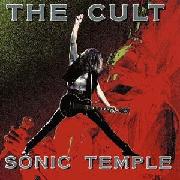
Sonic Temple (and its follow-up
Ceremony) they branched into arena rock; on
The Cult they flirted with alternative rock and psychedelia; and the post-reunion album
Beyond Good and Evil bordered on heavy metal.
Unfortunately, this musical boldness goes hand in hand with artistic irregularity. The band underwent two breakups and a series of internal conflicts that led to frequent changes in the line-up. Only vocalist Ian Astbury and guitarist Billy Duffy remain the constant members and chief ideologists, pushing and pulling the band according to their vision and ambitions.
Born into This was released in 2007 after the second (and as of today, the last) reunion. It was received rather mildly and did not spur much acclaim from either critics and the audience. Let’s try and figure out how right they were.
The first minutes of the album are puzzling. The title track,
Citizens, and
Diamonds feel off, but it is difficult to pinpoint what exactly is the reason for this. There is some kind of uncertainty that catches your ear, as if The Cult are not sure what direction to choose. And it is surprising, given the obvious talents of the musicians. As a result, the straightforward hard rock of
Born into This and
Diamonds confuses listeners, since these tracks do not possess the elements usual to the band’s sound.
Repeated listens provide an answer to what seemed off at first. It is the case of peculiar production. It is difficult to say who initiated it, but Duffy’s guitars, which had always been at the forefront, ended up in the background. As such, they became almost like ambient noise instead of leading the song alongside Astbury. Moreover, this approach seemingly highlighted some of the wear in the vocals. One of the tracks most affected by this is
Citizens, which, with different production choices, could have been one of the brightest spots on the album.
And then, like somebody realized their mistake, starting from
Dirty Little Rockstar, the guitars begin to crawl back to the front. With that, the songs get more and more lively, truly sounding like The Cult. After the faltering start,
Born into This gains momentum and doesn’t let up until the very end. Only the softer
Holy Mountain gives us a little breather, and then we are back into action.
Still, this false start results in a somewhat blurred impression, especially with only 10 tracks on the album. There is also a feeling of certain roughness – a search for a suitable musical form that would satisfy the band, despite the solid cuts presented. Though The Cult produced a number of hard-hitting tracks, some of them lack the ambitiousness inherent to their sound. On the other hand, it is far from the worst outcome.
P.S. A curious fact: the extended version of the album also includes two completed tracks,
Stand Alone and
War Pony Destroyer. What’s surprising is that both are very solid songs, and it is not clear why the band decided not to make them a part of the LP. If they were added instead of
Born into This and
Diamonds, it would have really benefited the album.