Review Summary: The Book of Scatman 1:1 - In the beginning, there was John Larkin.
Scatman John always carried one special message for his listeners: that you can take an obstacle and turn it into an advantage. In his case, that obstacle was a stutter that he developed at an extremely young age – and something that he would start combating through the power of singing. See, most people recognize Larkin for his famous titular eurodance hit from the far-off land of 1995; however, all that rapid-fire incomprehensible scatting was actually the culmination of his lifelong fight with the aforementioned speech impediment. And whether you see “Scatman” as a serious artistic statement or total camp, there’s something quite inspiring about its overall meaning: if he could overcome his fears on a public platform, so can you.
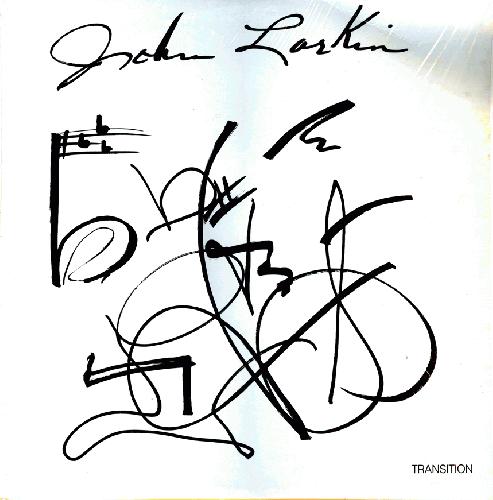
But before he hit it big in the 90s, Larkin was an obscure jazz pianist who regularly integrated scat singing into his work. According to a 1999 L.A. Times article, the idea was that he’d hide behind the piano because was he nervous about speaking or interacting with the audience – and sadly, like many a prolific jazz musician, he also developed a pretty bad drug habit. However, even through his hardships, he finally released a record in 1986. Now, I want you to take your preconceived notions about Scatman John – his eurodance stuff, his campy persona, Japan’s weird unexplained obsession with him – and throw all that out the window. Because Larkin’s self-titled debut is absolutely
legit.
This is some incredibly well-written, technically impressive music that falls somewhere between free jazz and hard bop. And right from opener “The Misfit”, Larkin’s personality and charm are on full display; in between the wild piano solos and acrobatic basslines, there are spoken-word segments in which he uses vivid metaphors to describe the life of a jazz musician. Oh, and of course, there’s some crazy scatting throughout the track as well. This is about as memorable an opener as you can imagine, and thankfully the rest of the record doesn’t waver in quality. Songs like “Angels Cry” and closer “Softly as in a Morning Sunrise” carry a similar energy to “The Misfit”, as they marry whirlwind chord changes with breakneck tempos; meanwhile, the piano always remains the star of the show as it should.
With all of that said, Larkin isn’t afraid to show a more tender side from time to time. In fact, the second track “Last Night I Dreamed” brings down the energy
significantly as we’re treated to a lovely waltz-like ballad. And what Larkin lacks in technical vocal ability (he isn’t exactly the most gifted singer in this regard), he makes up with sheer earnestness as he belts out the track’s sentimental lyrics. Then there’s “John Coltrane”, which is – fittingly enough – a tribute to the legendary saxophonist himself. What begins as a strange a cappella scatting piece eventually opens up to a gorgeous piano arrangement, conveying a mood that’s equal parts solemn and wondrous… that is, until Larkin just starts screaming over dissonant chords at the end. You really need to expect the unexpected when listening to the record for the first time.
Throughout all of this, each individual member consistently manages to impress. I’ve already heaped plenty of praise onto Larkin himself – particularly for his piano abilities – but the other musicians deserve a mention as well. Then again, I suppose having saxophonist Joe Farrell in your lineup is already setting your album up for success. The dude played with just about every 60s/70s jazz artist you can think of, from Return to Forever to Billy Cobham to Charles Mingus to Elvin Jones. And just as he did with those acts, he excels here as well; whether the song calls for absolute chaos or a slow wistful vibe, he always knows what approach to take. Meanwhile, the rhythm section of bassist Bob Harrison and drummer Clark Woodard have a wonderful chemistry with each other and the other members, keeping the songs grounded and steady even when Larkin and Farrell are flying off the handle. If I had to pick a standout track from a performance standpoint, however, it would be “Softly as in a Morning Sunrise”; the entire second half is just an excuse for every member to show off and get their own spotlight, and it’s absolutely glorious.
Still, the album does feel a bit short. Maybe I wouldn’t be making that point if Larkin released more music in this style, but this record just leaves you wanting
more. But once the whole Scatman Extended Universe (SEU?) took off, he never returned to this sound ever again – and given the fact that he sadly passed away in 1999, he never will. With that said, his dance stuff actually did contain little hints and snippets of his jazzy past; for instance, his big hit includes some of the lyrics from “The Misfit”. Then there’s “Everybody Jam!”, which is an endearing posthumous duet with Louis Armstrong – trumpet parts and all. And that’s really the best word to describe John Larkin: endearing. A big part of his legacy is that he had such a wholesome personality, something that extended to his music and life story. As for his self-titled record, it’s an unfairly overlooked gem that demonstrates just how talented he truly was. Check it out if you’re a jazz fan; I assure you that you won’t be disappointed.