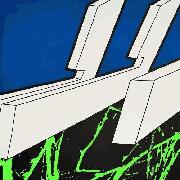
Review Summary: A blend of seemingly immiscible genres with charming and highly influential results
Despite releasing a string of singles and EPs in 1991, it wasn’t ‘til the summer of 1992 and the release of
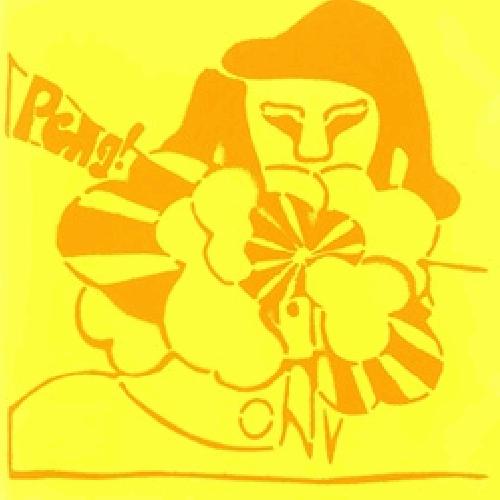
Peng! that Tim Gane and Lætitia Sadier would lay down the foundations for their transformation into boundary-pushing Avant-pop legends. By combining indie rock with the drone like stylings of The Velvet Underground and 70s krautrock, Stereolab successfully forged a sound that can be considered truly their own. When compared to the ultra-creative songwriting, slick musical arrangements, and grandiose production of their later masterpieces
Emperor Tomato Ketchup and
Dots and Loops (the latter of which I consider to be their finest recording),
Peng!, possesses somewhat of a demo vibe in terms of execution and production but remains a captivating and highly influential record which encapsulates the carefree optimism of the 90s.
The bulk of the music is guitar driven but also prominent is the use of organs and analog synthesisers which Tim Gane is known to favour, finding them more versatile and malleable than their modern digital counterparts. Vintage Moog synthesisers and Farfisa organs delicately snake their way around the guitar and bass on tracks like “Perversion” but become the star of the show on “Mellotron” where a harsh electronic drone forms the base of the song. A personal highlight is the chill-out track “You Little ***s” which adds further stylistic diversity with a touch of 50s surf rock, creating a track that sounds somewhat like a krauted-up Link Wray song. Tim Gane’s lead guitar begins by meandering along placidly over an ebbing, wave-like chord progression conjuring up images of sandy shores and seashells before erupting into a jarring solo.
For me, there is something uniquely special about the vocals of Lætitia Sadier across the full Stereolab discography and
Peng! is one of the few albums to feature her on vocals exclusively. Her hypnotic voice suits all songs on the album perfectly whether it be the faster paced indie rock of “The Seeming and the Meaning” and “Stomach Worm”, the slower, eerie tracks like “Super Falling Star” and “K-Stars” or the droning krautfest that is “Mellotron”. This is quite an achievement for a vocalist widely reported to sing in monotonic fashion.
A factor which lets the album down is the erratic structure. The tracks are arranged in such a way that the transition between styles can seem a trifle brusque and the running order could have benefited from a touch more consideration. Despite these structural flaws and the prototype vibes
Peng! projects, it successfully pulls off an alluring fusion of diverse genres and now exists as the benchmark from which Stereolab would blossom into one of the most influential and overlooked avant-pop acts of the 1990s.