Review Summary: Goodbye, I’m flying over you
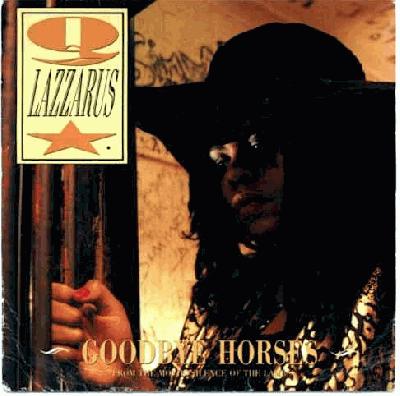
Goodbye Horses never fails to stir up a myriad of questions, but perhaps the most important question of all is ‘why didn’t we deserve more?'
The story of Q Lazzarus is an unusual one. Diane Luckey aka Q’s story begins in the 80’s in a taxi cab, where she happened to pick up Jonathan Demme, director of
Silence of the Lambs, in a snowstorm. After asking if he was in show business, she showed him her demo and he was immediately smitten with her androgynous husky voice. Up until this point she had a tough time getting her music to be picked up by any labels, as her unusual style and voice were unfairly deemed unmarketable. However, Jonathan Demme liked her enough that he was determined to use her music in his films. He first included her song
Candle in the Wind in his 1986 film
Something Wild. Q then had a mysterious 5 year stay in London where she performed in a ‘Aerosmith-style’ rock band. Little information exists about this group and time of her life. Thankfully, her collaboration continued with Demme upon her return to the US. This collaboration not only eventually resulted in one of cinema’s great memorable sequences, but also in showcasing one of popular music’s most enigmatic figures with her signature hit,
Goodbye Horses.
Despite the demanding presence of the titular track and everything it brings with it, Q was no one-trick pony. The remaining tracks leave just as big of an impact, where the sense of seemingly infinite lost potential becomes very tangible. The ever obscure
White Lines is like peaking into a cooler alternate universe where Q was given the opportunity to live up to her potential. There are multiple genre influences going on here that quickly set an eerie yet blissful tone. The obvious ‘synth pop’ label gets thrown onto most of her work yet a label like this can’t completely encapsulate what her music really offers.
Goodbye Horses always struck me as some kind of abstract ‘post-country western’ song, seemingly flying over the wreckage of the past with a soaring confidence yet with a lingering haunting past. The Recently included
Hellfire and
Summertime offer what feels like a more intimate look into the mind and motivations of Q.
Hellfire especially feels like a fitting companion to
Goodbye Horses. Both of these tracks certainly fit closer into a synth pop label than
White Lines does, but they deliver the same vocal energy one would come to expect after hearing the titular track. Q’s soulful deep voice and touching lyrics demand immediate attention, especially on the titular acapella.
Q also went on to contribute more music to Demme’s films, including a soul version of
Heaven by Talking Heads for
Philadelphia in 1993. After disappearing from the public eye in 1996 Q recently resurfaced years ago in 2018, stating she was happy as a bus driver and that despite appreciating the support of her fans, she had no interest in returning to the public eye or to music in general. This was her last public statement. Q sadly passed in 2022, seemingly content and fulfilled in her private life as a driver up until the end. The story of Q is over and her ultimate potential will remain unknown, but her place in the annals of pop culture are set in stone not only as a one-hit wonder but more importantly as a one of a kind figure that left us forever wanting more.