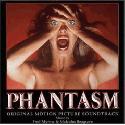
Review Summary: Composers Fred Myrow and Malcolm Seagrave guide the horror classic Phantasm and add to its musical appeal.
Not since the early 20th century have moving pictures or films been without sounds to accompany it. Sounds eventually turned into music which has been partnered with movies since people thought of the concept of combining them. Since that moment, the idea of recording a movie's soundtrack has been put in place, and many of them are memorable and have sold well. Among the most popular are soundtracks for comedy/drama movies featuring a collection of songs either recorded specifically for the movie, or that already exist and are put together to give off the vibe that though the songs are recorded separately and are patched up by being featured on the same disc, there is sort of a vibe that it caries that unifies it and makes all the separate songs work together.
Such is not the case for this soundtrack. Like many scores that have been recorded for movies, certain composers have been put to the task of creating the entire thing, no bands or patched up songs. Among the most noted film scores in recent memory, is the one created by Clint Mansell (and the Kronos Quartet) for the cult film,
Requiem for a Dream. Often when films have scores, they are overlooked simply because it is orchestrated music and that becomes instantly tied to classically music and is given the label "uninteresting".
Uninteresting is on the of the last words that describes this soundtrack, however. When the 1979 horror classic, Phantasm, needed something to accompany its nightmarish plot, Fred Myrow (Who also did
Soylant Green and
Perfect Dark Zero soundtracks) joined Malcolm Seagrave to craft what would be one of horror film's most memorable and infamous scores.
Like most scores and soundtracks, the first thing people will remember is the opening title, as it introduces the film and is the most referred to (re: redone with about one thing changed) tune in the piece. On
Intro & Main Title, Myrow and Seagrave take this opportunity to deliver a creepy and well-known piano driven introduction. The piano is joined by percussion, and is about the only time on the soundtrack where just piano and percussion are used for a single tune. At 3:55, it stands as the longest song here, but being not only the intro and main title, but being the powerful and suspenseful piece that it is, it perfectly sets the mood and tone for the rest of the tracks.
Though the album is listed as being released in 2000, the music and ambiance found on the disc far differ from that time. The original film was released, as mentioned, in 1979 and the music for it is a big reference to that. Why is that important? The importance of that comes from how the sounds were formed. The state of mainstream music in 1979 is much different than in 2000 and this is noted on the track
Silver Sphere Disco. Disco? Yes, a horror soundtrack with a disco song, thank you late 70's for combining something so scary, and also a horror movie together. Seriously though, the track is at the butt end of
Phantasmogoria which is basically the main title but with added synthesizer.
Silver Sphere Disco however, is something much different; a break from the similar soundness once put together by the track. The song is recorded on synth but with more emphasis on bass notes, and a higher tempo, which gives us all something to dance to while watching a horror movie. Of course its not all dance and good times, if you know about the movie or have scene it, this music accompanies the scene with the silver spheres, and this song actually has the hum of the ball as it gears up for..well you'll see. All disco and superfluous commentary on it aside, this is a standout track because it breaks up the flow of the album, and introduces the rest of it
There was no big budget for the score nor was there for the film. The music is not backed by a 30 piece orchestra because it doesn't need to be; all it took were two composers to capture the elements of the movie and emphasize them in music form. The majority of the tunes on this soundtrack are made by synthesizer and percussion, and this base group of instruments guides the movie through its twists efficiently. Constant use of the same two instruments is occasionally broken up to allow other instruments to have the main stage and be the main conductor and contributor of the specific track. As heard on
Funeral Organ & Dwarf in Hearse, an organ is used to play the traditional funeral music that is the main part of the piece. Joined by synth and drums later in the piece, it is giving funeral music an even creepier feel. Making funeral music more horrific than it already is takes talent, talent well shown off in the making of this score.
What has been described is really a small portion of what this soundtrack has to offer in terms of being able to be listened to and mood-setting. As most other soundtracks go, it makes the music more meaningful if you've seen the film. Like the film, the soundtrack is very overlooked and undervalued. Need proof of this? On Amazon.com the score is listed as # 82, 165th in number of copies sold, yet all 8 of the reviews for it at 5/5. Judging by the longevity of the tunes and how they have been ripped off throughout other movies, there is no way this is the 82,165th best musical work.
Recommended listening:
Intro/Main Title
Silver Sphere Disco
End of the Game (or is it?)