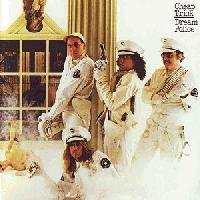
Review Summary: The dream police, they live inside of my head...
Cheap Trick still could not achieve widespread popularity in their native land. The first three LPs were met with positive (and deservingly so) reviews, but potential audiences simply kept ignoring them. Luckily, the band could stay afloat thanks to greater success in other countries. At that time, Cheap Trick were most popular in Japan, so they decided to tour there for the first time. And it was during the Japanese tour they recorded the material that became their live album,
At Budokan. By some quirk of fate – which often played such jokes in the 1970s – this record, though initially released only in the Land of the Rising Sun, started to attract the attention of the US audience.
Nevertheless, do not think the band rested on laurels they received completely unexpectedly. On the contrary, when
Cheap Trick at Budokan officially came out in the USA, the Rockford fellas already had a completed studio full-length under their belts, which the label decided to postpone, giving the live LP a chance to reap all the rewards. When
Dream Police was finally released, it was followed by expected high sales, respective certifications, and – at long last – deserved success. But was the album worth all of that?
So let’s not beat around the bush and state it clearly:
Dream Police was worthy of all the rewards it got. But it should be added that the reasons for that are not entirely straightforward. Since the album was recorded before
At Budokan became an unexpected breakthrough, the direction
Dream Police follows continues that of previous releases. So there is no apparent pandering to a potential audience to ensure better sales (a mistake Cheap Trick would make later), only a natural playfulness not devoid of creative ambitions. And since ambitions were mentioned, it should be noted that they can be commonly found on the LP.
Dream Police turned out to be one of the most ambitious and experimental works in the band’s discography.
The album combines wonderfully all sides of the band’s multifaceted sound (some might even say this combination is a lot more effective than on
Heaven Tonight): we have energetic rock, sweet pop, and more clearly defined hard rock that intersect and intertwine both across the album and within single songs. The material carries on the traditions of the first albums while simultaneously expanding the sound in a studio format. A perfect example of the latter is
Gonna Raise Hell, a 9-minute track that teeters on the brink of heavy metal and blends catchiness with hard-hitting melodies a la the debut. Besides its atypical length, it is one of the tracks to incorporate orchestration, something Cheap Trick had not attempted previously. Strings and more complex arrangements are something that can be encountered on the album quite often.
Another trait aimed at developing and adding complexity to the direction of
Heaven Tonight (the track) is the nervous bursts of dissonant melodies that you can hear on the very opening track, the title song. These pieces are there as if to add something psychedelic, uneasy, and disturbing to all the polish. It is as if pop orderliness sheds its structure, uncovering an underlying chaotic opposite and giving a hidden edge to the overall lightheartedness of the narrative. Such attention to minute details highlights the studio focus on the album, setting it apart from those that preceded it.
And so Cheap Trick once again rode a high horse after a slight dip on
Heaven Tonight. This album has only one insignificant drawback in its occasional unwieldiness, which is inherited from the approach of more complex arrangements. As for the rest, the album thoroughly deserves its share of popularity while simultaneously serving as a significant step forward for the band. Now, it was important not to lose footing at the next step.