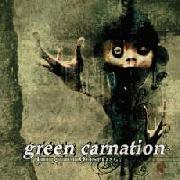
Review Summary: Where doom meets prog.
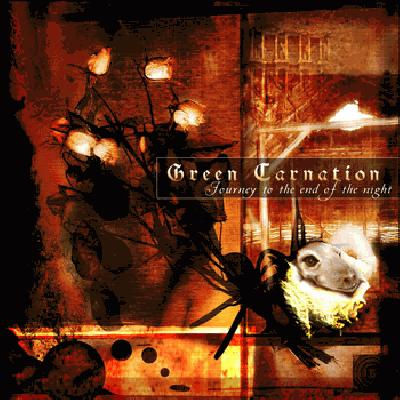
“Tchort wishes to dedicate this album to the memory of his Daughter (rip).”
The above can be read on Green Carnation’s debut album booklet Journey to the End of the Night, and needless to say, the music contained on these 70 minutes, does reflect the emotions associated to a tragic event of this magnitude. In fact, this had such an effect on the guitarist that for years he wasn’t able to come up with any music of his own, mostly referring to playing in bands that already had a main composer like Carpathian Forest or Emperor.
That creativity hiatus finally came to an end in 2000 when he managed to channel his inner feelings in the form of music, as means to find closure to such heartbreaking and devastating episode. With the help from the Botteri brothers (In the Woods… had been recently disbanded at that time), the unknown Alf Tore Rasmussen on drums and a plethora of singers, Tchort penned down what is Green Carnation’s darkest offering, and one of Doom Metal’s most unique (and dare to day underrated) albums: Journey to the End of the Night.
Naturally, Doom Metal is not a style unfamiliar with dark emotions but still there is something disturbingly tragic about these songs and the way they develop themselves. Nothing here is happy or uplifting, even if the overall result is definitely melodic.
Musically, more than exploring over repetition of riffs or motifs, the band opts for complex structures with various changes both in tempo and in key, not unlike the ones used by Opeth on their first two records. The vocals, ranging from operatic male and female singing to tortuous cleans give a welcome element of diversity to the album, despite the complete lack of growls or screams. The guitar department, however, is where things get even more interesting. The main rhythm (probably played by Tchort himself) does evoke a doomy feel through palm mute chords, arpeggios or tremolo techniques nonetheless, those are beautifully complemented by X Botteri’s strange guitar effects (mostly phaser and feedback), which sometimes do tend to linger without ever overstaying their presence. In a way it’s like they’re used to substitute keyboards or synths, which seem to be also absent from here.
This turns the end result into something that is definitely heavy, progressive, sad and psychedelic. One could almost say that this is Candlemass and Pink Floyd’s gothic offspring. With each song surpassing the 10 minutes mark, there is a lot to unravel and digest in here, which may require more than one (very attentive) listening session to fully grasp what’s really going on. But at the end of the day (or dare I say Night), it’s time well spent.