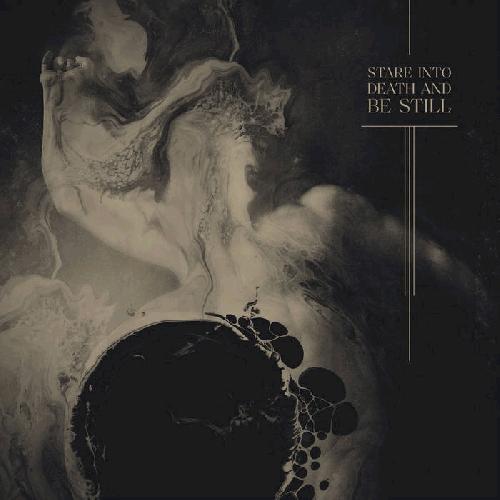
Album Rating: 5.0
Let’s talk about Downfall of Gaia instead
|
| |
Album Rating: 4.0
Lets talk about Dispensing of False Halos instead
Great underrated 90s styled Screamo band that has members of In Loving Memory in it.
|
| |
Album Rating: 4.0
Nobody cares about a BtBaM suckups opinions on obscure Hardcore bands.
|
| |
Album Rating: 5.0
Swarm of Cranes vs Aeon which is better and why
|
| |
Album Rating: 4.0
girl dick vs boy dick which is better and why
|
| |
both are good
|
| |
Album Rating: 4.0
That is a very fair take
|
| |
i say whichever tastes sweeter is better
|
| |
Album Rating: 4.0
girls got less salty of a taste so I guess girl dick is kinda sweeter.
|
| |
"girls got less salty of a taste so I guess girl dick is kinda sweeter."
sold
|
| |
Album Rating: 4.0
Unfortunately no, but its what I hear from other peeps.
|
| |
look at that fucking average
|
| |
Album Rating: 3.5
This is better than Abbey Road confirmed
|
| |
Album Rating: 4.0 | Sound Off
no
|
| |
Album Rating: 4.5
the last couple minutes of Visceral End saved my life
|
| |
Album Rating: 4.5
cant wait for my shirt and vinyl to come this is prolly their best
|
| |
Album Rating: 5.0
Album is my life
|
| |
Album Rating: 4.5
Listened to it once, but I need a lot more time with this. I can hear it's gonna be magnificent down the road, but it's a little to much sensory overload to take it all in at once for me.
|
| |
Album Rating: 4.5
@MementoMori
I don't think we radically disagree on anything, mostly just by degrees. I agree that our experience of harmony/melody (and all musical elements) is phenomenological, but our experience of everything is phenomenological. The question is what can we reasonably infer exists independently of our experiences as objects or properties of objects, and it's usually the stuff that we can consistently sense and that doesn't change depending on how we think of it. So with music, we can say that certain harmonies have certain mathematical relationships with each other; that melodies contain a sequence of pitches/harmonies in time; but our experience of pleasure when listening to such things is wholly subjective, even if it is (in part) caused by a combination of the objective aspects of the music and our psychological makeup, which is in itself determined by both evolutionary and socio-cultural forces.
I wasn't trying to boil all appreciation and perception of culture down to biology; but the thing is that we must be able to account for both the differences in artistic tastes/appreciation across time and cultures, as well as the simularites. You can explain differences with culture, but it's difficult to explain the similarities without evolutionary psychology and neuroaesthetics. There are certainly plenty of evolutionary features--like our penchant for pattern recognition--that existed long before culture and fed into what culture we appreciate. EG, it's difficult to explain the prominence of archetypes like the monomyth, or, indeed, even the near-universal success of tonality, even in cultures whose music was historically atonal or non-tonal (like Japan), without thinking that there's something similar in brains that makes such art appealing. With tonality, I think the success is precisely in how intuitive its patterns are; the stressing of a "home" note/chord makes both the deviations into the other notes/chords in the key intuitively apparent (even without any prior musical education), as well as any excursions into dissonant chromantic notes/chords or modulations to other keys. In fact, the establishment of tonality that leads to modulation and then back to home (as was dominant throughout the history of western classical music, and even pop music to an extent) is, in itself, very analogous to the monomyth: beginning at home, adventuring out, returning home. There's a reason that archetype is deeply ingrained in human psyches. [1]
|
| |
Album Rating: 4.5
@MementoMori
Now, I want to stress that, with the above, I’m not arguing that tonality is innately “better” than atonal or non-tonal music, merely why so many perceive it to be better. It’s worth noting that atonality, despite having been around for over a century in the west, is still an incredibly niche method that mostly only appeals to composers, musicologists, and small groups of listeners. But it’s failed to make much of a dent on either classical radio or album sales. After a century, Mozart, Beethoven, and Bach still sell like hotcakes, and Schoenberg and Webern are mostly ignored. The simple reason is because it’s much more difficult to create discernible, intuitive patterns in atonal music; for much the same reason it’s more difficult to create rhythmic or aural patterns in free-verse rather than verse.
Is it possible that if atonality was ingrained in culture and we heard it from an early age with the same frequency we do tonal music that it would be more appealing and intuitive than it is? Probably, yes, but it’s worth noting that the history of western music over the last thousand years has been one of constant innovation, revolution, and change; so you can’t solely lay atonal music’s inability to appeal more broadly down to people’s resistance to something new/change. Again, there’s a reason tonality has been accepted into cultures that were historically, geographically, and culturally cut-off from the west, while the reverse isn’t true. So while I don’t deny the profound influence culture has on our perception and appreciation of art, I think you’re underplaying the role that evolutionary psychology has as well. [2]
|
| |
|
|