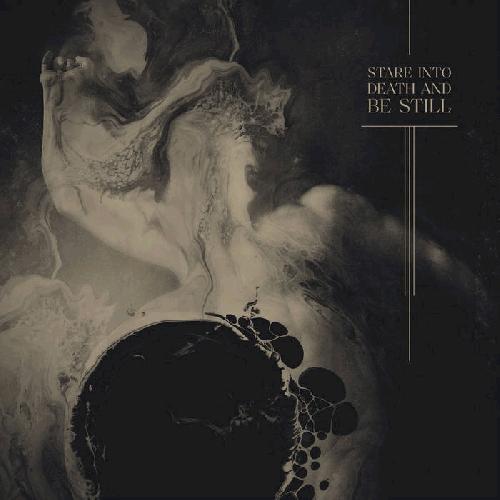
Album Rating: 4.5
That feels very cathartic, I must say.
|
| |
Album Rating: 4.0
That’s some serious tl;dr shit right there, I actually attempted to skim through your previous ramblings, but even I have my limits.
|
| |
No one in this thread could debunk my objective rating system.
|
| |
Album Rating: 4.5
It's only meant for people who leave equally long comments I feel the need to respond to. Don't feel obligated to read them.
|
| |
it's dumb heh
debunked
|
| |
Album Rating: 4.5
@Ghandhi Honstely I wouldn't even know were to begin debunking your system.
|
| |
Album Rating: 4.0
Stare Into Death And Type Novel-Length Comments
|
| |
Album Rating: 4.5
I do love exaggerations.
|
| |
A normal distribution that depends on the average tonal musicality.
|
| |
does this guy know how to party or what?
|
| |
Album Rating: 4.0
watchmojo top 10 philosophers, ranked.
|
| |
Album Rating: 4.5
@Ghandhi Can't beat that.
|
| |
"our conceptualisation of harmony and melody, as well as our feelings towards them, purely exist within the domain of our own conscious experience"
This is broadly true, but consistent use of certain melodies/harmonies for certain affects mean that people within individual cultures tend to have shared cognitions for the most part - esp if they get the bulk of their musical exposure from the movies. e.g. for western stuff, mj7th chords for a slightly melancholy chillout, 9th chords for further space and relaxation, mj7#5 arps for scifi-esque suspense (and, fuck it, minor =sad) etc.. these reactions are still subjective ofc, but bc the associations are normalised you can take an objective attitude towards them as a composer. i guess tl;dr music makes it easy to screw with people's feelings, but people whose feelings are being screwed with still have real feelings ;]
|
| |
also tonal musicality [2]
|
| |
also
"Cultural universals, if they were to exist, are ultimately a product of the historical development of any given culture, which might be ultimately reducible to a natural state, but cannot be adequately explained through an appeal to Darwinism"
word. can there please be no further argument over this or biological essentialism.
|
| |
Album Rating: 3.5
Buttfucking poopoo titty peepee
|
| |
But mozart
|
| |
Album Rating: 4.5
@Johnny: I agree with your assessment, and it seems to almost entirely aline with my above comments. They only thing I would change is: "but bc the associations are normalised you can take an subjective attitude towards them as a composer", considering the attitude one takes towards composing, the data one uses to determine how people react to certain aspects of tonality, melody, harmony, are all derived from interpretation, making it, well subjective, in the sense that it can't be detached from one's own frame of reference. Also, it's probably a bit of generalisation to suggest people react in exactly the same way to those chords. I suppose you can take an inter-cultural, theoretical attitude towards them as composer? Or should we just substitute that approach with the term objective, in the name of pragmatism maybe?
|
| |
Yeah, I meant that as an addendum sorry - should have clarified as such
"are all derived from interpretation, making it, well subjective, in the sense that it can't be detached from one's own frame of reference"
This is technically true, but I think these associations can be gauged so consistently from their incorporation in various works - not to mention directly taught by an experienced composer - that it feels a bit like a split end to me. I'm thinking about this particularly with reference to film scores, where you a load of extra, non-musical semiotics indicating the role of the music; I guess this takes the convo even further off-track, oops
"it's probably a bit of generalisation to suggest people react in exactly the same way to those chords"
I'd say more that people can be expected to react in general ways to those chords (etc.); you'll struggle to engineer affect if you expect to get things too precise ;]
|
| |
Album Rating: 4.5
@Johnny: their consistency doesn't necessarily make them objective however, but it does indeed imply some sort of conditioned, inter-cultural tendency. So, in that sense we can agree. I'm sure people could generally react the same way, although I must admit emotional responses are are so easily homogenized even if they appea similar at first. Moreover, what might be the parameters by which we measure that similarity? We might both refer to an emotional state produced by a piece of music with the same terms, but those states could be entirely different. It's one of the reasons why psychological research concerning emotional states is so difficult to replicate. I suppose in that sense, for any musician, it's always going to be a sort of highly educated guess as to what the affect of a certain musical element might be.
|
| |
|
|