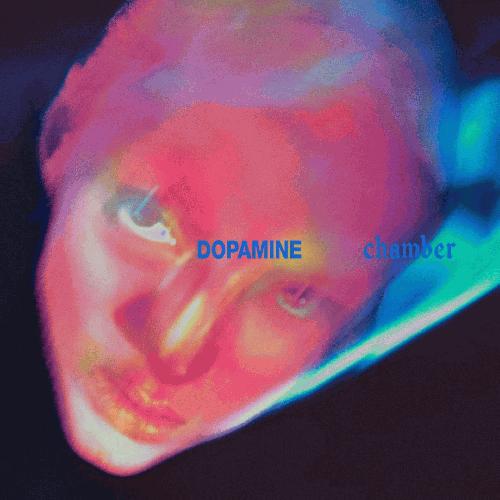
Review Summary: A wake-up call for a desensitized world
Dopamine Chamber might just be the most dangerous and daring chapter in the history of Fontaines D.C. The Irish outfit has firmly cemented its status as stadium-rock heavyweights without losing an ounce of the piercing urgency in their sound. Looking at them today,
Grian Chatten’s lines on
Big from their debut album feel prophetic: the quintet has retained all the defiant grit of post-punk poets while somehow managing to conquer arenas. And the secret seems simple enough – an absolute, laser-focused dedication to writing ever-stronger songs and an unshakeable belief in themselves.
The album’s title says it all. In their usual acerbic, detached manner, the band dissects a present-day reality where we do nothing but distract ourselves at every turn in pursuit of cheap (and supposedly harmless) thrills. Chatten speaks openly about the loss of humanity (did it ever really exist to begin with?), mocks the hysteria surrounding artificial intelligence, and highlights a paradoxical savagery: we can scroll past footage of widespread war crimes on our phone screens, entirely unfazed, between memes and commercials. The record feels like a much-needed wake-up call for a numbed-out world that has long and routinely ignored its own senses.
Dopamine Chamber brings together 1960s retro aesthetics and the cold, industrial nerve of early
Depeche Mode and
New Order. Teaming up with producer
James Ford, the band continues to explore danceable grooves within rock music, deploying vintage synthesizers, a Therevox, and lush string arrangements. Alongside Chatten’s vocals, these elements create the sensation of a futuristic vacuum where the individual completely loses themselves amid endless digital madness and noise, with emotions swinging between cold, synthetic contemplation and the comforting escapism of psychedelic ballads.
As a result, the album unfolds like a series of fragile yet striking chapters. It opens with the brooding
Six Shot Morning, where synthesizers reminiscent of early
Simple Minds weave through the weighty, unfussy guitars of Conor Curley and Carlos O’Connell. What follows is a block of synth-pop through the lens of Fontaines D.C., steeped in gothic aesthetics and cybernetic decadence: the sharp stops and transitions on
Demolition instantly stick in your memory, while the lyrics on
Tongue take unexpected turns, where breakneck delivery suddenly gives way to a sweeping, melodic chorus.
The record scales a whole spectrum of moods – from the icy, uncompromising weight of apocalyptic prophecies to moments where emotions thaw in a warm wash of light on the mesmerizing track
Japan. There is also a striking collaboration with Spanish superstar
Rosalia on
Where Is Gone?, where the two artists seek out a common wavelength, trading lines with cold, serpentine detachment and blurring the boundaries between the real and virtual worlds against a lavish backdrop.
Fontaines D.C. refuse to hide in a musical bubble or shy away from social issues, drawing on their Irish historical memory of famine and genocide to openly project anti-war sentiments.
Dopamine Chamber is steeped in a grim, existential dread that acts as a soundtrack to a seemingly fast-approaching end times. Yet at the same time, it is recorded by people who sincerely hope to grow old together around a shared table, calmly having real conversations. The album functions much like a dopamine chamber itself: you willingly dive into it for a hit of powerful sonic impulses that dissolve into space, capable of both unsettling and warning you all at once.