Review Summary: A cosmic fable from Seoul
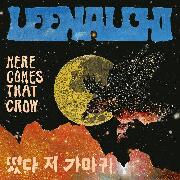
Pansori – the centuries-old tradition of Korean epic storytelling originating in the 17th-century Joseon era – has found a second wind thanks to the Seoul-based band Leenalchi, who have transformed ancient folklore into a futuristic musical explosion. Their full-length debut draws upon the allegorical fable
Sugungga, one of the five canonical works that have survived to the present day. It tells the story of a turtle that sets out in search of the only cure for a sick dragon king: a rabbit’s liver. As a product of folk wisdom, this plot vividly reflects the authentic roots of the art of pansori while warning listeners against human greed.
Taking the classical work as their foundation, the band does something remarkable: instead of preserving traditions in an academic framework or dissolving them into commercial K-pop, the musicians package the fable into a killer cocktail where post-wave, new wave, krautrock, and cosmic disco converge. The result relies on distinct bass lines, hypnotic rhythms, subtle electronic textures, and house music elements. Curiously, this sonic array is created using only two electric basses, a drum kit, and a synthesizer, while a powerful instrumental groove goes hand in hand with centuries-old vocal technique.
The album might well be called a genre dispute resolved not by compromise, but by brute force. Four vocalists, professionally trained in the disciplines of
pansori and traditional Korean
gugak art, bring traditions into the present through a tense, guttural vocal delivery with sudden leaps in pitch. Male and female voices do not blend into a perfect unison here; instead, they chaotically interrupt one another, creating the effect of a lively conversation among animals in the forest. Yet this chaos does not detract from the group’s cohesion and teamwork. The record is built on a sonic approach brimming with enviable confidence and immense creative freedom.
Each track on the album impresses with its texture and bold solutions. The opening track
Mao Mao Mao (whose title refers to the sound imitation of a cat's meow) sets the stage with a hip-hop vibe, while the eccentric art-funk
Tiger Is Coming captivates with its repeating hook and bass and drum beats that are intentionally unsynchronized with the leitmotif to create an engaging polyrhythm. No less expressive are the record’s other numbers, each playing its own dramaturgical role. The eerie track
You Know Who I Am?, the hilarious
Tiger’s Third Leg, and
Catch a Rabbit – where vocalists imitate animal sounds and exchange lines right up to the dramatic climax with the capture of the rabbit – demonstrate the astonishing plasticity of the form created by Leenalchi.
At the same time,
A Fish Map delights with juicy bass ripples, the unusual vocal bends and rare percussion in
Ultimate Prescription come together as a sonic recipe for a healing decoction, and
If You Want Me to Say sounds like a tense dialogue between the emperor and the rabbit, completely devoid of banal stylization. Gradually, the album reveals newer and newer colors: the slow
Crying Softshell Turtle draws you in with dense bass lines and persistent synthesizers,
Ddiddiloo Diroo Diroo resembles galloping funk with an eerie lyrical subtext about human freedom and the inevitability of death, and the closing
Please Don’t Go raises eternal questions of loyalty to the ruler and the homeland.
Sugungga is compelling precisely because the ensemble does not take the easy way out. Leenalchi weave together folk texts, traditional performance styles, and modern rhythms, while managing to sound fresh and driven, for lack of a better word. What is this if not proof that tradition and innovation can coexist without the slightest hint of archaism? Even without understanding the plot, the record conquers with its diversity and sweeps you off your feet with an absolute confidence in its sound, where centuries-old vocal technique doesn’t just soar above the accompaniment, but plays a significant role in the rhythmic framework. And by the way, the clever rabbit in the original story managed to keep his liver after all.