Review Summary: The Ocean Collective sheds its skin, though its new form is still taking shape
2026 is turning into quite a year for metal bands introducing new lineups. Mastodon, Sleep, and Neurosis have already done so, and now The Ocean follow with
Solaris. The German post-metallers, also known as The Ocean Collective, have undergone radical changes since
Holocene. Membership has long been a fluid affair for this band, so another reshuffle is hardly unprecedented. Even so, I wonder how many times a group can rebuild before enough is enough.
Remaining relevant in progressive metal takes more than repeating whatever once earned you that description. New recruits can bring different ideas and renewed motivation, as well as a more cooperative approach to writing together. In a world that seldom stops changing, I would hardly expect a progressive outfit to remain fixed either. Challenging its own habits is part of the job, and I welcome the opportunities this latest reorganisation opens up.
Before
Solaris, the only Ocean albums I had heard were
Pelagial and
Phanerozoic I and
II. Between them, they contain some of the most absorbing, and imposing heavy music I have encountered in recent years. Daunting in scale and bewildering in detail, they never struck me as tedious. There was always something pulling me further into their oppressive surroundings. That is a demanding introduction to any band, and it inevitably shapes what I want from this record.
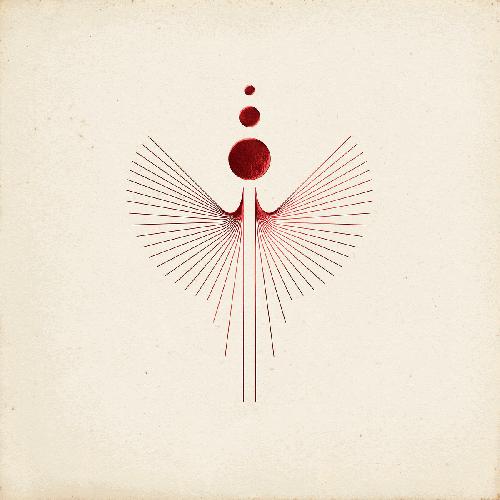
The brighter artwork hints at how far Solaris moves from those surroundings. Calling it happy would be a stretch, but its gentler episodes have a dreamy, almost lullaby-like quality that feels unusually inviting. The guitars retain their guttural bite, with lumbering drones and doomy, apocalyptic riffs and occasional punkish abrasiveness keeping the music from drifting altogether into reverie. Drawing on Tarkovsky’s "Solaris", the album explores an alien encounter entangled with human fears and memories. I enjoy hearing the band explore this territory, especially when a small melodic detail emerges amid the commotion. What I miss is the sustained claustrophobia of those earlier recordings. The heaviness remains, but it no longer engulfs me or leaves me feeling like I’m drowning beneath its weight.
Enrico Tiberi handles the harsher vocals capably, though his resemblance to Loïc Rossetti also reminds me of the expressive nuances his predecessor brought to the role. Simulacra suggests he has more of his own to reveal. Lane Shi is harder to pin down. Her voice can cut through the growls with startling diligence, and the exchanges become particularly exciting when she stretches into her thinner, more piercing register. At other times, I hear an almost mocking tone in her delivery and cannot quite place its purpose. Her near-possessed cries in
Light Pollution do little to draw me further into the song. The pairing has possibilities that neither singer could offer alone, but I am not sold on every decision, or indeed, every moment of the pairing.
More troublesome is the songwriting. Across eight tracks and roughly sixty-nine minutes, Solaris often meanders, accumulating ideas whose relationship is unclear. Repeated listening reveals connections, but it also exposes a shortage of cohesion and subtlety in the way some sequences develop. A change can arrive before the preceding idea has led anywhere, leaving stretches of the album disjointed and frustratingly underworked. I love the sinister, riff-driven outro of
Light Pollution, and the recurring keyboard figure in
Ultima Esperanza is infectious. The segue between the latter song and
Milk of My Dream is equally gorgeous to behold. Similarly, the central riff of
Simulacra is easily some of the best riffing in this collection and the piano-led segment into the second phase of the song is a particular highlight. Such moments show just how well these musicians can shape their material, but they remain frustratingly brief, making the aimless wandering elsewhere all the more noticeable.
Holocene was described as a move towards electronic music, an approach that remains relatively central here. Alongside the softer synthesizer sounds,
Solaris ventures into industrial territory and occasionally, ever so lightly, brushes against dance and disco. Personally, I find these touches less convincing. They seldom intensify the unease or make the songs more involving, and sometimes seem attached to the arrangements with little thought for how they belong. Conversely, the recurring keyboard figure in
Ultima Esperanza shows how effectively synthesizers can guide the songwriting. Some of the other electronic additions clutter arrangements that already struggle for cohesion.
Despite its ambition and the musicianship involved,
Solaris falls short of
Pelagial and the two
Phanerozoic records. Even at their most convoluted, those albums gave me ample reason to keep coming back to them. Still, recreating them may have little to do with what this lineup wants to accomplish. I respect the effort to absorb the newcomers into the band’s sound and allow them to reshape it. The results are frequently rewarding, and the experiments that misfire seldom overshadow the enjoyment of hearing this ensemble discover what it can do.
This group have considerable experience of surviving upheaval, with changes of personnel yielding varying rewards along the way. That history gives me reason to be cautiously hopeful about their latest incarnation. Its best ideas deserve the chance to develop through further collaboration. I hope the next album makes good on the promise I keep hearing here.
Recommended tracks:
Light Pollution
Simularca
Ultima Esperanza