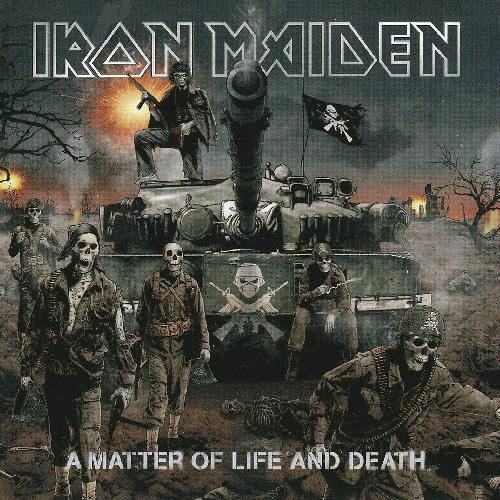
Review Summary: There is beauty and surely there is pain
As easy as it can be to brand all of Iron Maiden’s 21st century output under the ‘reunion era.’ 2006’s A Matter Of Life And Death shows the band still seeking evolution. While the last couple albums had dealt in similar tropes of brooding tempos, progressive structures, earthy production, and introspective lyrics, any trace of their heroic spirit is buried under layers of melancholy. When Maiden purists say that they would’ve enjoyed 1995’s The X Factor if Bruce Dickinson had sung on it, this album is what I imagine they mean.
This haggard demeanor is combined with an infamously raw production job. The last two efforts may have set the precedent for producer Kevin Shirley’s methods, but the desire for a more live feel resulted in a rough mix and allegedly no mastering in the post-production. It may be the sort of thing to drive an audiophile insane but I find it effectively helps convey the album’s character. I dare say it feels like a sort of subversion on No Prayer For The Dying’s approach, united in grit yet on opposite ends of focus and scope.
Most concerns about tedium are reconciled by each of the epics offering a distinct aura. “Brighter Than A Thousand Suns” rides a cautiously climbing bass chug and Oppenheimer interrogations amidst hazy guitar textures. “The Longest Day” and “For The Greater Good Of God” highlight the mastery of Dickinson’s modern delivery in different ways; the former grimly looks over the D-Day carnage like a breathless specter through solemn verses, charging pre-choruses, and urgent choruses while the latter is a spitfire of interrogative diatribes with enough instrumental urgency to keep ig all glued together. “The Legacy” might be the most musically evocative number with a gradually enveloping narrative supplemented with creepy storytelling and exotic acoustic guitar work.
I may be the most partial to “The Reincarnation Of Benjamin Breeg.” While its murky bass-driven beginning and mid-tempo march don’t differ too drastically from the established template, the lower vocals combined with the first person cycles through guilt and internal torment strike a chord. It plays like an alternate ending or final reflection of the old Seventh Som story viewed through an even wearier lens.
But with that said, the hour and twelve-minute runtime is enough to indicate some needed trimming. “These Colours Don’t Run” is a rousing impetus for the album’s war theming but the structure could’ve been tighter had one of its momentum halting choruses been cut. “Lord Of Light” offers occult intrigue but meanders a bit to take off in the way as something like “Dance Of Death.” “The Pilgrim” can also feel a bit jumbled compared to the similarly upbeat and wobbly “Different World,” but the chorus directs the spryness.
Twenty years later, I still admire how Iron Maiden forged a path forward with A Matter Of Life And Death. While a few of its bad habits would come to be more noticeable on subsequent outings, the band’s convictions on full display. I also can’t help but savor its controversial reputation; I’ve run into at least a couple people who declare it their favorite Maiden album and every time a fan relates a disgruntled anecdote about the tour where they played the whole thing, I find myself wishing I’d been able to see it.