Review Summary: Charge!
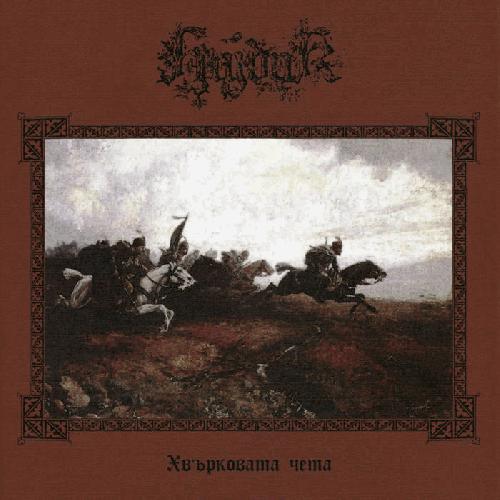
In my opinion, the Bulgarian Hajduk is one of the rising stars of recent years, at least within the raw black metal genre. In 2019, within a single year, the project's mastermind, Белгун (or Belgun), put out three exceptionally massive EPs. Those EPs and subsequent releases (a compilation and a split) were followed by an unexpected 6-year silence, broken by the arrival of the debut full-length
Хвърковата чета (translated: "
The Flying Band"). So what was cooked up during those 6 years?
Unlike many stylistically related bands, Hajduk deals with historical themes, and
Хвърковата чета presents the tale of a Bulgarian historical hero, Georgi Benkovski, across six tracks — one of the leaders of the 1876 Bulgarian uprising against the Ottoman Empire. The choice of subject is bold, but in my view the album succeeds in matching the atmosphere evoked by its context. The raw black metal genre is inherently capable of embodying a warlike, revolutionary energy through its extremely sharp guitar tones and occasionally quite punk-driven rhythms. This is further reinforced by the fact that Hajduk draws, even within the genre, from a distinctly melodic and captivating melodic palette, lending the album a kind of "narrative" flow: as the album progresses, the story of the uprising becomes perceptible in the very changes of the music itself. Brimming with energy and revolutionary fever, the fastest and sharpest riffs appear at the album's opening ("Кърваво писмо" and "Непобедима"), after which, around the midpoint, the mood grows increasingly somber. Also worth highlighting in this shift of atmosphere is the way a certain melancholy emerges — audible for instance in "Дим до бога" — most closely resembling the style of Drudkh's albums.
Without any doubt, the absolute peak of the album is the fifth track, "Три бюлбюла". What makes this track special is that, unlike the earlier songs on the album, the barking-croaking vocals are accompanied by folk-style female singing. Combined with a slightly slower tempo, this folk element lends the music a distinctly elevated, almost epic quality — which, given the genre's constraints, is a serious achievement in itself. Perhaps the closest comparison for the atmosphere of "Три бюлбюла" would be the liturgical mood of Batushka, yet it never comes across as stylistic imitation — the sound is entirely unique. The elevated atmosphere is then replaced by grief and the mood of heroic death in the album's final track, which again evokes the Drudkh style: the album closes with slow, drumless waves of riffs accompanied by ethereal synthesizer melodies and bitter croaking (with a faint trace of Burzum's influence). The languid melancholy is brought to a close by one final charge of aggressive riffing, effectively framing the album's overall structure.
In my opinion, Hajduk's debut full-length is one of the standout records in the raw black metal genre — an exciting musical journey worth the years of waiting.