Review Summary: …sings a serenade.
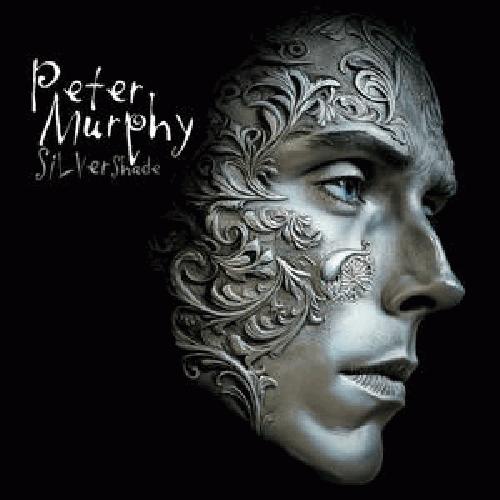
A lot must have changed for Peter Murphy since his previous release, or so you might think. It’s been over ten years since “Lion” was unleashed, and Peter himself stated that he wanted to try something different this time. Unfortunately, he also suffered a heart attack in 2019, which was bound to put things in a new perspective.
That being said, “Silver Shade” still feels like a direct continuation of “Lion” in a lot of ways. In an interview, Peter said that his new album is not as intense and has more space between the notes, and he’s right about that. Where “Lion” was banging on the door and demanding to be let in, “Silver Shade” deftly picks the lock. And, of course, he’s back to a more restrained style of singing. It’s clear that the over-dramatic approach that he employed for “Lion” was suitable for that album specifically and will not be continued. Still, maybe because Youth from Killing Joke is in charge of the production again (which is great), the new album’s sound and songwriting are not that far removed from the previous one. The faster cuts on “Silver Shade,” like the opener “Swoon,” are still built around pulsating synths and choppy, snappy guitars. They are not as electrifying as their counterparts from 2014, but are quite energetic nevertheless. At the same time, the more stately mid-tempo songs, such as “The Artroom Wonder,” are reminiscent of the less direct, “build-up and release” tracks from “Lion,” such as “Compression.”
There are, however, considerable differences as well. First of all, “Silver Shade” features the highest number of guests and level of outside involvement since “Unshattered” (2004). The most high-profile one is probably Trent Reznor, who provides vocals on the title track and a couple more songs. The most unexpected ones however, are Danny Carey and Justin Chancellor from Tool. Plus, of course, Boy George co-wrote and provided vocals for a song, and a few other people were involved in songwriting as well. All this could have led to another unfocused and scatterbrained record like the above-mentioned “Unshattered,” but that didn’t happen. I guess that we have Youth’s producer control to thank for the album’s focused and determined nature, plus the guest list is much more impressive this time around.
The second important feature is that instead of sounding like an exulted Methodist preacher from the previous record, this time Peter lets his inner David Bowie out into the wild. If you have heard the song “Ziggy Stardust” from Bauhaus times, you know that Peter can provide a near-perfect imitation of the 70s glam era Bowie, but this time, he channels the late-career David quite a lot. Apart from the vocals, there’s considerable musical influence (more on that later) and quite a lot of lyrical references. For example, “Hot Roy” features lyrics like “I’m thin, and he’s white” and references both David Bowie and Mick Ronson indirectly, while “The Artroom Wonder” describes the way Murphy felt as a teenager when he accidentally heard a Bowie song for the first time.
Musically, the title track is the first callback to David’s style. It wouldn’t have felt out of place on “The Next Day,” although, I dare say that none of the songs on that album are as infectious and tasty as this one (I’ve never been a big fan of “The Next Day,” although at the time of its release I was happy that the Thin White Duke broke his silence only a few months after I finished my exploration of his discography). I would say that “Silver Shade” the song opens the first exceptionally strong sequence of songs on “Silver Shade” the album, which also includes “The Artroom Wonder” with its foray into pure synth pop and dramatic “The Meaning of My Life” which is the only song that features the return of Emilio DiZefalo’s magical violin.
However, the following two songs return to the pattern established by the first three tracks, and you can’t help but feel that they don’t bring anything new to the table, especially since this sound was already thoroughly explored on the previous album. I remember thinking that if things keep going like this until the end of “Silver Shade,” it will end up being a solid but unspectacular album. Luckily, though, the final four-song stretch is the most experimental and unusual part of the record. Not all the experiments work equally well. “Soothsayer” is as close to a punk rock song as Peter is probably able to get, and it’s a curious development, but I’m not sure it’s his thing. It does, however, serve nicely as a palate cleanser after a couple of samey and rehashed songs like “Cochita is Lame.” From there on, things are getting much more interesting. “Time Waits” starts with a Flamenco guitar passage that seamlessly morphs into an Eastern melody and back to Flamenco again, fluctuating between the two for the entire duration of the song. This puts an interesting spin on Murphy’s experiments with Turkish instruments and melodies that started way back on his debut solo record with “Jemal” and “Never Man” and were explored most deeply on “Dust” (2002)
Finally, the album closes with two ballads, which would have been a questionable decision if they both weren’t gorgeous. In fact, as soon as the cinematic and profound “The Sailmaker’s Charm” was over, I thought to myself that I wouldn’t mind hearing another song like that. And “Let The Flowers Grow” delivers on that with interest. It was written as a duet with Boy George, and it’s a perfect song to sing along to, but not in a big drunken company where everybody just tries to sing louder than everyone else. No, this is more suitable for a quiet gathering with your best friend to watch a movie, share a glass of wine, and exercise your vocal cords a bit in an imperfect but sincere fashion. In fact, if I had any singing abilities at all, I would have busted the song out from my balcony in the evening for the dubious pleasure of my neighbors. This is also the second most obvious David Bowie-inspired song. I can almost hear him singing “I’ve been chaaaaaaanging, and mamma don’t know…”
Thus, the album ends on a perfect note and is prevented from becoming a tamer version of “Lion” or, if you will, a shade of the Blackstar. Instead, it becomes its own thing and a welcome comeback that continues the perfect string of Peter Murphy’s modern albums, which are all excellent in their own unique way. “Ninth” (2011) steers closer to “classic” Peter Murphy sound from the eighties, but is a much fuller, refined, and updated version of that sound, whereas “Lion” (2014) is fascinating and exciting in its audacity and directness. As for “Silver Shade,” for a while, it seems like this record prefers to stay in the shadow of its older siblings, but when the time comes, it smiles crookedly and pulls some quite dazzling tricks out of its sleeves. I have my preferences, of course, but each one of the last three Peter's albums represents different aspects of the greatness of the old artist who uses his life-long experience and love for music to expand, grow, inspire, and get inspired by others, rather than just rest on his laurels.