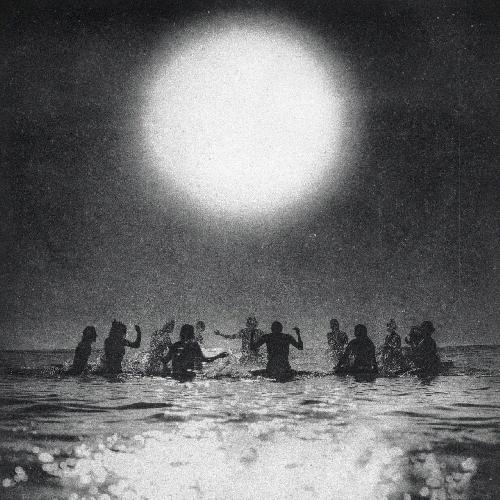
Review Summary: A pretty emo/indie-rock outing that falls a bit shy of Seahaven's past ambitions.
Halo of Hurt was one of the best kept secrets of 2020. The record was haunting and experimental; a pandemic fever dream that gradually built suspense and possessed a very natural ebb and flow. In the context of Seahaven’s career, though, it sort of came out of nowhere – because while they always competently delivered emo/indie-rock, there was nothing to suggest that a breathtakingly creative maturation was nigh. Nevertheless, Seahaven impressed with their dark, quiet magnum opus while elevating themselves into rarified air. After all, so few artists in this scene have successfully pulled off the switch from punk/emo to something far more brooding and mysterious.
With Seahaven’s fourth full-length LP – this one self-titled – the band has taken a much lighter approach.
Seahaven delivers a fairly straightforward dose of indie-rock from front to end, without the unexpected twists and turns or bone-chilling atmosphere of its predecessor. A back-to-basics album is not ideal in the wake of
Halo of Hurt’s artistic breakthrough, but Seahaven manage to pull it off pretty well. The music still sounds stately and mature, it’s just that for whatever reason, the band decided a gear shift was in order. While it never really approaches the impact or magnitude of the previous album, there are still plenty of enjoyable moments to unwrap here.
Seahaven is brimming with subtle little flourishes that complement the music and add layers of sonic depth. We witness it right away with the electronic undercurrent on opener ‘Godsend’; an unanticipated stroke of genius that makes the track feel as though it’s levitating. Right on its heels, the distantly cascading keys of ‘Hellbound’ serve as a clever accent to one of
Seahaven’s stronger choruses. On ‘February Flowers’, it’s that same brilliant use of spacing and cadence that made
Halo of Hurt such a uniquely poignant experience. Often these small gestures seem negligible in the moment only to have them pop up in your head days later…proof that they’re fundamental to what Seahaven is trying to build here.
Although Seahaven do an admirable job of trickling various bells and whistles into their compositions, it’s still obvious when they hit their stride and begin to roll on all cylinders. ‘Highwire’ is one such moment. It’s a stunningly atmospheric piece that sees Kyle Soto’s vocals land somewhere between mournful and angelic, all while giving off an aura of emotional weightlessness – the sonic equivalent to having all the burden lifted from your shoulders, as the stress melts away from your mind all at once: “Everything you feel for me in time will fade / I’m in a free fall…everything is simple.” It might be the record’s best offering; it is jaw-droppingly beautiful in every way imaginable. ‘Wedding Bells’ and ‘Remember Me’ are close seconds, however – both are emotionally stirring slow burners that recount specific people/memories to drive the pain even deeper.
These highlights anchor
Seahaven, but also reveal its weaknesses by merely existing. The slower, more thoughtful songs lend themselves to Soto’s melancholy vocals much better than the band’s attempts at upbeat, traditional rock songs. ‘Midnight Hour’ and ‘Long Goodbye’ – just to name two examples – are properly catchy, but like so many of the tracks here that push for more direct songwriting (at least half the album!), they end up ringing a bit hollow. It’s the musical equivalent of dragging that one really introverted friend out to the dancefloor…he’ll sort of go through the motions just to get everyone off his back, but where he really thrives is the back corner of the booth, cooly sipping his drink and having deep one-on-one conversations. When Soto is left to brood and project his strangely captivating voice over bleak, desolate backdrops – that’s where
Seahaven (and Seahaven) truly feel elevated and enlightened.
All in all, the band’s fourth album is an occasionally striking experience that can’t quite live up to
Halo of Hurt’s lore. It can still contend with
Reverie Lagoon for the group’s second best offering to date, so it’s not like this is a poor release by any stretch. It is, however, slightly disappointing to witness Seahaven go from unlocking something truly monumental during COVID only to wait six years and come back with a comparatively basic “batch of songs”.
Seahaven is a good and often quite pretty record, but it's fair to wonder if they’ll continue to trek down this slightly more accessible path, or once more try their hand at catching lightning in a bottle. Only time will tell the rest…