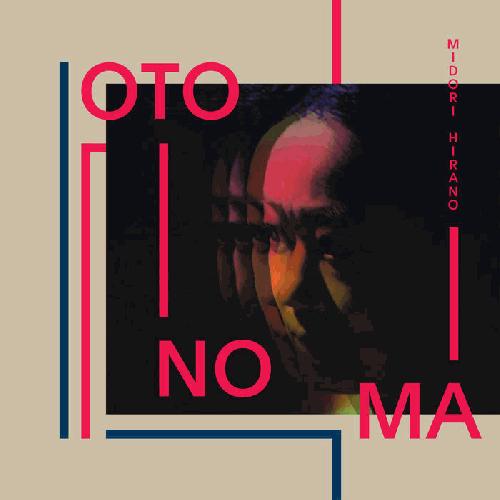
Review Summary: Warm, immersive ambient music suspended between memory and dream.
Midori Hirano’s
Otonoma is not a drone ambient record built from vast, static soundscapes. Instead, it moves — quietly, carefully, but constantly. Piano pieces like “Rainwalk” unfold with restrained melancholy and minimalist elegance, while tracks such as “Warped in Red” introduce brighter synth tones and sine waves that occasionally recall early Oneohtrix Point Never. Elsewhere, fragments of the album feel strangely cinematic, not in an overtly dramatic sense, but in the way they suggest spaces, weather, movement, and fleeting visual impressions.
What makes the album so compelling is the balance it achieves. Even its more futuristic electronic passages never feel cold or alienating. Warm tones, soft resonance, organ-like textures, and intimate piano motifs continuously ground the music, giving these digital environments an unmistakably human presence. There are moments here that evoke Tim Hecker’s atmospheric density, Brian Eno's spatial sensitivity, the delicate melancholy of Ryuichi Sakamoto, or flashes of early OPN-style synthesis, yet
Otonoma never feels derivative of any of them.
The album’s immersive quality also deserves emphasis. This is not immersive music because it overwhelms the listener with scale or volume, but because it quietly constructs spaces one wants to remain inside. Many tracks feel less like compositions than like illuminated still lifes, half-remembered film scenes, or photographs suspended somewhere between dream and memory. “Ame, Hikari,” with its subtle sense of movement and water-like textures, is particularly striking in this regard, while “Before the Silence” emerges as one of the album’s emotional centers: slow, pulsating, electronic, and deeply absorbing.
Perhaps the album’s greatest achievement is its consistency. Every sound feels carefully chosen; every transition feels natural. Nothing here seems excessive, misplaced, or underdeveloped. Rather than relying on singular climaxes,
Otonoma succeeds through accumulated atmosphere, emotional precision, and an almost architectural sense of cohesion. I rarely stop after one listen — most of the time, I simply start it again from the beginning.
Otonoma does not demand attention through grand gestures. It earns it through warmth, detail, and an extraordinary sense of balance.