Review Summary: Top form, to everyone's surprise.
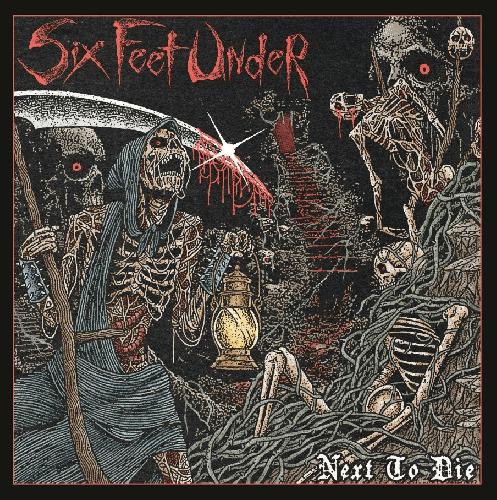
Next to Die sees Six Feet Under in a notably revitalised and self-assured form, delivering what is, quite frankly, one of their most convincing releases in recent memory. In the aftermath of the widely derided Nightmares of the Decomposed, a record that marked a clear creative low point, the band’s gradual recovery began with 2022’s Killing for Revenge. With this latest effort, however, that recovery feels complete, even emphatic.
The album opens in a surprisingly restrained fashion, leaning into a slow, atmospheric, almost doom-laden introduction that prioritises tension and mood. It is an effective choice, lending weight to what follows. Once the record fully unfolds, it settles into roughly forty minutes of unapologetically traditional death metal. The approach is direct and unembellished, rooted firmly in the genre’s foundational principles.
A great deal of the album’s strength can be attributed to Jack Owen, whose role in the songwriting process is both substantial and immediately apparent. Having written the majority of the material, and seemingly exercised a strong degree of creative control, Owen injects the record with a renewed sense of identity. There is a clear reverence for the spirit of 1990s death metal throughout. At various points, one is reminded of the groove-laden authority of Morbid Angel’s Domination, as well as the darker, more oppressive atmosphere found on Incantation’s Onward to Golgotha. These influences are not imitated outright, but rather absorbed into a sound that feels purposeful and grounded.
The guitar work is particularly noteworthy. The riffs are not merely heavy, but memorable, constructed with clarity and intent. There is a pronounced sense of groove running through the album, giving many of the tracks a surprisingly infectious quality. This is complemented by a series of well-executed solos which feel deliberate and musically considered, rather than perfunctory additions.
Chris Barnes also delivers one of his strongest vocal performances in years. His approach here is markedly more controlled and consistent, avoiding the much-criticised high-pitched “EEEEEEEEE” screech that had come to define some of his more recent output. In its absence, his delivery recalls, at times, the raw and commanding presence he exhibited during the Tomb of the Mutilated era. It is a significant improvement, and one that greatly enhances the overall impact of the record.
In terms of tone, Next to Die remains largely serious and focused, maintaining a dark and aggressive atmosphere throughout. The one notable exception is the third track, “Mr Blood and Guts,” which introduces a degree of dark humour. It serves as a brief yet effective counterbalance, adding a touch of personality without undermining the album’s overall cohesion.
What ultimately distinguishes this release is its consistency. Rather than relying on isolated highlights, the album maintains a steady level of quality from beginning to end. It does not seek to reinvent the genre, but instead refines its core elements with precision and confidence.
If Killing for Revenge marked the beginning of Six Feet Under’s return to form, Next to Die stands as its most compelling affirmation. It is a cohesive, confident, and thoroughly engaging record, and without question one of their strongest efforts in a considerable span of time.