Review Summary: The weight of great expectations.
When
The Tropic Rot was released in 2009, it felt like Poison the Well was just starting to hit their stride. Not all bands have a straight linear progression, and while their path was a little more unwieldy, it felt like their entire career had been building toward that album. They initially burst onto the scene with their debut album,
The Opposite of December… A Season of Separation, which is undoubtedly a foundational piece of metalcore and a major driving force behind the commercial boom of metalcore in the early 2000’s. And honestly, it’s easy to hear why. Everyone stole from it. It effortlessly wove together hard-hitting riffs, melody and nonstop breakdowns with a true emo sound backing it to create something novel at the time. Such an abrasive and yet accessible sound was always bound to take off, and that it did.
Poison the Well have always been innovators. They forged a distinct sound early on, but they sure didn’t rest on their laurels. What followed was one of the most interesting discographies in core music, and one I regretfully didn’t experience until recently.
Tear From the Red serves as a transition album between December and what would come later. It expanded on the melodic and emotional aspects, incorporating touches like acoustic guitars, interludes, and more elongated clean sections.
You Come Before You is where they truly cemented themselves as one of the most fascinating bands in the scene. It was certainly still Poison the Well at its heart, but also like in the past, they seamlessly added in more influences to their core sound. You can hear shades of post-rock, post-metal, and bands like Deftones and Glassjaw. It’s an album that is so expansive, and comes together in such a natural way.
Versions pushed their experimental edge even further, introducing a significant country twang and a diverse array of new instruments like banjos, mandolins, horns, slide guitars and pianos. Perhaps, it was too much of a shock for some at the time, but yet again, they were undeniably ahead of the curve and thinking outside the box.
The Tropic Rot felt like the ultimate culmination of that boundary pushing mindset. It took everything that worked about
Versions and smoothed over all the rough edges to create something truly special. They even weave in more eclectic, unexpected elements, like a warped take on surf rock, twisted into something darker that somehow never feels out of place. That’s next level craftsmanship. And then, poof, they were gone. Just as they seemed to be hitting another gear, maybe even peaking creatively, they disappeared. No dramatic breakup, just a quiet farewell. Sure, they’ve reunited for a few live shows, as many “retired” bands do, but I figured that was the last we’d hear from them.
Completely out of the blue, in 2024, after 15 long years, the band announced, in the notes of a vinyl box set no less, that Poison the Well were back and in the process of writing a new album. There’s just something in the water right now when it comes to bands reuniting, especially ones you never thought would return, and this one caught everyone off guard. It certainly left my mind racing about what direction
Peace in Place would take. Would it be a continuation of
The Tropic Rot? A now all-too-common “return to roots” album? Or something completely out of left field? I didn’t really have a guess. The end result is something I’m still grappling with.
On one hand,
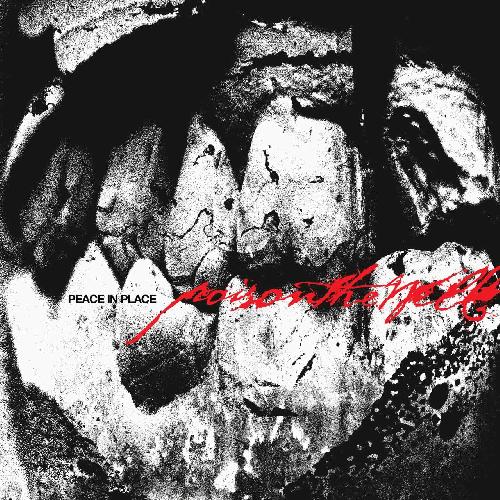
Peace in Place is a rock-solid album for a band returning after 17 years. It has plenty of kickass riffs, excellent performances and crushing breakdowns, along with moments of beauty that you have come to expect from Poison the Well. The first half of the album kicks off in just the way you would want with a concerted effort to recapture the heaviness of their debut. After a fuzzy subdued intro, “Wax Mask” smacks you across the face with a simple and ridiculously heavy riff, which they have always excelled at. Vocalist Jeffrey Moreira has always been a consistent highlight, with his gruff but discernible shouting delivery, and he has aged quite well. Nobody sounds the same forever, and while Moreira is a bit more strained now and has lost some range, it adds a weathered texture to the music that hits differently. They’ve still got it. “Primal Bloom” features a main riff that has that dark, surf-rock edge their previous album had, and the song is capped off by a minute-long, mutli-faceted breakdown that is as satisfying as it is well executed. “Thoroughbreds” is another highlight, feeling like an updated take on
The Tropic Rot with a touch of twang, another ocean-drenched riff, stop-start chugs and an eerie atmosphere.
On the other hand,
Peace in Place feels a little too familiar. While competently made, it feels very much of its time which is a touch disappointing for a band so forward thinking. Each Poison the Well album has traditionally had unique qualities that set them apart. They felt like individual experiments that built upon one another. This album has those elements in theory, but there is just a spark that is missing. It plays like a blend of the straightforward heaviness of
The Opposite of December with touches of their more experimental work, and that balance never quite clicks.
The outright heavy ragers and sections are all excellent for the most part, and at times rank among their heaviest material. The clean, melodic sections, however, have never felt more jarring and out of place. These moments often feel obligatory, grinding songs to a halt rather than flowing organically as they once did. It doesn’t help that Moreira’s once vibrant, soulful and expressive clean vocals are either drowning in reverb and vocal effects or simply lack the presence they once had. Where he could previously carry entire passages with his cleans, they now feel strained and, at times, forced. Hooks were never their strongest suit, but they feel even less impactful here. Tracks like “Antarctica Inside Me” showcased how dynamic and engaging those moments could be. Now, they feel more like textural contrasts than true highlights. “Bad Bodies” is a clear example of these issues. It features strong chugging riffs and great screams that build toward a hook that is underwhelming, even slightly irritating, leaving a sense of missed potential.
When I think of Poison the Well, I think of dynamics. They have a special ability to create such sharp contrasts that jolt you out of your seat, like the electric off-kilter riffing on “Prematurio El Baby” or the sudden explosion into screams of “Meeting Again for the First Time”.
Peace in Place is much more subdued, leaning heavily on a Deftones-inspired approach to create those dynamics. Those comparisons are absolutely out of control these days, and honestly a bit lazy. The band has always been clearly inspired by them, but here, it is more pronounced than ever. The shimmering, gazey guitars, and melodic crooning combined with a metalcore sound used to be somewhat a novelty. In the years since, that approach has become far more widespread, especially as Deftones have surged in popularity again, and it now feels exhausting. To the band’s credit, “Everything Hurts” is a standout in this style, using all of those elements to craft what is perhaps the album's best song that puts those aspects in a blender with a mammoth riff that keeps the song with a clear forward momentum. “Drifting Without End” is the complete opposite and is that sound at its dullest and most predictable. It has a nice cascading build at the end bringing some life, but you’ve heard this song before. I also find myself missing the longer, atmospheric post-rock and post-metal excursions like “Apathy Is a Cold Body,” “Sounds Like the End of the World,” “Pamplemousse,” and “Are You Anywhere” that were always showstoppers and ones that kept you guessing. These tracks didn’t just stand out because they were different. They worked because they were fully realized compositions that balanced a wide range of influences while still feeling cohesive. That sense of ambition and expansiveness feels notably reduced here.
I am left torn between an album that I enjoy for what it is and the one I had imagined in my head. It can be difficult to separate those expectations. Over time, it has grown on me as I’ve sat with it, and I can now appreciate it for what it is rather than what I wanted it to be. I love the return to the more aggressive, chugging riffs of
The Opposite of December, but I still find myself wanting more, especially in terms of the oddball influences and sense of experimentation that once defined them. Maybe that expectation is unrealistic after 17 years, but if any band could pull it off, it would be Poison the Well.
Peace in Place is, without a doubt, a solid and efficiently made metalcore album. But their earlier records carried a vibrancy and sense of risk that felt genuinely boundary-pushing in a genre that at the time, often played it safe. They left me with vast thoughts about genre conventions and how they broke the mold in such peculiar ways. Compared to that, this feels more restrained, and at times less distinctly them.
The Tropic Rot felt like the culmination of their unique voice, and a fitting endpoint. As a post-script, though, I’ll gladly take
Peace in Place.