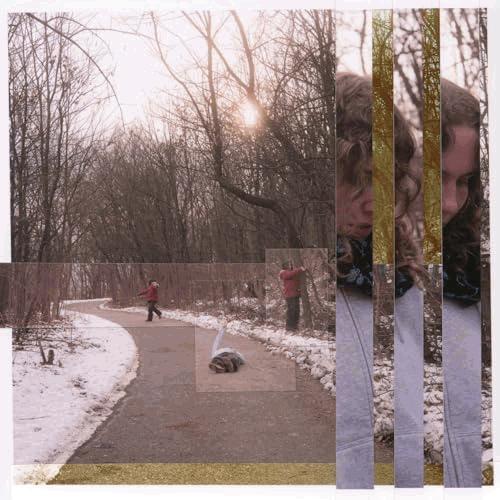
Review Summary: Anabelle Dinda's debut is the first folk gem of 2026.
The greatest songwriters always seem to have a quiet, steady resolve. A sense of inner confidence that begets
presence, as if you could somehow still feel them in an otherwise silent studio. Annabelle Dinda possesses that intangible trait on her debut LP
Some Things Never Leave. It’s not that she out sings her range, vies for epic crescendos, or crafts a series of stunning instrumentals. There’s just this natural energy she brings to each moment – earthy, breezy, and effortlessly catchy melodies intertwine with introspective lyricism across forty minutes of emotionally-charged folk music. It’s no-frills, but sometimes simply being yourself and owning the moment is all that’s called for.
As Annabelle Dinda’s first album unfurls, its beauty speaks for itself. ‘Big News Day’ transforms from upbeat acoustic strumming to breathtaking self-harmonizing, and all in the name of lamenting that people, as she sings repeatedly in the refrain, are boring. ‘Doesn’t Matter’ is one of the most graceful and free-flowing songs on the record, with a chorus that will have you unconsciously swaying while Annabelle sneaks little gems like “blood doesn't matter 'til you get cut open” into the verses. ‘The Hand’ is an equally whimsical and offhand track that observes the gender gap in society, but does so with relative neutrality: “this isn't rage, it's worth a mention / this is no statement, I'm complicit / this is a dream, god put me in it.” While all ten songs deliver either some sort of memorable hook, intriguing message, or emotional gut-check, ‘Satellites’ somehow pulls off all three. Elegant acoustic guitars shimmer tranquilly in the background while Dinda’s voice gradually swells toward a beautifully layered rebuke of what could be perceived as relational, political, or just general hypocrisy – “don't bark like it's high divining, don't bite and expect no bruise / don't start with the diatribing, then spite all the love you lose” – adding in, “you put me into space, then hate me when I ask for it.” It might very well be the best song of her early career.
While her bolder statements are worth highlighting, there really isn’t a single part of
Some Things Never Leave that doesn’t leave some sort of lasting impression. On ‘Everyone Likes To Be Forgiven’, it’s the way Dinda’s voice alternates between passive (almost spectral) and directly powerful, culminating with the subtle drum kick when she sings “frozen like a fossil, this overflowing cup / do you hate when people move you?” On ‘To Reconcile’, it’s the ice-tinged classical pianos that lend the song its detached, wintry air. On the curtain-call ‘London Plane Trees Grow in Philly’, it’s the sheer power of her words which linger well beyond the record’s expiration. Dinda seems to find inner peace in the give-and-take of the forces of the universe: “when I start catastrophizing, I call you to stem the rising / ache of living, fear of dying /
they're the same, says Fate, while sighing.” It’s moments like these that don’t feel overly important at first, but become cornerstones of the album over time.
Once again,
Some Things Never Leave’s charm boils down to the artist’s unique sense of self – and the distinctive expression that comes with that. If I had to draw a direct comparison to another musician it would be Katie Crutchfield (for those who don’t know, that’s a massive compliment), but I’d rather say that Annabelle Dinda is simply the first of her. While Annabelle’s debut leaves room for her to experiment and grow, it’s about as perfect a launching pad as any artist could create for themselves. On ‘The Body Remembers’, she sings about having “no map and no tour guide” – respectfully, I don’t think she needs one at all.
s