Review Summary: A very interesting and rare work. But a very strong one.
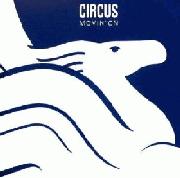
“Circus” is the eponymous debut album of Circus and was released in 1976. The line up on the album is Roland Frei, Andreas Grieder, Marco Cerletti and Fritz Hauser.
Prog rock in Europe in the 70’s was essentially a UK phenomenon. Still, it was spread outside of the British islands to many European countries, most successfully in countries like Germany, Netherlands, Italy and in the Scandinavian countries. However, and despite that, many other bands arose in some other European countries. This is the case of Switzerland. My knowledge about Swiss prog is relatively short. The only two bands I know are Islands and Circus. I know Patrick Moraz too, but that’s another matter. About those two bands, I know “Pictures”, “Movin’ On” and this one.
Circus was one of the most unique and technically refined names in European prog rock of the 70’s. Formed in Basel, in 1972, active until 1980, they stood out for an eclectically prog sound that almost entirely abandoned electric guitars and conventional keyboards, focusing on wind instruments, (flute and saxophone), acoustic guitars, bass effects and complex vocals. The music style of the band is frequently compared to names like King Crimson (for complexity and intensity) and Van der Graaf Generator (for dramatic use of horns), the band mixed elements of jazz fusion and classical music. We can also see some hints of Camel and Jethro Tull, due to the flute work. The band only released three studio works, their self-titled debut, from 1976, “Movin On”, from 1977, and “Fearless, Tearless And Even Less”, from 1980.
The Swiss Circus is one of the prog rock bands where King Crimson’s influence is directly evident. Circus is composed of outstanding musicians. This quartet had no electric guitarist and no keyboardist, which is apparently a strange thing, despite they had acoustic guitars. It’s true that many great prog bands had no electric guitarist or keyboardist. But the both absences are almost a sacrilege, especially the absence of the keyboards. In fact, the keyboards are almost an indispensable instrument in prog rock music. Another interesting point is that the singer of Circus could sing in English with a not bad accent. At the time, they were creating their own sound, such as the powerful development of music, the acoustic guitar sound using various effects, and the effective use of the flute being played in the right place.
Circus’ first album is one of the most fascinating landmarks of the European progressive rock scene due to its instrumental audacity and its very complex sound. It’s a mellow, yet intricate, flute-heavy work that blends symphonic prog with jazz-rock. It has an unlikely mix between Camel, the acoustic side of Jethro Tull, the rhythmic aggression of King Crimson and the vocal drama of Peter Hammill in Van Der Graaf Generator. It’s considered a very difficult album on first listen, but it’s highly rewarding for its originality. The album is noted for its high-level musicianship, complex arrangements, and a mix of soft passages with heavier, jazz-infused prog rock. It’s noted for its mellow, flute-heavy sound and melodic, almost delicate progressive rock. Somehow, this album is a kind of a rarity in the prog rock scene.
“Stormsplineter” is the opener of the album. It’s almost an atypical track for the rest of the album. While not exactly rocking, it’s one of the louder and faster tracks here. It’s a short instrumental that sets the technical tone for the rest of the album. “Nowadays” is more like a collage of smaller, loosely connected ideas, sometimes very quiet, then eruptive, giving the piece an almost experimental feel. A song structure is barely present at times. This also makes the piece a touch inaccessible. The overall tone is rather contemplative and somber. However, this is one of the central pieces of the album, with great variations in dynamics. This is probably the most inaccessible and complex piece on the album. “Sundays” continues the tranquil style of the album. It mixes melodic moments with more experimental passages with some sparse acoustic guitars and a fragile voice. The mood is almost melancholic and wistful. The flute picks up this atmosphere, and the piece flows on calmly. This is a beautiful track that reminds me of Camel. “Dawntalk” focuses on the dialogue between flute and voice. It begins with little more than a trilling flute, but suddenly, the other instruments become more intense and louder, culminating in a crescendo. The flute engages in a duel with saxophone, sometimes harmonious, sometimes dissonant. Technically, it’s one of the most interesting pieces on the album. “Room For Sale” is the album’s epic, demonstrating the band’s total mastery for long compositions. Here, the music picks up the pace a bit, foreshadowing the style for their next album. The flute, the percussion and the lively guitar are fantastic. Basically, everything is simply great on this track. At times, it creates a cheerful upbeat atmosphere. When the vocals kick in, things get even more edgy. The flute throws in rapid, shrill runs, the vocals switch between spoken word and singing and the percussion clatters and bangs in the background. This is my favorite track on the album, and probably its best.
Conclusion: Anyone expecting “Circus” to sound like “Movin’ On” will be disappointed. The latter is more accessible and rockier than this one. What makes this self-titled album so special is the fact that it’s a complex prog rock album recorded without electric guitars and keyboards. The band used an acoustic approach, where tension and textures were created through the vibraphone and percussion that filled the space that would normally belong to synths. The use of bass pedals and bass distortion give the compositions the necessary weight. The flute and saxophone were the main melodic instruments, giving a tone that ranged from jazz to pastoral rock. “Circus” requires more attention to open up to the listener than “Movin’ On”. But time and quiet enjoyment are well worth it. A clear recommendation is warranted.
Music was my first love.
John Miles (Rebel)