Review Summary: Await in phenomenon, let it go without warning.
Browsing music on the Internet two years ago, I stumbled across a pleasantly-looking abstract blue artwork. The review I read got me interested, so I went on to take a listen and one track in, I was already blown away. “Sun Killer” was a great introduction to Spiritbox: it’s hypnotic and skilfully builds tension before an explosive climax. In recent years, there’s been a plague of watered-down djentcore releases that show more investment in checking out the boxes of commercial appeal than in displaying any sort of artistic quality.
Eternal Blue broke the mold thanks to its elasticity: it delved into mainstream music without sacrificing its metal backbone, sounded characteristic while still playing with different styles and song structures, put focus on melody without treating it as obligatory and thus relegating aggression to the role of a gimmick. And yet, somehow, I found it lacking. Don’t misunderstand me, I still take pleasure in listening to songs like “Hurt You” and “Circle With Me”, but that requires looking past the fact that at that point, Spiritbox hadn’t fully evaded a sense of artificiality in their output. As effective as it was, the band’s debut longplay called for a further evolution of sound.
Over time, I concluded that
Eternal Blue failed at full immersion because of being a transitional record. The band’s first two EPs displayed a completely different style, bleak progressive metalcore, and despite being incredibly slow burns, succeeded at evoking the feelings of melancholy and overbearing anxiety. This doesn’t mean the band’s shift towards the mainstream was at fault there, rather that in 2021 their footing on their new style wasn’t steady enough to make it more engaging. Thankfully, 2023’s
The Fear of Fear saw things changing. It wasn’t particularly innovative, but thanks to a slightly different approach to musical expression and more creative production, it reintroduced the sense of uneasiness and cohesion, and manipulated tension far more effectively. And yet, somehow, it didn’t quite hit the mark. Despite being a juggernaut of an album, its tightness left it a little dry and shallow, still leaving room for improvement. This is where
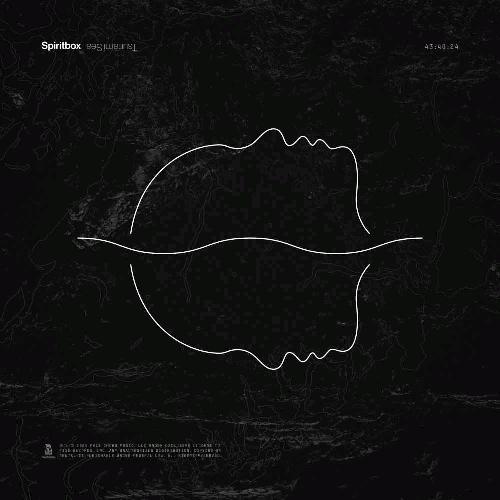
Tsunami Sea walks into the picture.
A few seconds of distorted guitar ambiance in, a crushing groove coupled by cold, mechanical pick scraping hits like a massive tidal wave. Then, it backs off for the intro effect to return to the spotlight and make way for a brutal verse. “Fata Morgana” is a truly unnerving opener because of subverting expectations. The droning grooves are aggressively heavy and slow, making the listener crave for a moment to breathe that either doesn’t come, or is immediately followed by another strike. Even the melodic chorus subtly infused with synths doesn’t provide calm because of the strangely muffled vocal line that feels like an additional layer was missing from it, odd beat timings and the anticipation of another tide coming in, which extends into the song’s outro. The groove is there, but it’s subsided in the mix for the sake of eerily waving synth melodies and layers of distorted guitars; a climactic punch is never provided, leaving nothing but lingering tension.
The uneasy feeling continues with much faster “Black Rainbow” – a musical equivalent of beating at the walls in a state of confused rage. It’s not until the third track, “Perfect Soul”, that the tension is finally relieved. With its bouncy beats and pop sensibilities, it feels like a throwback to
Eternal Blue, but with one crucial difference: the sound is deeper and more epic. The speed is just right for an energetic pop-metal song, but low enough to feel moody. That, together with a smooth synth background and a warm combination of Courtney’s and Josh’s cleans in the chorus, creates an atmosphere of comfortable bittersweetness.
These initial cuts well showcase many of
Tsunami Sea’s merits. All the tracks are arranged to create a continuous flow of shifting mood and tension – a dynamic already featured on previous albums, but this time brought to its apex.
Eternal Blue and
The Fear of Fear often felt too tight and somewhat rushed, making most of the potentially emotional moments sound superficial. Here it appears as if the band allowed the compositions more room to breathe and interfere with each other, albeit not without a healthy dose of songwriting calculation. As a result,
Tsunami Sea is a sinusoid of effective build-ups and payoffs not bordered by individual song timeframes. This goes on until the very last track and beyond: despite its relatively calm and melodic nature, “Deep End” isn’t climactic at all and creates an urge to return to the brutality of “Fata Morgana”.
Another thing worth noting is the improved production. The application of vocal effects is less overwhelming and far more tactical than in the past. The sound layering possesses a newfound depth that makes even the most basic breakdowns engaging. The surprisingly prominent synth lines are fit into the picture like puzzle pieces. All of that greatly contributes to the overarching sense of being lost on hostile waters.
The album doesn’t succeed in terms of stylistic innovation as much as in evoking emotions, more specifically anxiety, melancholy and hopeless anger. Still, it sees the band using their influences to their full potential, moving freely between the contemporary pop and the Meshuggah ends of the sonic spectrum. “Fata Morgana” relies on tension maintenance through uncanny repetition and messing with the rhythms, while “Black Rainbow” is driven by polarized tempos and harbors an atonal guitar lead satisfyingly reminiscent of Fredrik Thordendal’s soloing style. On the other hand, the lengthy verses of “Ride the Wave” are pure sad pop and “Crystal Roses” could be easily mistaken for a work of Poppy (which it is,
if you know what I mean). That last example is, however, an oddball in a bunch of relatively normal Spiritbox songs, as its overly computerized stylings and near-total absence of metal elements effectively make it break the album’s flow. This
could have been a strength, given that the song is preceded by several bleak and menacing juggernauts… if not for the two largely melodic tracks that follow, which makes its usefulness very questionable.
My initial contact with
Tsunami Sea left me largely unamused. However, upon a closer inspection after a few months, I can confidently say that this is Spiritbox’ most accomplished work in the current decade. It’s still a largely formulaic mainstream metal release, which is enough to put many people off, but it stands above its peers in terms of execution. The production is excellent and largely responsible for the emotional impact of the record. What’s also important is the approach to songwriting: the stylistic components are being treated as a set of freely picked tools instead of an obligatory checklist.
Id est, it’s not pretentious in the slightest.
Tsunami Sea combines the best of its predecessors: the intense bleakness of the band’s self-titled EP, the commercial appeal of
Eternal Blue and the cohesive flow of
The Fear of Fear. In short, it’s Spiritbox at the peak of their power.
Yet.