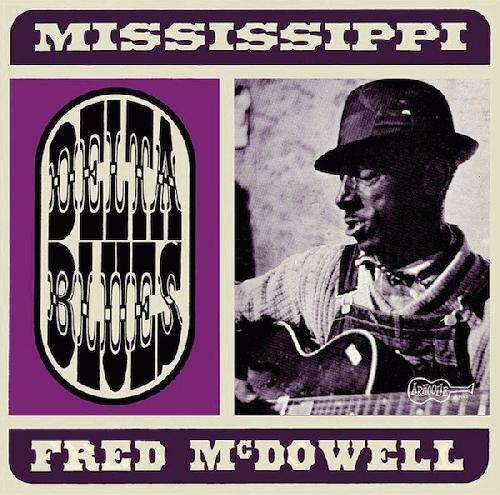
Review Summary: Well, I ain't never loved babe, Hope I never will, This way you got lovin goin around, Get somebody killed
Another of the Blues Revival leaders who’s music career was given another lease at life by the folklorists, Fred McDowell had no desire to lead the hardscrabble farming life his parents had. That of course doesn’t mean he had the luxury of making the blues his day job, the black bluesmen who could make a decent living on their music alone were a rarity. Who’s to say if he ever hoped the blues would break him out of the life America had set out for him, but it wasn’t until well into his 50s that he was ever able to do so. By then, he had spent decades playing at house parties, juke joints, and roadside gatherings, his music shaped by years of calloused hands and long days working fields. When the folklorists and revivalists finally came knocking, they weren’t discovering him—they were merely catching up.
Fred McDowell’s not got the technicality of some of his peers, nor the rich timbre of some others. What Fred’s got, and got in spades, is raw, rich, unrelenting
life. Fred wails his blues almost tunelessly sometimes, stomping his feet in time with the music so loud it almost sounds like percussion. Here the primary quality is one of rawness, earth and sweat. His guitar is a cheap, rattly thing; when he first started playing he learned slide guitar with a knife, and then a beef rib. His voice hollers, he cackles and groans, shouts and moans with the voice of an aging smoker, that cheap guitar creating a distorted, pulsing rattle in the low notes like the rumble of a lost technology groaning itself to life.
Stop what you’re doing and listen to the blistering heat of That’s Alright, and you’ll hear the sound of cutting loose, of letting a week’s worth of weariness slough off your back as a unpolished whoop escapes your throat, a bottle’s worth of unfettered railery that’s had a lifetime of wanting to break out and only had a single Saturday night with which to do it. It’s not for careful listening, it’s not meant to be dissected or really analyzed beyond the feeling it gives, like pouring a cold beer down your throat on a sweltering Tennessee day.
All the richness of the old country blues singers points back to their black working-class roots, the kind of shunted-aside menial life that was meant to grind an entire people down. The difference between how much the likes of Fred McDowell deserve to be remembered and how much they are is a gulf you couldn’t fly across if you were born with wings. The world never stops moving, and memory only lasts as long as people have the will to put down words that will dredge it back up. Put on this record, and give this document a chance to bring an artist’s life to yours. Because when McDowell’s foot hits the floor and his voice cuts through the air like a knife, you’ll know: the blues never really left—it just needed someone to listen.