Review Summary: Chill lofi rock music to study/relax to.
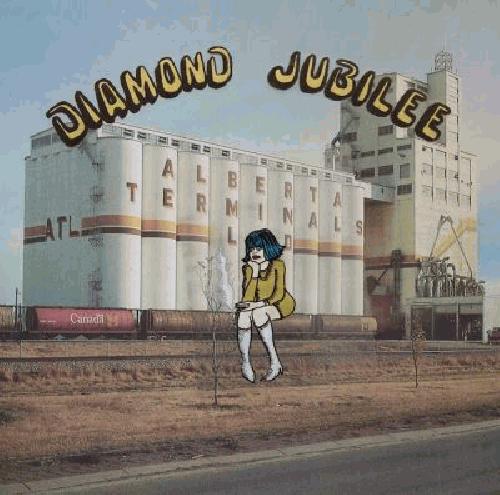
At first glance, this is a very intriguing album which boasts a 2+ hour runtime, evocative cover art, and a promise of reinterpreting the sounds of rock’s golden age for the 21st century. However, what is primarily found here is an example of a lack of creative force and the enervating influence of playlists and streaming services on music.
While the 1960s are one of the chief influences on the sound of this record, Cindy Lee is not attempting to simply repackage 60s music, but rather to use the 60s as a means to capture a sense of nostalgia and longing. Cindy Lee’s hazy dream is not inspired by the wild and experimental 1960s of the Rolling Stones, The Who, or Pink Floyd, but instead, the songs of Diamond Jubilee are inspired by the kitschy and highly commercial 60s pop that now lays dusty and dormant on vinyl records at thrift stores, or forgotten in grandparent’s basements. The musical idea of Diamond Jubilee is to filter these forgotten (and imagined) sounds of the past though the lens of lofi indie pop to create a dreamy and nostalgic soundscape.
The album presents us with 32 songs that primarily dwell on the genres of surf-rock, dream pop, psychedelia, and jangle pop. The instruments are recorded in a way to present a retro and analogue sound, as if to give the impression that this album is “found footage” from another era. The tremolo heavy instrumentals are topped by what is one of the album’s weaker aspects: Patrick Flegel’s voice. His androgynous vocal style is flat and without attitude or emotion, the generous amount of reverb applied to it seems to be an attempt to make it more musical, or at least to turn it into an instrument, and this adds to the monotony of the whole project. I can imagine the groovy tracks Flesh and Blood, Stone Faces, or Dracula being elevated by a more forceful and personal delivery, but Flegel just weakly drones over the tracks regardless of their feel. It is not a surprise then that some of the album’s highlights are the more melancholic songs: the songs Dreams of You, Always Dreaming, and Til Polarity’s End are lovely pieces which make the best use of the album’s hazy sound. Diamond Jubilee’s best song is the moody If You Hear Me Crying which features an exciting melody and a welcome blast of guitar distortion that interrupts the drowsy somnolence of the rest of the album.
Although there are nice songs on here, they only exist to cultivate a “vibe” or aesthetic, and this is the most significant aspect of this album, and is what makes it most distinctly a product of our time. While Cindy Lee has an aversion to streaming services, they have made an album that is directly a product of the streaming industry, for this collection of songs more resembles a mood based playlist than a traditional album. It is music designed to be background noise that evokes a certain feeling. It’s as if AI generated these songs to create an ambiance at a costume party. Other than the occasional pretty melody, there isn’t anything to these songs other than their aesthetic and sentimental associations.
This lack of musical ideas would have been more tolerable if the record was under an hour, but at just over two hours, the mediocrity becomes almost unbearable without some kind of distraction. This long runtime encourages the use of this album as disposable background music, as there just isn’t enough substance here to keep one engaged for the runtime. Further, there isn’t a progression to this record, the album is completely formless, the track-list could be randomized and the listening experience would remain the same. This is the Spotify playlist experience of music.
The tedium of the music reveals that the nostalgic sound is just a cover for creative exhaustion. Releases like these betray a lack of ideas and forward impetus, which has resulted in a wider cultural tendency to create comforting images of the past to evoke sentimental feelings. When artists have lost their creative vitality, their recourse is to make copies of the forms that worked before, but it is inevitable that these copies lack the power of the originals.
There is an irony at the heart of Diamond Jubilee: the fact that the powerfully vibrant music of the past has almost no resemblance to this album’s dull and tedious songs.