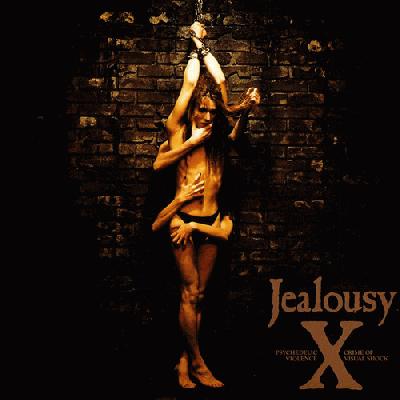
Review Summary: X Japan's third studio album bests Blue Blood with an outstanding title track and more intricate musical diversity.
This is my first review on sputnikmusic, let alone my first written review of an album, so feedback is very much appreciated.
This is X Japan's third studio album, released on July 1, 1991. Having experienced all of their albums, this is the one I come back to listen to the most times. Why not Blue Blood, which has most of their famous songs? Why not Art of Life, Vanishing Vision or Dahlia? I'll try to explain all of that here.
First of all, the time during which the album was made was quite difficult for the relationship of two of the Band members: Leader and main composer Yoshiki and masterfully skilled bassist Taiji. In his biography, Taiji mentions how he and Yoshiki would often get into fights regarding the musical direction of the group, with Yoshiki already branching out into a more balladesque, progressive style while he himself tried to maintain the old school hard rock/ heavy metal which was one of the band's stairways to success (besides the ballads, of course). Much later, Yoshiki described the matter a little differently, blaming the whole thing on a supposed fight between Taiji and hide, the band's famous lead guitarist, with him asking Yoshiki to fire Taiji. It is debatable which version is nearest to truth, but that is not of primal concern here. Taiji's rejected compositions for "Jealousy" can be found on the rare X album "Rose & Blood: Indies of X". Definitely worth a listen.
But now it is time to look at the songs themselves:
1. Es Dur no piano-sen: A very beautiful piano intro by Yoshiki. It sets a nice contrast to "Prologue" on "Blue Blood", being quite mellow and melancholic. The whole piece consists of a simple piano riff branching out into an ascending melody. On the highest point, it suddenly breaks, and we hear Yoshiki creating a storm of dissonant sounds, arriving at one of the lowest keys. It keeps ringing awhile, then breaks off. This habit of Yoshiki bashing away at the keyboard still holds itself today, with Art of Life's piano solo and the live intro to "Born to be free". This creates a subtle tension which lasts until the next track begins.
2. Silent Jealousy: Arguably one of the best songs by X Japan, if not THE best. Even if all the other songs on this album were horrible, I would still buy it just because of this magnificent, powerful, and melodic piece of music. At the beginning we hear the chorus played by Yoshiki on the piano, ending on a cliffhanger. A few seconds of complete silence, then WHAM! the song hits you with it's dashing ascending guitar riff, and shortly after , Toshi joins in with his outstanding vocal ability. I think what fascinates me the most with this composition is that it blends ass-kicking metal with emotional melodies better than any other work of X Japan (except Art of Life, but that's another story). The drums are fast and accurate, hide and pata pick the riffs with great speed and accuracy, and Taiji completes it all with his heavy but not too dominating bassline. Another exceptional part are the three instrumental solos following each other. At first there's Taiji with a short melody on the bass, followed by an orchestral bridge featuring a piano solo by Yoshiki who is accompanied by drums and the ever-present Orchestra. The third part is the brilliant guitar solo, played by hide and pata simultaneously. Never losing itself in mindless shredding, it goes from climax to climax until it reaches the top note, effectively wrapping up the onslaught of the instrumental attack. This song grabs you right at the beginning and never lets you go until it ends. Yoshiki, this is positively a masterpiece of yours.
3. Miscast: Composed by hide, Miscast is a hard-rock song that puts you back on your feet (after the experience with Silent Jealousy) with several interesting qualities that make it stand out. Toshi's voice has a mischievous undertone (You're a failed actor! HAHAHA!) and the solo is nothing short of amazing in its "evil" sound. The latter part of it involves a descending tapping pattern, quickly followed by an unusual drum beat which makes the whole thing sound like a slowly marching percussion group. Definitely one of hide's underrated classics that he also continued to play live at his solo concerts. Eventually, a studio version of the new arrangement was put on one of his posthumous compilation albums.
4. Desperate Angel: Composed by Taiji, this song is sort of an arguing point between fans. Some see it as a cheap, kitschy hair metal ripoff, others like its addicting chorus and rock n' roll attitude. Throughout the time I listened to the album, I both liked and disliked it. As I heard it the first time, I wasn't particularly impressed, but it grew on me very quickly and now my positive opinion of it is as follows: It is basically Taiji's equivalent to hide's "Joker", another r&r track on this album, and it serves the purpose of an upbeat, energetic and catchy song that breaks up the tension between the more "serious" tracks on "Jealousy". I love it.
5. White Wind from Mr Martin ~Pata's Nap~: Next to Dahlia's "Wriggle", this is the only instrumental song composed by pata. A very peaceful, relaxing piece played entirely on acoustic guitar, creating a feeling of momentum between the fast paced rock songs. Definite proof that Pata is also awesome.
6. Voiceless Screaming: Another song by Taiji, this time, rather unusual of him, a very emotional ballad. The thing is: This is not your typical X Japan trademark ballad. I doesn't have lush orchestration and choruses repeated to the point of insanity (coughendlessraincough). Here, we only have a small amount of strings and two acoustic guitars, and in the center, Toshi's voice, singing a sad, beautiful melody, culminating in heartwrenching screams at the end. Enjoy the calmness while it lasts, because the next track will kick your ass if you're not ready.
7. Stab Me In The Back: A soaring speed metal riff-fest, reminiscent of the album "Vanishing Vision". In fact, the song was already performed in 1988, so apparently it took some time for it to make it on a record. It is not too focused on melody like "Vanishing Love", being more similar to "I'll kill you". I don't really get tired of this song because it is not too stretched; furthermore, the backing vocals also add a nice touch to the overall feel of sonic onslaught.
8. Love Replica: A very mysterious instrumental song by hide. Underlined by a waltz-like drumbeat, the melody is mid-tempo, not too complicated, but definitely unique with its nostalgic yet otherwordly atmosphere. I gets even more unsettling when you watch the promotional video of the track which features hide, wearing bright yellow-green contact lenses that enhance his demon-like appearance, being surrounded by naked people who seem to worship him. Accompanied by this melody, it really creates a creepy atmosphere. An underrated gem.
9. Joker: hide really worked much on this album, didn't he? This is another composition of his, a faithful rock n' roll song bearing obvious similarities to "Celebration", another song of his on "Blue Blood". Still, I prefer Joker over Celebration because it is not artificially stretched and more direct in it's melody. You can just sit back and enjoy listening. Also, there's a small intro where you can hear a person visiting a bar who later starts a riot of some kind (fitting for hide, as he, next to Taiji and Yoshiki, was notorious for creating a furor). Also, watch the song's performance on the new year's eve concert in 1995 and you'll be in for a surprise (hide definitely wasn't, haha).
10. Say Anything: The last song on "Jealousy" is a ballad, and a perfect way to finish it. It is not a pure coincidence that the studio version of this track was always used as the ending music playback in their following live concerts. The buildup is really nice, the chorus emotional and satisfying and hide's solo rounds it all up. A bit underrated if you ask me, but at the same time surely not their best ballad. I myself am really not sure which ballad deserves the top spot...
In my humble opinion, the diversity of the songs (as well as the diversity of the composers) makes this album stand out. Having a masterpiece like "Silent Jealousy" as the title track, Yoshiki couldn't make many mistakes with this one. Every song is unique and X Japan's instrumental skills are impressive more than ever. The musical range between Taiji and Yoshiki makes this album special and better than Dahlia or Blue Blood, but ironically it was also the reason both parted ways and X Japan made another musical evolution; but for better or for worse? I will try to answer this question in my review of Dahlia.