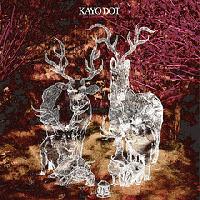
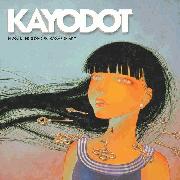
Review Summary: Much anticipated continuation to "Dowsing Anemone..." and with newly featured musicians, the album is less of a trip, more concise... and no growls to be heard.
It's difficult to define intensity in terms of music. It's easy to put in in physical terms as exposed by "current intensity", for instance, which is a measurable physical quantity, and as it grows larger, its effects can be seen more prevalent by external witness corpuscles (like magnetic fields or power dissipation. Nonetheless, the task seems to get fuzzier and blurrier as it approaches the music aspect.
How could intense music be defined?
The approach to distinct music genres will lead to different answers. A pop-music listener might define intense as a musical piece which is easy to relate to, whether for the emotional link it creates or, put more simply, the more it talks about getting dumped and guys being jerks. A sludge-metal-music listener will define an intense musical piece as that which most evident crescendos are put in particular, special moments of musical distress, or as those moments in which the song seems to have lost its entire point and goes back to tie links musically.
As a Kayo Dot listener, it's quite not so much of an easy task, since the most intense moments are not equivalent to each listener, nor is the focus each gives to a certain moment of the song. To put a clear example,
Gemini Becoming the Tripod could be used. The intensity is marked by the screeching. helpless, anxious vocals by Toby driver, as if it wasn't meant to be sung, but screamed. And that's how it sounds. And it sounds fitting, as the birth of a new being from a once complete entity.
"The world closed its eyes..."
The poetic intricacies in the last line are obvious, once put in context and to a lesser extent out of it, whether its the sentiment it's sung with or the overall context of the piece as a whole.
On a different approach, one could take
The Antique or more significantly
__ On Limpid Form for an intense musical moment, given by the subtlety of instrumentation or the build-up necessary to reach... absolute nowhereness. And all three examples are distinct from each other, even being the same band. Leaving the philosophical dissension of what Kayo Dot implicates, onward with
Blue Lambency Downward.
First of all, the most evident missing element are growls and other distinctive vocal experimentations present in "Dowsing Anemone..." and lesser in "Choirs of the Eye". Whether it was a creative decision or simply put, growing up, it can't be said that the appeal of the band was lost.
Au Contraire, the feeling of the band is still there, albeit the lack of classically-understood "metal intensity". Given intensity is now given by the band's instrumental capacity, and rarely recurring to rock instruments to achieve it, so that when they do use them (like the intro to
Symmetrical Arizona or most drum participations along the album) they actually seem like they are "in place" and not so much leaving a sensation of "oh, there goes another solo". As the album goes on, the musical intensity spikes at moments and unlike what was tried to be done with "60 Metonymies" by giving a lot of the stress work to the strings department, it seems like what Toby Driver knows how to do best is to create pieces of magnanimous proportions with as many elements as he can bring to the table. Nonetheless, it can't be denied his genius for ambient creation and minimalist touch, but the more vast compositions happen to be what I perceive as his best work (given the chance, my personal preference is questionable at this point, I suppose).
Leaving the growls-are-missing part of the album, most of it flows amazingly, and each instrumental section is interesting as is on its own. When the news that Charlie Zeleny (formerly with Behold... the Arctopus) was going to be featured in the band as the drummer, quickly conclusions were drawn in the vein of the band becoming some kind of technical-core ambient sludge drone monstrosity. It's a good thing to know that it didn't.
The drumming in this album is possibly one of the biggest differences when compared to previous releases. As the album progresses, it is noticeable that there's no longer the intent to make it part of the music, as it was used for example in
Gemini Becoming the Tripod, where percussive effects were used as tension points when building up from nothing, and a masterful companion all the way around. In this observation, however, drumming has its own voice, doesn't help much with the ambient but just blends in amazingly in songs like
The Awkward Wind Wheel, which are predominantly chaotic and for that reason, fitting to Charlie's drumming. There seem to be less solo moments and more convergent musical moments than in previous albums, there seem to be less diffuse moments and more focused, mature musical moments. And altogether, it sounds just like Kayo Dot, as if change was the key element to the success of this band's musical observations among its avid listeners.
What might throw off some are the "jazz" moments which keep popping up in different opinion sectors, which are not really "jazz", if it sounds more fitting to the listener, it reminds me more of classical movies instrumentation where the key is not to make outstanding solo instruments, but where convergence of sound is to create the mood of the scene rather than accenting music itself, making it moreso interesting and making the whole picture to fit in together. Don't be mislead by some drumming and the saxophone here or there, other music genres other than jazz use such instrumentation and musical motifs and it doesn't make them "jazzy" or anything of the sort.
So what can be concluded from this album? Was this article supposed to change your perspective on what something intense should be? Was this a miniature physics course to try to demonstrate that change is not a subject of negative criticism but of praise to disorder? No more questions should be left from reading this than they were answered.
Blue Lambency Downward is, in terms of Kayo Dot, another very nice set of musical leading always to want more, more mature musically, more cohesive, and outstanding as are its fellow observations by Kayo Dot; nonetheless,
Blue Lambency Downward seems to leave this observation with a much more conclusive,
grand finale song as Symmetrical Arizona is, which makes me wonder if it was really necessary after all to find closure from a finite number of tracks, or to always leave things hanging, wishing the experience lasted longer than it did.